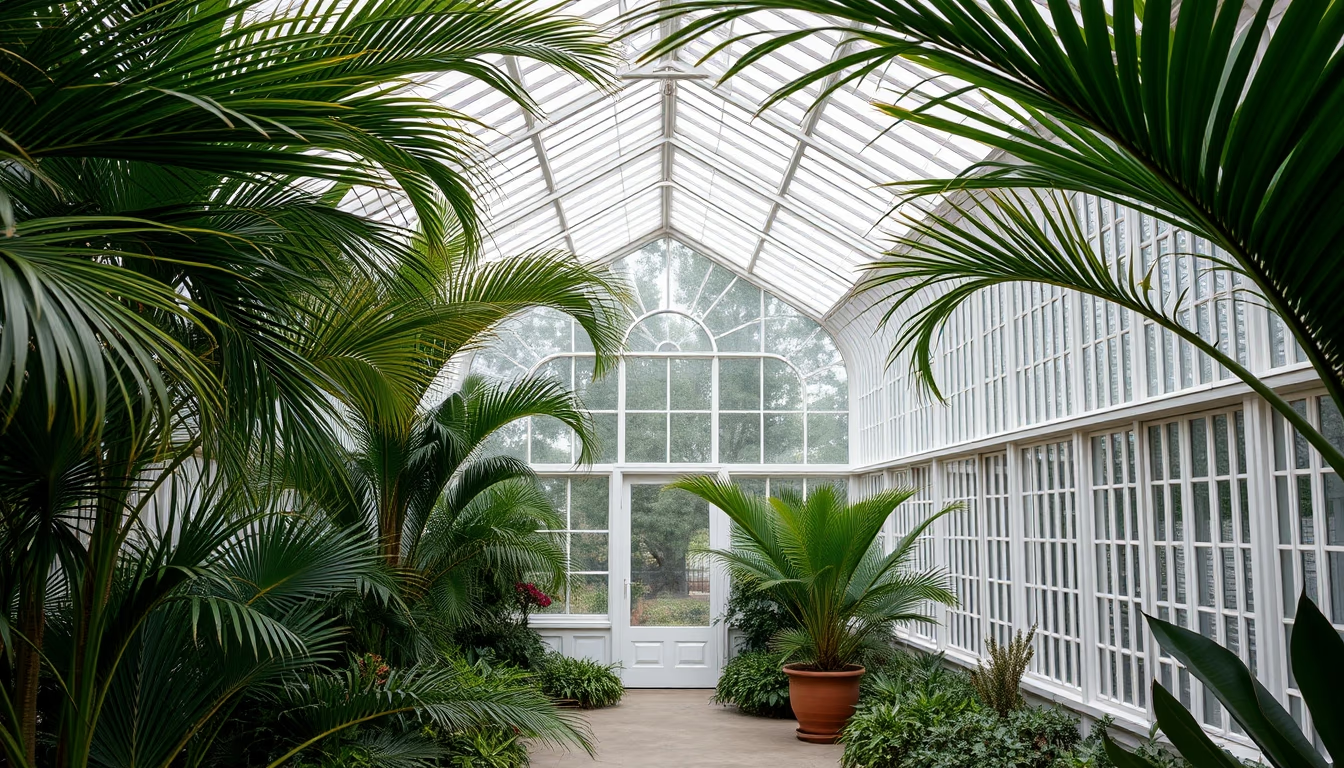
Tropical greenhouse misty
1344×768 · AVIF · CC BY 4.0
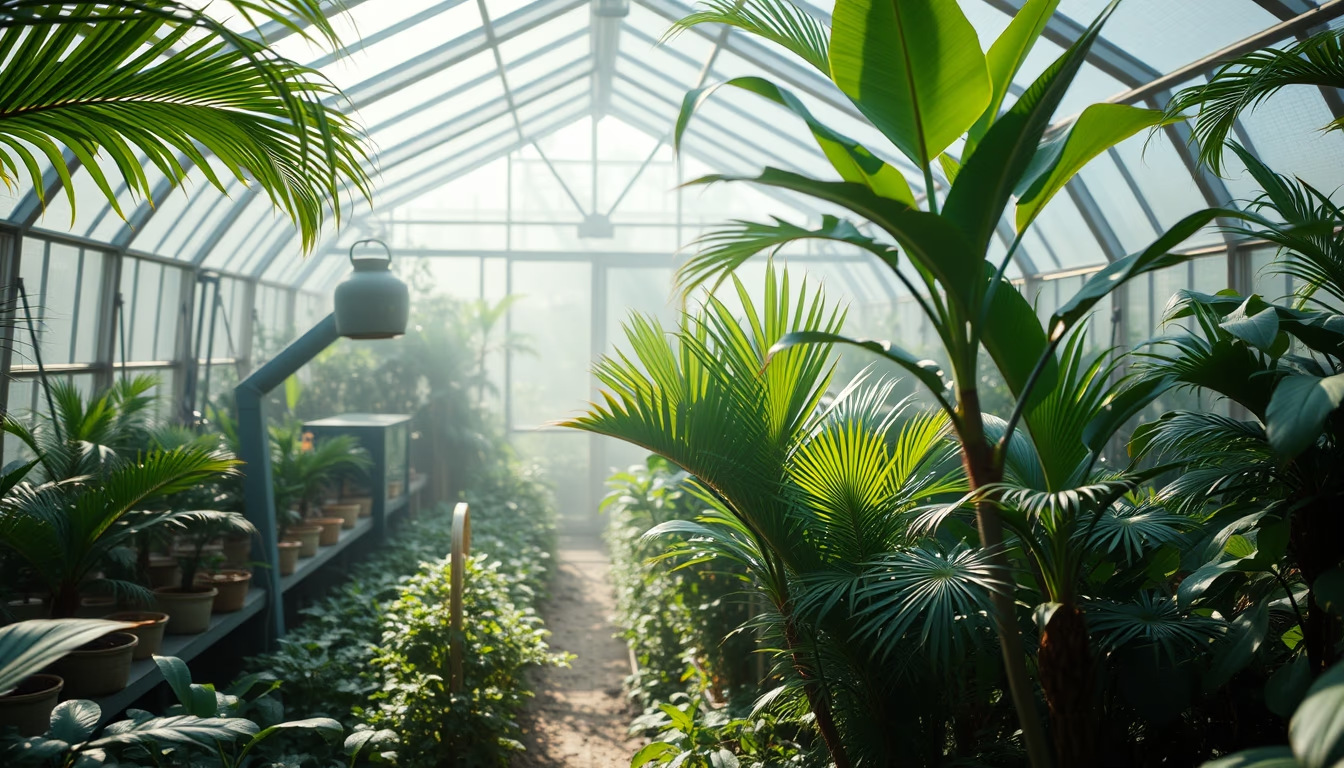
Tropical greenhouses with misting systems create ideal microclimates for growing exotic species, combining technology and botany.
About this subject
Tropical greenhouses are specialized structures that recreate the hot and humid conditions of equatorial regions. These controlled environments allow the cultivation of plants that would not survive in temperate climates, such as orchids, bromeliads, and tropical ferns. Misting is an essential component: it maintains high relative humidity, often above 80%, and cools the air through evaporation, preventing thermal stress in plants.
In Brazil, tropical greenhouses are common in botanical gardens and commercial nurseries. The São Paulo Botanical Garden, for instance, houses a historic greenhouse from the early 20th century that displays species from the Atlantic Forest and the Amazon. In arid regions like the Northeast, these structures enable the production of seedlings of tropical fruit trees, such as açaí and cupuaçu, adapting them to dry climates.
The technology behind tropical greenhouses has evolved significantly. Humidity and temperature sensors automate misting, which can be done by high-pressure nozzles or ultrasonic systems. The water used typically undergoes reverse osmosis to prevent clogging and mineral deposits on leaves. Modern greenhouses also integrate shading screens and natural ventilation to balance light and heat.
Beyond commercial use, tropical greenhouses play educational and conservation roles. Many Brazilian universities maintain living collections for research, such as the University of São Paulo, which studies the physiology of Amazonian plants under controlled conditions. Recreating microclimates also aids in preserving endangered species, like Brazilwood, whose greenhouse cultivation ensures healthy seedlings for reforestation.
Frequently Asked Questions
Why is misting important in tropical greenhouses?
Misting maintains high humidity, which is essential for tropical plants that need moist air to avoid dehydration. It also cools the environment through evaporation, preventing leaf burn from excessive heat.
What plants are most common in tropical greenhouses in Brazil?
Orchids, bromeliads, ferns, anthuriums, and heliconias are frequent species. Seedlings of fruit trees such as açaí, soursop, and cupuaçu are also grown for reforestation programs.
Do tropical greenhouses consume a lot of water and energy?
Modern systems use sensors to optimize water and energy use. High-pressure misting consumes little water, and evaporative cooling reduces the need for air conditioning. Solar panels can supplement electrical power.
Direct URL
https://pub-c7d6a6ea828543ac903a74a341ccb2e1.r2.dev/imagens/tropical-greenhouse-misty-magazine-editorial-fresh2.avifHow to credit
Include a visible link back to UtilizAí. Copy one of the snippets below:
<a href="https://xn--utiliza-eza.com/en/midia/imagens/tropical-greenhouse-misty-magazine-editorial-fresh2">Tropical greenhouse misty</a> by <a href="https://xn--utiliza-eza.com">UtilizAí</a>, licensed under <a href="https://creativecommons.org/licenses/by/4.0/">CC BY 4.0</a>.
[Tropical greenhouse misty](https://xn--utiliza-eza.com/en/midia/imagens/tropical-greenhouse-misty-magazine-editorial-fresh2) by [UtilizAí](https://xn--utiliza-eza.com), CC BY 4.0
License: CC-BY-4.0