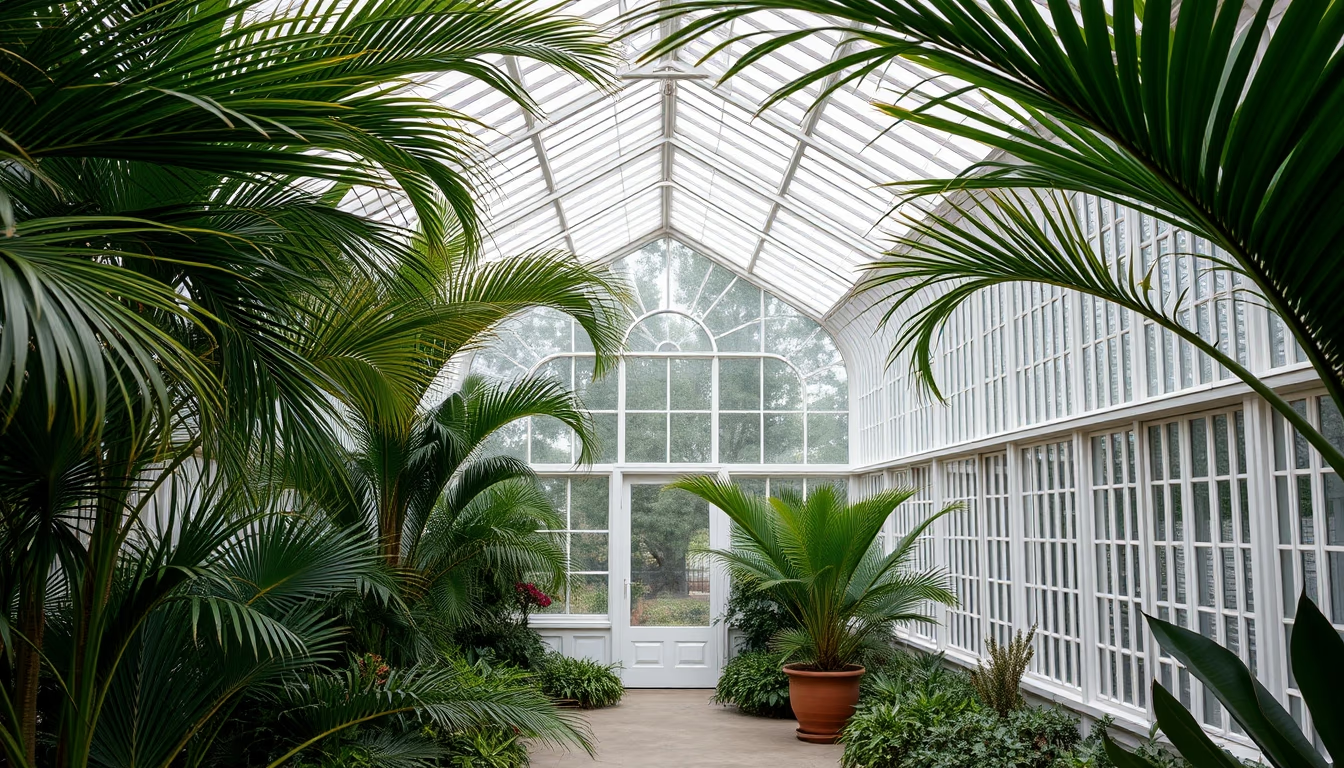
Tropical greenhouse misty
1344×768 · AVIF · CC BY 4.0
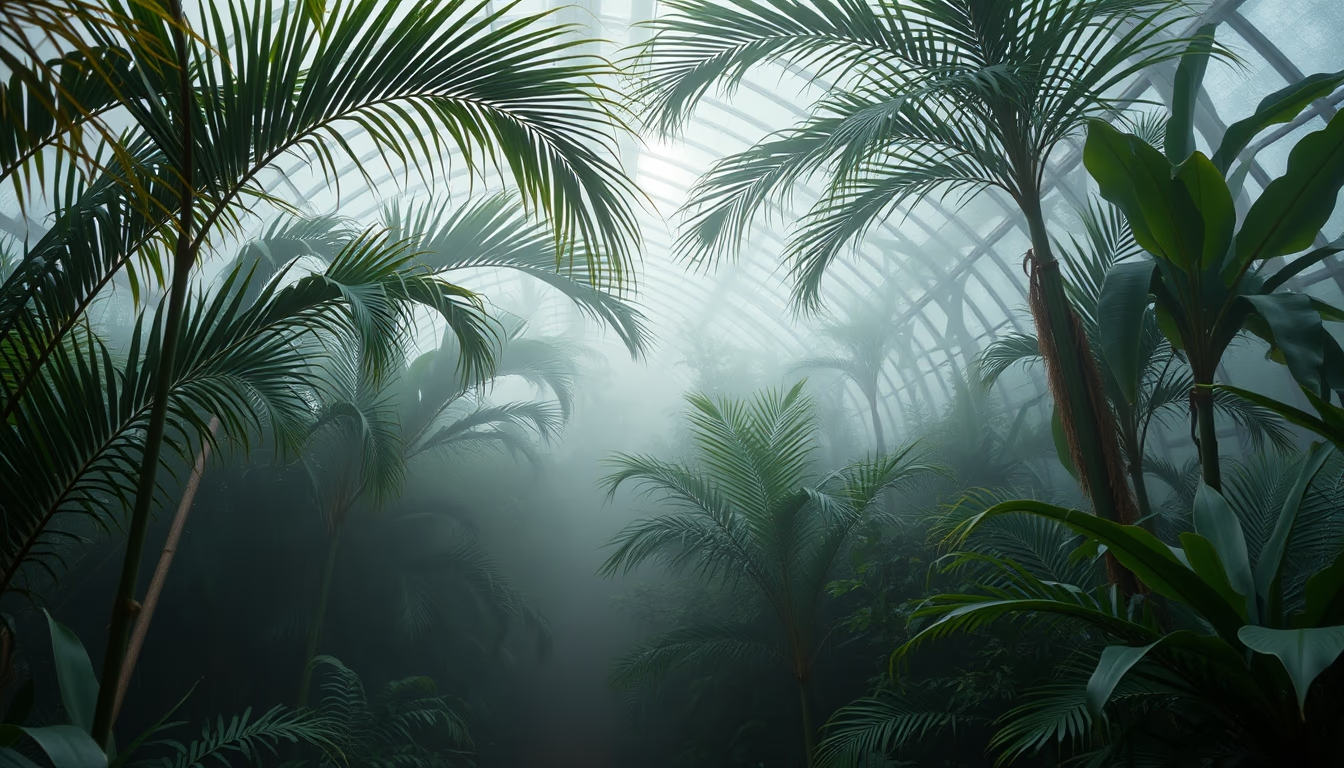
Tropical greenhouses with misting systems maintain ideal humidity for exotic plants, essential for modern horticulture.
About this subject
Tropical greenhouses are controlled environments designed to replicate the humid and warm climate of equatorial regions. The artificial mist, generated by high-pressure foggers, is crucial for maintaining relative humidity above 80%, an essential condition for orchids, ferns, and bromeliads. This system also reduces internal temperature by up to 5°C, preventing heat stress in plants.
The use of misting in greenhouses is not new: since the Victorian botanical gardens of the 19th century, vaporization techniques were employed to cultivate tropical species in Europe. Today, automated sensors control the frequency and duration of mist, saving water and energy. In Brazil, tropical greenhouses are common in research centers like the São Paulo Botanical Garden and in commercial nurseries in the southern region.
Beyond humidity, mist aids vegetative propagation: cuttings of woody plants root faster under intermittent misting. This technique, called "intermittent misting," reduces leaf transpiration while providing water. For the horticulturist, understanding mist dynamics is as important as substrate or fertilization. Poorly ventilated greenhouses can accumulate fungi, but with proper air circulation, the system is safe and efficient.
Frequently Asked Questions
What is the ideal humidity inside a tropical greenhouse?
The ideal relative humidity is between 80% and 95%, depending on the species. Orchids and ferns prefer higher levels, while tropical succulents tolerate around 70%.
How does a misting system work in greenhouses?
Water is pumped at high pressure (40-70 bar) through special nozzles, generating droplets of 5 to 50 micrometers. Humidity and temperature sensors automatically activate the system to maintain optimal conditions.
Which plants benefit most from misting?
Understory tropical plants like anthuriums, begonias, and mosses rely on mist to avoid dehydration. Rooting cuttings also have higher success rates under intermittent misting.
Direct URL
https://pub-c7d6a6ea828543ac903a74a341ccb2e1.r2.dev/imagens/tropical-greenhouse-misty-documentary-nature-style-fresh4.avifHow to credit
Include a visible link back to UtilizAí. Copy one of the snippets below:
<a href="https://xn--utiliza-eza.com/en/midia/imagens/tropical-greenhouse-misty-documentary-nature-style-fresh4">Tropical greenhouse misty</a> by <a href="https://xn--utiliza-eza.com">UtilizAí</a>, licensed under <a href="https://creativecommons.org/licenses/by/4.0/">CC BY 4.0</a>.
[Tropical greenhouse misty](https://xn--utiliza-eza.com/en/midia/imagens/tropical-greenhouse-misty-documentary-nature-style-fresh4) by [UtilizAí](https://xn--utiliza-eza.com), CC BY 4.0
License: CC-BY-4.0