Trombone slide closeup
1344×768 · AVIF · CC BY 4.0
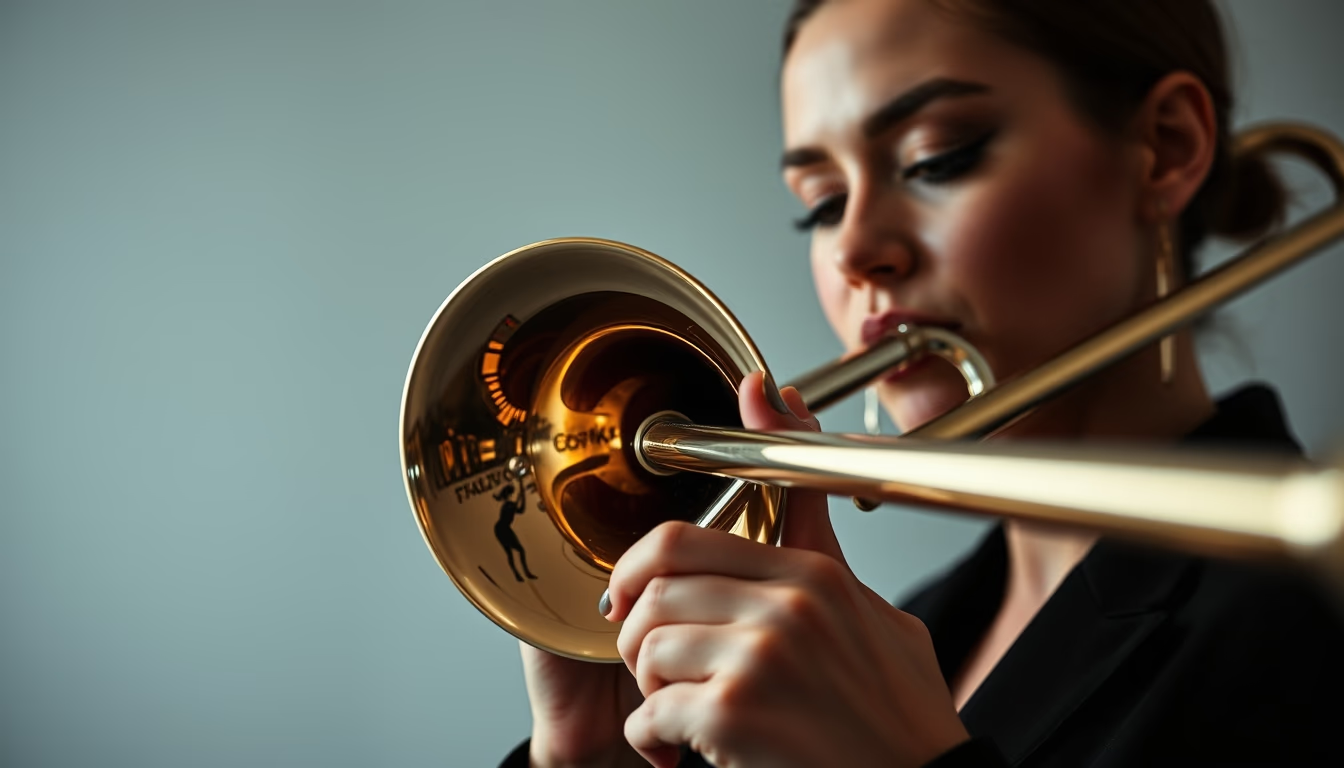
Technical detail of the trombone slide, the mechanism that allows pitch variation through precise movement of a sliding tube.
About this subject
The trombone slide is one of the most distinctive mechanisms among brass instruments. Unlike valves or keys, it consists of two parallel tube sections that move telescopically, altering the total tube length and thus the pitch. Each slide position corresponds to a specific harmonic series, allowing the musician to execute chromatic scales smoothly.
Slide construction demands millimetric precision. Inner and outer sleeves are manufactured with minimal clearance to ensure smooth motion without air leaks. Materials like nickel-plated brass or stainless steel are common, and regular lubrication is essential for performance. A slide lock prevents accidental movement when the instrument is not in use.
In orchestral and jazz contexts, the slide enables the glissando, a characteristic effect where the note slides continuously from one pitch to another. This is impossible on valved instruments and gives the trombone unique expressiveness. In big bands, the slide is used for fluid melodic lines or percussive effects like the "smear".
Slide maintenance is an art. Musicians regularly apply specific oils or greases and perform stretching exercises to prevent uneven wear. Over time, minor dents or misalignments can compromise the seal, requiring repair by specialized technicians. The tactile sensitivity of the slide is so important that many trombonists prefer handmade models.
Frequently Asked Questions
Why does the trombone use a slide instead of valves?
The slide allows continuous pitch variation, enabling glissandos and microtones impossible with valves. It also provides a purer timbre without the extra tubing bends that valve mechanisms introduce.
How is the trombone slide lubricated?
Typically with specialized slide oil or grease applied to the inner tubes. Excess should be removed to prevent dirt buildup. Lubrication should be done before each practice session.
What are the slide positions on a tenor trombone?
There are seven main positions, numbered from closest to the player (1st) to farthest (7th). Each corresponds to a harmonic series; for example, 1st position produces the fundamental and 2nd position lowers the pitch by a semitone.
Direct URL
https://pub-c7d6a6ea828543ac903a74a341ccb2e1.r2.dev/imagens/trombone-slide-closeup-high-fashion-editorial-p3.avifHow to credit
Include a visible link back to UtilizAí. Copy one of the snippets below:
<a href="https://xn--utiliza-eza.com/en/midia/imagens/trombone-slide-closeup-high-fashion-editorial-p3">Trombone slide closeup</a> by <a href="https://xn--utiliza-eza.com">UtilizAí</a>, licensed under <a href="https://creativecommons.org/licenses/by/4.0/">CC BY 4.0</a>.
[Trombone slide closeup](https://xn--utiliza-eza.com/en/midia/imagens/trombone-slide-closeup-high-fashion-editorial-p3) by [UtilizAí](https://xn--utiliza-eza.com), CC BY 4.0
License: CC-BY-4.0