Trombone slide closeup
1344×768 · AVIF · CC BY 4.0
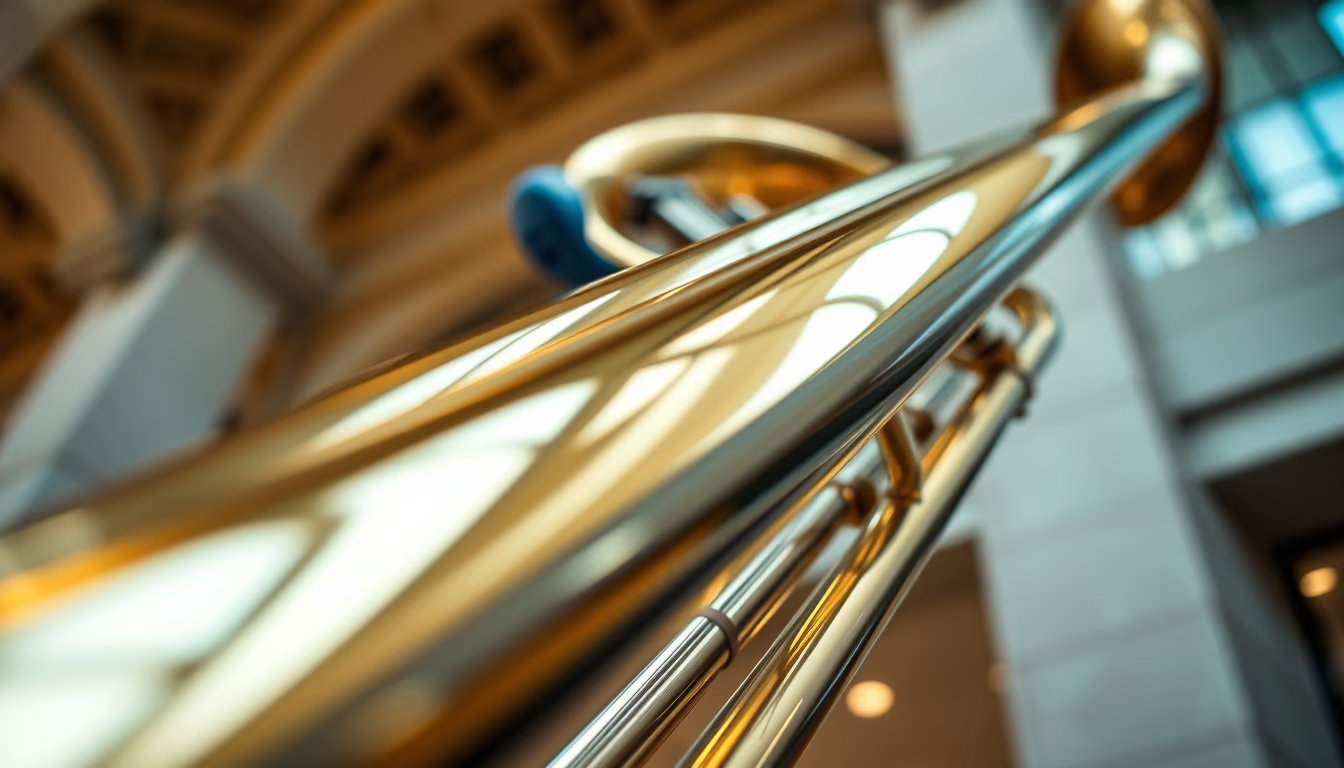
Close-up of the trombone slide, the mechanism that sets this brass instrument apart and enables precise pitch variations.
About this subject
The trombone is a brass instrument distinguished by its telescopic slide mechanism, which replaces valves or pistons to change pitch. The slide consists of two parallel tubes: the inner slide moves within the outer slide, altering the overall tube length and thereby the fundamental frequency. Seven positions are typically used, each corresponding to a harmonic series; players rely on muscle memory and ear training to hit precise spots without visual cues.
Historically, the slide evolved from the sackbut, a Renaissance instrument used in European court and church music from the 15th century. Baroque composers like Giovanni Gabrieli and Claudio Monteverdi wrote extensively for the sackbut. By the 19th century, the modern trombone standardized its slide with a tapered bore and precise tolerances, using brass alloys and nickel or lacquer finishes to reduce friction and corrosion. Innovations such as precision-ground slides and advanced lubricants have improved smooth action and airtight sealing.
Culturally, the trombone slide is iconic in jazz, where musicians like J.J. Johnson and Curtis Fuller exploited glissando and vibrato effects, as well as in classical orchestras and marching bands. Proper slide maintenance cleaning with a soft cloth, applying light oil, and periodic professional adjustment ensures quick response and accurate intonation. Interestingly, the bass trombone slide is longer and heavier, requiring more strength, while the rare soprano trombone has a short slide covering only one octave.
Frequently Asked Questions
How does the trombone slide work?
The slide consists of two concentric tubes. Extending the slide lengthens the tube, lowering pitch; retracting it shortens the tube, raising pitch. Each position corresponds to a specific harmonic series.
What materials are used in a trombone slide?
The tubes are typically brass (copper and zinc) with chrome or nickel plating to reduce friction. The crossbar may be metal or plastic, and the interior is lubricated with special slide oil.
How should I maintain the slide to prevent wear?
Wipe the slide with a soft cloth after each use. Apply trombone slide oil to the outer tubes. Avoid bending the tubes and have the instrument serviced periodically by a technician for alignment.
Direct URL
https://pub-c7d6a6ea828543ac903a74a341ccb2e1.r2.dev/imagens/trombone-slide-closeup-architectural-photography-p4.avifHow to credit
Include a visible link back to UtilizAí. Copy one of the snippets below:
<a href="https://xn--utiliza-eza.com/en/midia/imagens/trombone-slide-closeup-architectural-photography-p4">Trombone slide closeup</a> by <a href="https://xn--utiliza-eza.com">UtilizAí</a>, licensed under <a href="https://creativecommons.org/licenses/by/4.0/">CC BY 4.0</a>.
[Trombone slide closeup](https://xn--utiliza-eza.com/en/midia/imagens/trombone-slide-closeup-architectural-photography-p4) by [UtilizAí](https://xn--utiliza-eza.com), CC BY 4.0
License: CC-BY-4.0