Tower of pisa lean
1344×768 · AVIF · CC BY 4.0
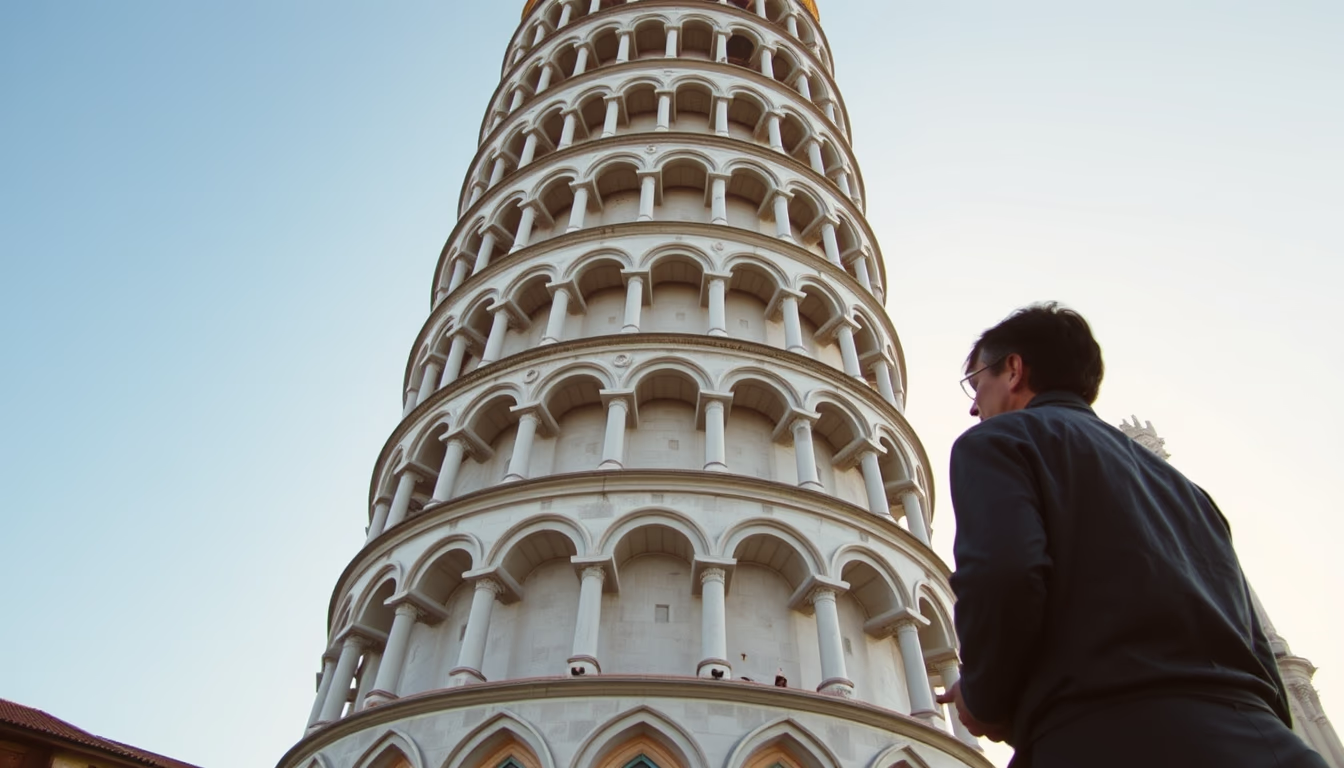
The lean of the Leaning Tower of Pisa, one of Italy's most iconic monuments, attracts millions of visitors annually.
About this subject
The Leaning Tower of Pisa, located in the Piazza dei Miracoli in Pisa, Italy, is world-famous for its unintended tilt. Construction began in 1173 and spanned about 200 years, interrupted by wars and structural issues. Already during the construction of the third floor in 1178, the unstable soil began to give way, causing the lean. The clayey and sandy soil of the region could not support the tower's weight, which today stands about 56 meters tall and weighs approximately 14,500 tons.
Current tilt is about 3.97 degrees from the vertical axis, after stabilization work between 1990 and 2001. Engineers removed soil from under the north foundation and installed lead counterweights, reducing the tilt by 45 centimeters. The tower has been declared stable for at least another 200 years. Originally designed to be 60 meters high, the structure was shortened by the lean, yet remains an example of how imperfections can become tourist attractions.
Culturally, the Leaning Tower of Pisa is a symbol of human resilience and ingenuity. Besides its lean, the tower houses seven bells, each corresponding to a musical note, which have never been rung together due to fear of vibrations. The monument is part of the Cathedral of Pisa and Baptistery complex, all built in white marble in Romanesque style. The tower was designated a UNESCO World Heritage Site in 1987, and its lean is one of the most studied phenomena in geotechnical engineering.
Interestingly, the tilt varies seasonally due to thermal expansion of the soil, changing a few millimeters over the year. The tower has also survived several earthquakes, thanks to its flexible foundation that absorbs vibrations. Visitors can climb the 294 steps to the top for a panoramic view of Pisa, but the experience is a test of balance as the tilt is perceptible during the ascent.
Frequently Asked Questions
Why is the Leaning Tower of Pisa leaning?
The lean occurred because the unstable clay and sand soil could not support the tower's weight during construction, starting as early as the third floor in 1178.
Could the Leaning Tower of Pisa fall?
After stabilization work in the 1990s and 2001, the tower has been declared stable for at least 200 years. Engineers reduced the tilt and reinforced the foundation.
How many steps are in the Leaning Tower of Pisa?
There are 294 steps to the top. The climb is challenging due to the tilt, causing a constant feeling of imbalance.
Direct URL
https://pub-c7d6a6ea828543ac903a74a341ccb2e1.r2.dev/imagens/tower-of-pisa-lean-film-grain-authentic-p4.avifHow to credit
Include a visible link back to UtilizAí. Copy one of the snippets below:
<a href="https://xn--utiliza-eza.com/en/midia/imagens/tower-of-pisa-lean-film-grain-authentic-p4">Tower of pisa lean</a> by <a href="https://xn--utiliza-eza.com">UtilizAí</a>, licensed under <a href="https://creativecommons.org/licenses/by/4.0/">CC BY 4.0</a>.
[Tower of pisa lean](https://xn--utiliza-eza.com/en/midia/imagens/tower-of-pisa-lean-film-grain-authentic-p4) by [UtilizAí](https://xn--utiliza-eza.com), CC BY 4.0
License: CC-BY-4.0