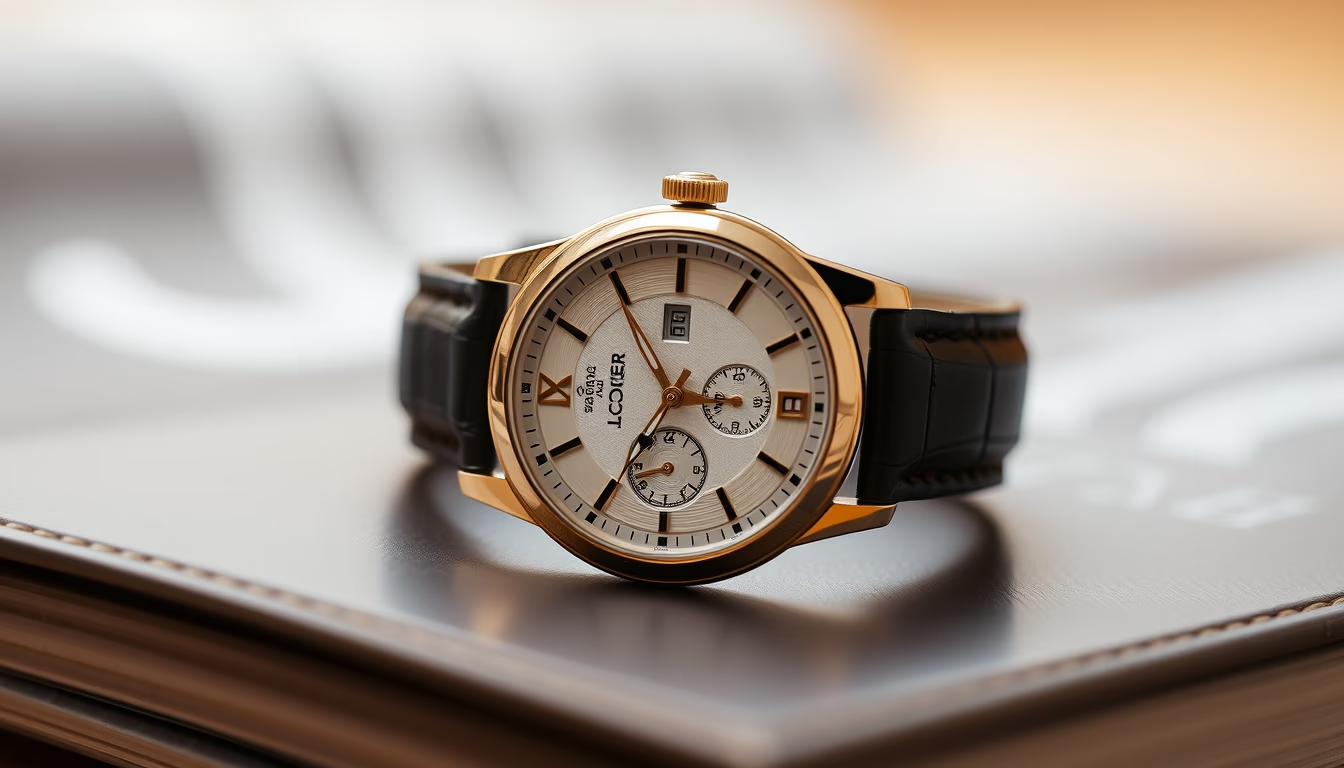
Tourbillon watch detail
1344×768 · AVIF · CC BY 4.0
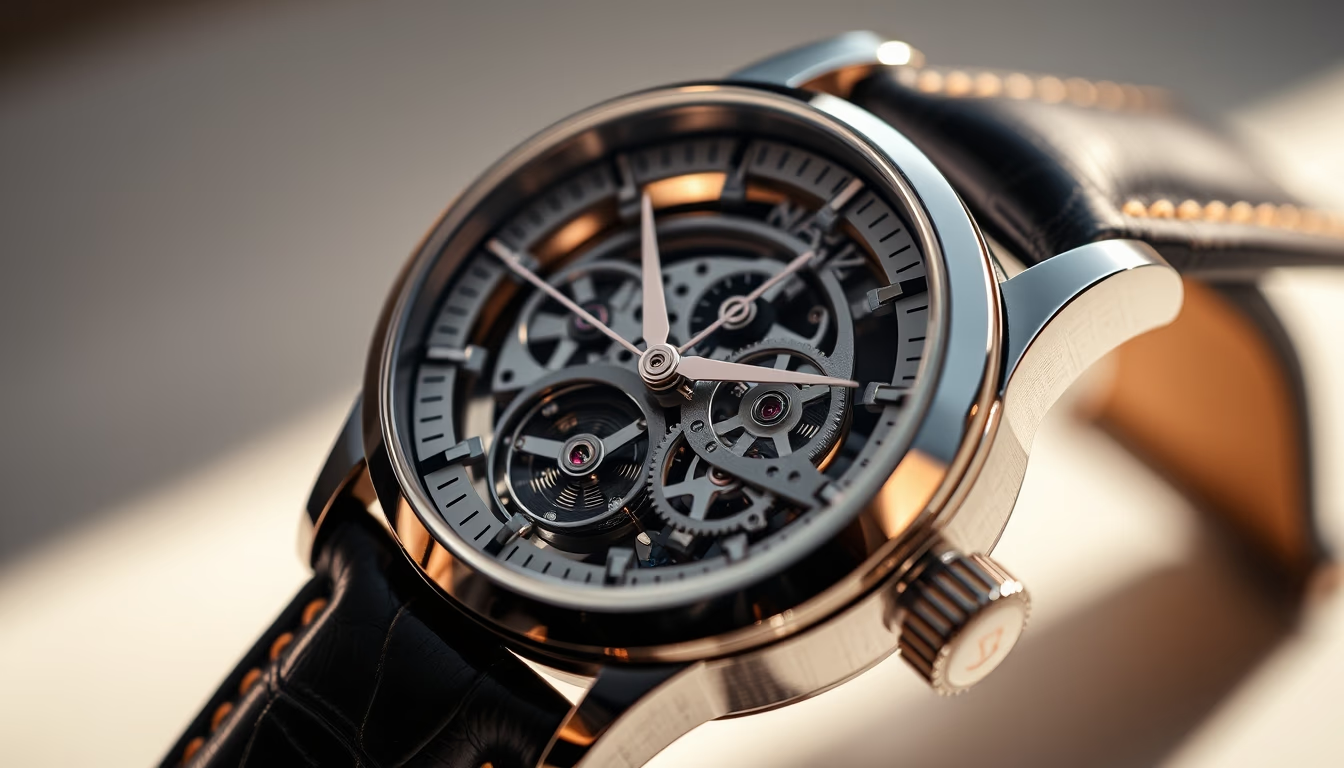
The tourbillon is a watchmaking mechanism that counteracts gravity effects on the balance, invented by Abraham-Louis Breguet in 1801.
About this subject
The tourbillon is one of the most fascinating complications in high-end watchmaking. It was patented by Swiss master watchmaker Abraham-Louis Breguet in 1801, aiming to improve the accuracy of pocket watches. At the time, watches were kept vertically in pockets, and gravity affected the oscillator, causing rate variations. The tourbillon consists of a rotating cage that contains the balance wheel, hairspring, and escapement, typically making one full rotation per minute. This continuous motion averages out positional errors, keeping the rate consistent.
Today, the tourbillon is no longer essential for precision, as modern wristwatches are more stable. However, it remains a symbol of technical mastery and craftsmanship. Many luxury brands like Patek Philippe, Audemars Piguet, and Jaeger-LeCoultre produce tourbillon watches, which require hundreds of hours of hand assembly. The complexity of the mechanism, with dozens of tiny parts, justifies the high prices, often exceeding fifty thousand dollars.
An interesting fact: there are variations such as the flying tourbillon, where the cage is supported only from one side, creating a floating illusion. Another is the multi-axis tourbillon, such as the double or gyro tourbillon, which rotates on multiple planes. Although its original purpose is now obsolete, the tourbillon remains a masterpiece of mechanical engineering, cherished by collectors and watch enthusiasts.
Frequently Asked Questions
Who invented the tourbillon?
The tourbillon was invented by Swiss watchmaker Abraham-Louis Breguet, who patented the mechanism in 1801.
What is the purpose of a tourbillon in modern watches?
Today, the tourbillon serves more as a demonstration of watchmaking skill and status than a functional necessity, as wristwatches are already accurate enough.
What is the difference between a regular tourbillon and a flying tourbillon?
In a regular tourbillon, the cage is supported by two pivots; in a flying tourbillon, it is fixed only from below, giving the illusion of floating.
Direct URL
https://pub-c7d6a6ea828543ac903a74a341ccb2e1.r2.dev/imagens/tourbillon-watch-detail-fine-art-photography-fresh12.avifHow to credit
Include a visible link back to UtilizAí. Copy one of the snippets below:
<a href="https://xn--utiliza-eza.com/en/midia/imagens/tourbillon-watch-detail-fine-art-photography-fresh12">Tourbillon watch detail</a> by <a href="https://xn--utiliza-eza.com">UtilizAí</a>, licensed under <a href="https://creativecommons.org/licenses/by/4.0/">CC BY 4.0</a>.
[Tourbillon watch detail](https://xn--utiliza-eza.com/en/midia/imagens/tourbillon-watch-detail-fine-art-photography-fresh12) by [UtilizAí](https://xn--utiliza-eza.com), CC BY 4.0
License: CC-BY-4.0