Tourbillon watch detail
1344×768 · AVIF · CC BY 4.0
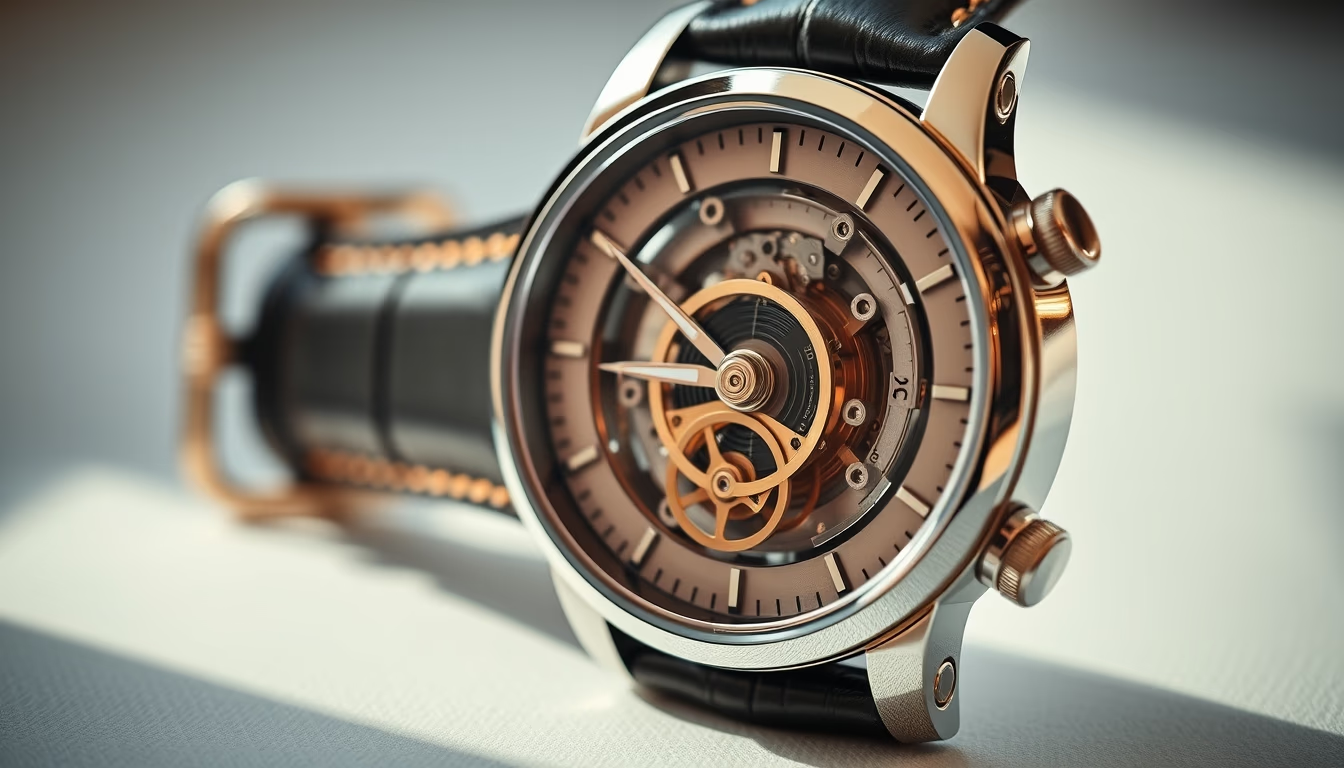
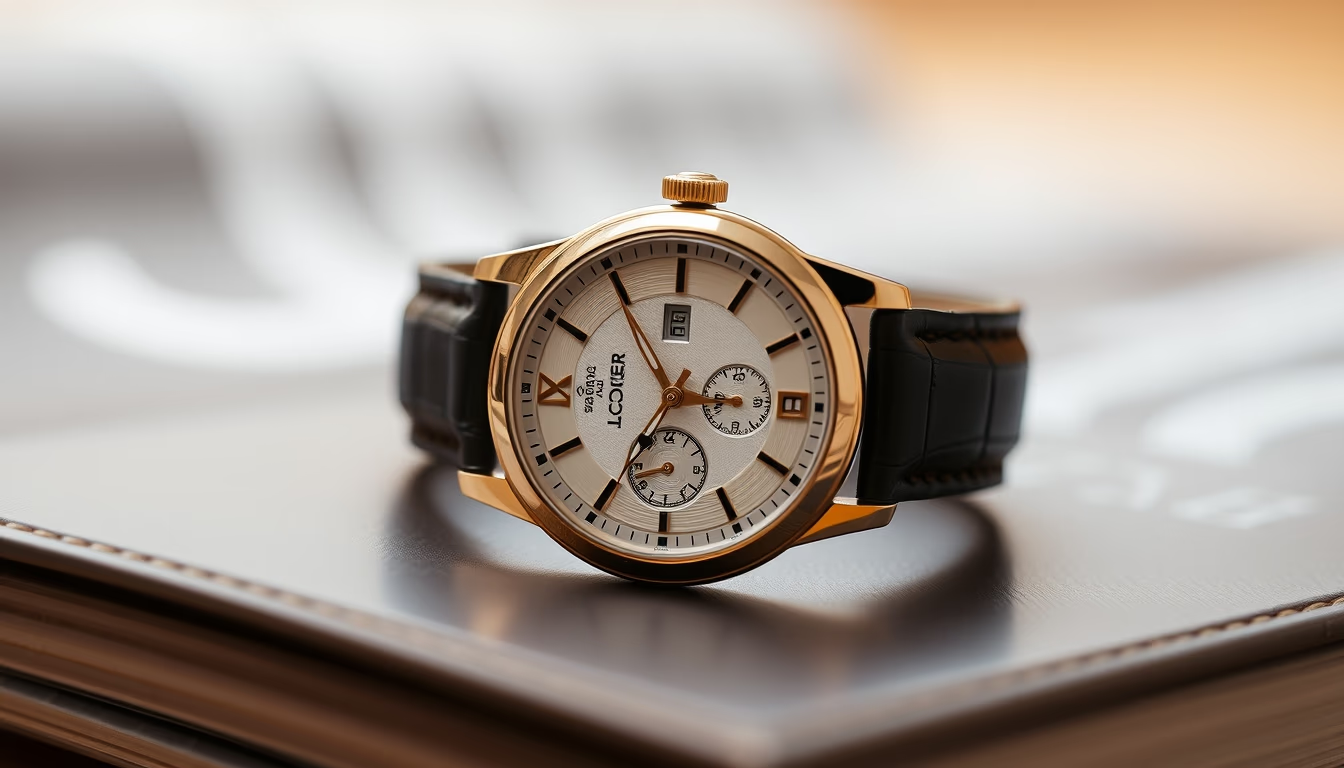
Detail of a tourbillon watch, a mechanism that compensates for the effects of gravity on the movement of mechanical wristwatches.
About this subject
The tourbillon is one of the most fascinating complications in high-end mechanical watchmaking. Invented in 1795 by Abraham-Louis Breguet and patented in 1801, it was originally designed for pocket watches, which were carried vertically in a waistcoat. The goal was to correct timing errors caused by gravity when the balance wheel and hairspring were in different positions. In a modern wristwatch, the tourbillon remains an engineering icon, though its practical utility is debated, as wrist movements already provide sufficient positional variation.
Constructing a tourbillon involves rotating the escapement and balance wheel inside a revolving cage, typically making one rotation per minute. This averaging of positions improves theoretical accuracy. Tourbillons are often displayed openly on the dial so the wearer can admire the motion. Watchmakers like Patek Philippe, Audemars Piguet, and Jaeger-LeCoultre produce variations, including flying tourbillons where the cage is supported only from below, creating a floating effect.
Producing a tourbillon requires extreme craftsmanship. Many parts are hand-made and individually adjusted. The cost and complexity make tourbillon watches luxury items, often priced over tens of thousands of dollars. Despite the availability of highly accurate quartz movements, the tourbillon remains a symbol of tradition and mechanical mastery, cherished by collectors and enthusiasts.
Interestingly, the word "tourbillon" means "whirlwind" in French, referencing the rotating motion of the cage. Although initially developed for pocket watches, the tourbillon has found its place in contemporary wristwatches, representing the pinnacle of horological art. Each minute, the cage completes a full turn, a spectacle blending science and aesthetics.
Frequently Asked Questions
What is a tourbillon in a watch?
It is a mechanism that rotates the escapement and balance wheel inside a revolving cage to counteract the effects of gravity on the movement's accuracy, mainly in mechanical watches.
Does a tourbillon actually improve accuracy in wristwatches?
In modern wristwatches, the improvement is marginal because natural arm movements already vary position. Its value is more historical and aesthetic than practical.
What is the difference between a regular and a flying tourbillon?
A flying tourbillon lacks a visible upper bridge; the cage is supported only from below, creating a floating appearance on the dial.
Direct URL
https://pub-c7d6a6ea828543ac903a74a341ccb2e1.r2.dev/imagens/tourbillon-watch-detail-documentary-photography-fresh6.avifHow to credit
Include a visible link back to UtilizAí. Copy one of the snippets below:
<a href="https://xn--utiliza-eza.com/en/midia/imagens/tourbillon-watch-detail-documentary-photography-fresh6">Tourbillon watch detail</a> by <a href="https://xn--utiliza-eza.com">UtilizAí</a>, licensed under <a href="https://creativecommons.org/licenses/by/4.0/">CC BY 4.0</a>.
[Tourbillon watch detail](https://xn--utiliza-eza.com/en/midia/imagens/tourbillon-watch-detail-documentary-photography-fresh6) by [UtilizAí](https://xn--utiliza-eza.com), CC BY 4.0
License: CC-BY-4.0