Tissue culture biology lab
1344×768 · AVIF · CC BY 4.0
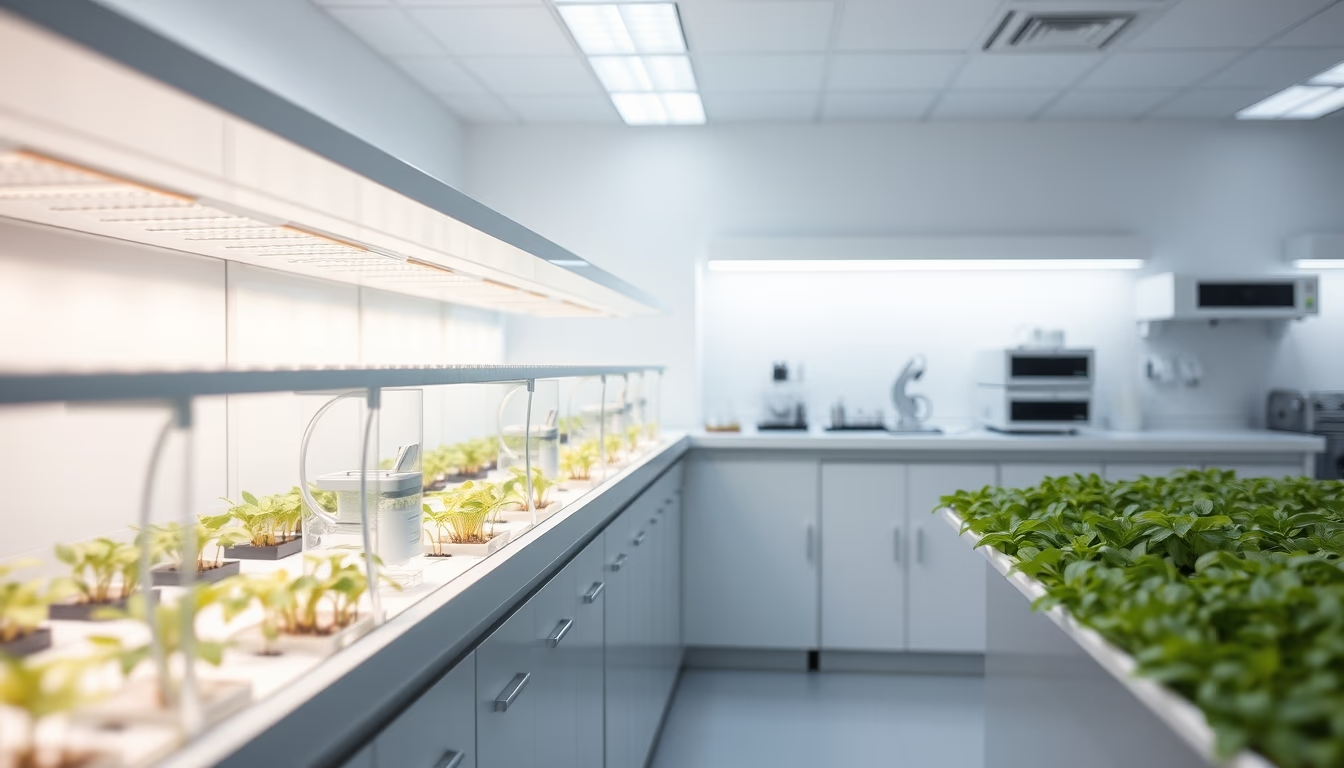
Tissue culture is a fundamental technique in biology that allows the growth of cells, tissues or organs under controlled conditions, with wide applications in research and medicine.
About this subject
Tissue culture, also known as in vitro cell culture, is an essential method for studying biological processes in a controlled environment. It involves maintaining living cells in artificial nutrient media under sterile, controlled conditions of temperature, pH, and humidity. This technique allows scientists to observe cellular behavior outside the organism, which is crucial for advances in biotechnology, pharmacology, and regenerative medicine.
The development of tissue culture dates back to the early 20th century, with pioneering work by Ross Harrison, who cultivated frog nerve cells in 1907, and Alexis Carrel, who improved sterilization and maintenance techniques. Since then, the method has evolved significantly, incorporating specific culture media, growth factors, and CO2 environments. In botany, plant tissue culture revolutionized plant propagation, enabling large-scale cloning and virus-free plant production.
Today, tissue culture is indispensable for producing vaccines, monoclonal antibodies, and cell therapies. A notable example is the use of HeLa cells, the first immortal human cell line, widely used in cancer and COVID-19 research. The technique is also applied in tissue engineering, such as growing artificial skin for burn victims, and in assisted reproduction through embryo manipulation. Key challenges include preventing microbial contamination, requiring specialized equipment, and accurately replicating the natural cellular microenvironment.
Frequently Asked Questions
What is tissue culture?
It is a set of techniques that allows the growth of cells, tissues, or organs in a controlled artificial environment, outside the source organism, maintaining sterile and appropriate nutritional conditions.
What are the main applications of tissue culture?
Applications include basic research in cell biology, production of vaccines and drugs, plant cloning, tissue engineering (such as artificial skin), and cell therapies, including stem cell treatments.
What are the challenges of tissue culture?
The main challenges are microbial contamination, the need for specialized equipment (such as laminar flow hoods and incubators), and the difficulty of accurately replicating the natural cellular environment, which can alter cell behavior.
Direct URL
https://pub-c7d6a6ea828543ac903a74a341ccb2e1.r2.dev/imagens/tissue-culture-biology-lab-minimalist-composition-p12.avifHow to credit
Include a visible link back to UtilizAí. Copy one of the snippets below:
<a href="https://xn--utiliza-eza.com/en/midia/imagens/tissue-culture-biology-lab-minimalist-composition-p12">Tissue culture biology lab</a> by <a href="https://xn--utiliza-eza.com">UtilizAí</a>, licensed under <a href="https://creativecommons.org/licenses/by/4.0/">CC BY 4.0</a>.
[Tissue culture biology lab](https://xn--utiliza-eza.com/en/midia/imagens/tissue-culture-biology-lab-minimalist-composition-p12) by [UtilizAí](https://xn--utiliza-eza.com), CC BY 4.0
License: CC-BY-4.0