Tissue culture biology lab
1344×768 · AVIF · CC BY 4.0
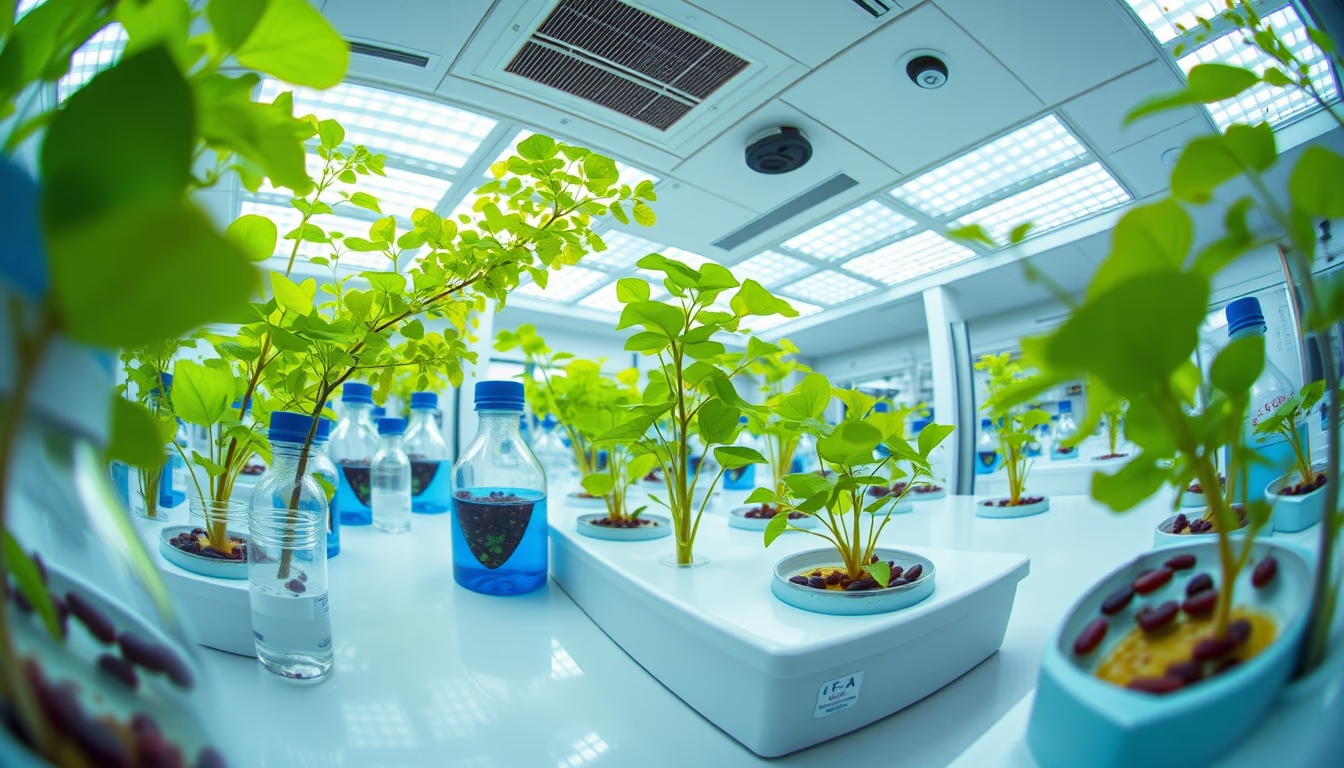
Tissue culture lab: a controlled environment for growing plant and animal cells, essential in biotechnology and medical research.
About this subject
Tissue culture is a biotechnological technique that allows the growth of cells, tissues, or organs under aseptic and controlled conditions. Used since the early 20th century, the technique has revolutionized fields such as agriculture, regenerative medicine, and pharmacology. In specialized labs like the one depicted, samples are maintained in culture media rich in nutrients, hormones, and vitamins, inside incubators with controlled temperature and humidity.
In the plant context, tissue culture is widely employed for micropropagation of endangered species, production of virus-free plants, and generation of commercially valuable secondary metabolites. For instance, rare orchids and high-value fruit trees are mass-propagated from small tissue fragments, such as meristems. In animal research, the technique is crucial for toxicology studies, vaccine development, and cell therapies, including stem cell production for transplants.
The laboratory environment demands strict sterilization protocols to prevent contamination. Essential equipment includes laminar flow hoods, autoclaves, and inverted microscopes. The fish-eye image emphasizes the spacious layout, with countertops, equipment, and culture containers organized to maximize workflow efficiency. Cool lighting and modular design are typical of such environments.
Interesting facts: the first successful plant tissue culture was performed by Gottlieb Haberlandt in 1902, although sustained growth was only achieved decades later. Today, tissue culture is a standard tool in laboratories worldwide, with applications ranging from species conservation to the production of genetically modified foods. Brazil has reference centers in this area, such as Embrapa and research institutes linked to universities.
Frequently Asked Questions
What are the main applications of tissue culture?
Tissue culture is used for plant micropropagation, metabolite production, conservation of endangered species, toxicology studies, vaccine development, and cell therapies, such as stem cells.
Why is sterilization so important in this type of lab?
Contamination by microorganisms can ruin cultures by competing for nutrients or producing toxins. Therefore, all materials and the environment undergo rigorous sterilization.
What is the difference between plant and animal tissue culture?
Plant tissue culture typically uses explants and media with hormones like auxins and cytokinins. Animal culture requires more complex media, often with fetal bovine serum, and specific conditions such as CO2 and body temperature.
Direct URL
https://pub-c7d6a6ea828543ac903a74a341ccb2e1.r2.dev/imagens/tissue-culture-biology-lab-fish-eye-wide-angle-p5.avifHow to credit
Include a visible link back to UtilizAí. Copy one of the snippets below:
<a href="https://xn--utiliza-eza.com/en/midia/imagens/tissue-culture-biology-lab-fish-eye-wide-angle-p5">Tissue culture biology lab</a> by <a href="https://xn--utiliza-eza.com">UtilizAí</a>, licensed under <a href="https://creativecommons.org/licenses/by/4.0/">CC BY 4.0</a>.
[Tissue culture biology lab](https://xn--utiliza-eza.com/en/midia/imagens/tissue-culture-biology-lab-fish-eye-wide-angle-p5) by [UtilizAí](https://xn--utiliza-eza.com), CC BY 4.0
License: CC-BY-4.0