Tissue culture biology lab
1344×768 · AVIF · CC BY 4.0
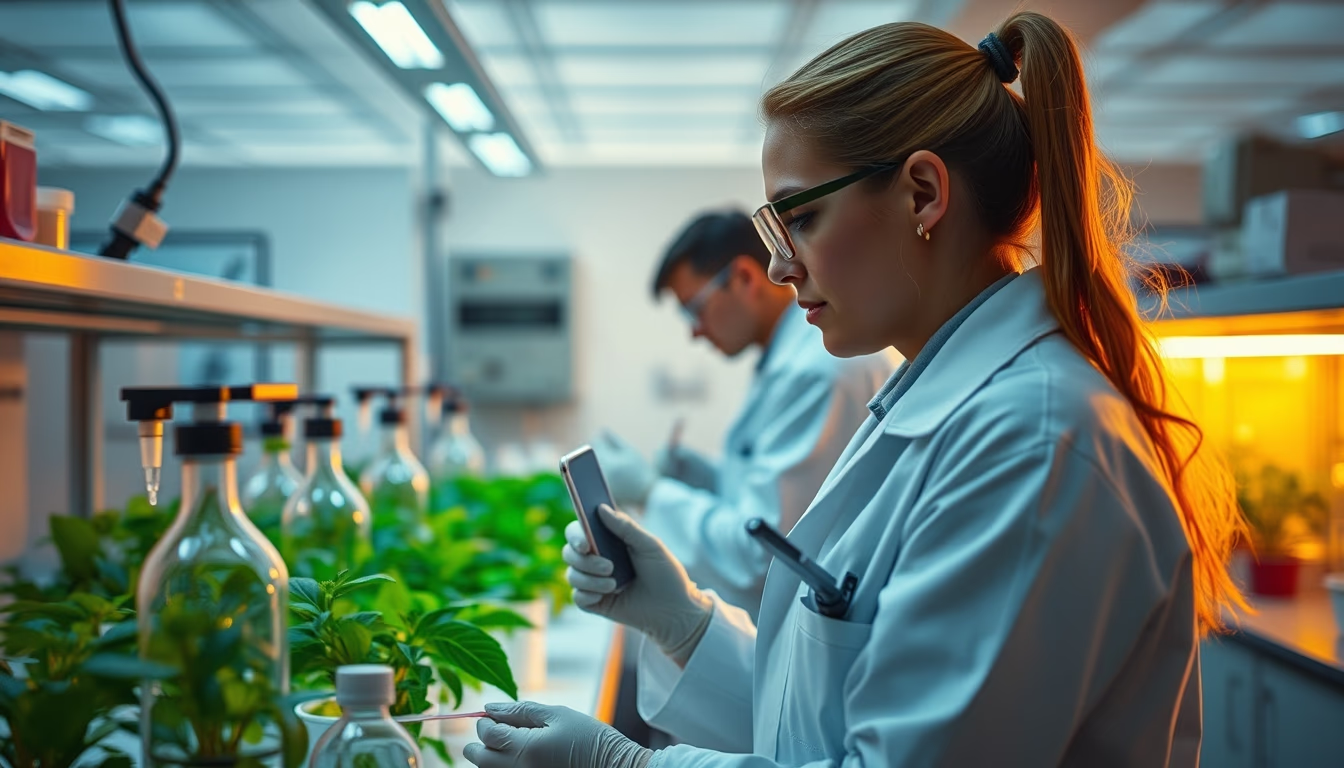
Tissue culture biology lab: biotechnology applied to controlled cultivation of plant and animal cells and tissues.
About this subject
Tissue culture is a fundamental technique in modern biotechnology, allowing the growth of cells, tissues, or organs under aseptic and controlled conditions. In a typical lab, you find equipment such as laminar flow hoods, CO2 incubators, autoclaves for sterilization, and inverted microscopes for cell observation. The process requires nutrient-rich culture media, plant hormones or growth factors, and strict microbiological control to prevent contamination.
Originally developed by Gottlieb Haberlandt in the early 20th century, the technique was refined for clonal propagation of plants, production of secondary metabolites, and germplasm conservation. In medicine, human cell culture is essential for cancer research, vaccine development (e.g., polio vaccine), and drug testing. Tissue culture also enables tissue engineering, aiming to create artificial organs.
In Brazil, tissue culture is used in agriculture to propagate species like orchids, bananas, and eucalyptus, ensuring virus-free plants with high genetic uniformity. Research labs study cell differentiation to recombinant protein production. Maintaining cell lines requires regular subculturing and constant monitoring of viability and purity.
Sterility is the biggest challenge: any microorganism can ruin months of work. Thus, professionals use gloves, gowns, and masks, and all materials are autoclaved or filtered. Tissue culture represents the intersection of biology, chemistry, and engineering, driving advances in agriculture, pharmacology, and regenerative medicine.
Frequently Asked Questions
What is tissue culture?
It is a technique to grow cells, tissues, or organs in a laboratory under sterile and controlled conditions, outside the original organism.
What are the main applications of tissue culture?
In agriculture, for plant cloning and virus-free seedlings. In medicine, for disease research, vaccine production, and cell therapy development.
What precautions are needed in a tissue culture lab?
Maintain strict sterility using laminar flow hoods, autoclaves, gloves, and masks. Constantly monitor incubator temperature, pH, and humidity.
Direct URL
https://pub-c7d6a6ea828543ac903a74a341ccb2e1.r2.dev/imagens/tissue-culture-biology-lab-cinematic-wide-shot-p8.avifHow to credit
Include a visible link back to UtilizAí. Copy one of the snippets below:
<a href="https://xn--utiliza-eza.com/en/midia/imagens/tissue-culture-biology-lab-cinematic-wide-shot-p8">Tissue culture biology lab</a> by <a href="https://xn--utiliza-eza.com">UtilizAí</a>, licensed under <a href="https://creativecommons.org/licenses/by/4.0/">CC BY 4.0</a>.
[Tissue culture biology lab](https://xn--utiliza-eza.com/en/midia/imagens/tissue-culture-biology-lab-cinematic-wide-shot-p8) by [UtilizAí](https://xn--utiliza-eza.com), CC BY 4.0
License: CC-BY-4.0