Tissue culture biology lab
1344×768 · AVIF · CC BY 4.0
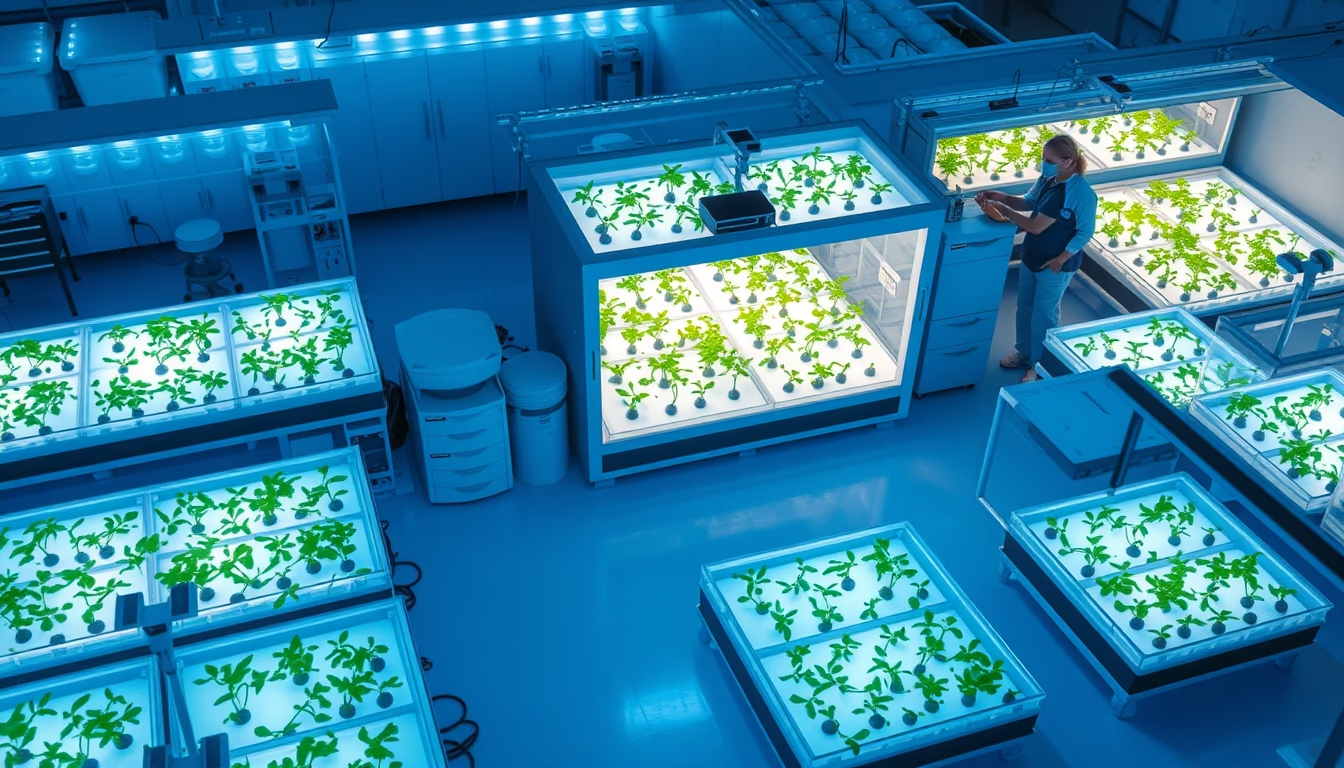
Tissue culture lab: biotechnology technique for in vitro cultivation of plant cells, tissues or organs for clonal propagation and conservation.
About this subject
Tissue culture is a biotechnological technique that enables the controlled growth of plant cells, tissues or organs in sterile nutrient medium under aseptic conditions. The field was pioneered by Gottlieb Haberlandt in 1902, who envisioned the potential of in vitro plant cell culture. Since then, the technique has evolved into commercial and research applications, such as micropropagation of virus-free plants, secondary metabolite production, and conservation of endangered species.
In a typical tissue culture lab, the environment is meticulously controlled to prevent microbial contamination. Explants are surface-sterilized and placed in containers with culture medium containing nutrients, vitamins, sugars, and growth regulators like auxins and cytokinins. The medium composition is adjusted per species and objective, whether to induce callus, shoots, or roots.
The importance of tissue culture is evident in global agriculture, particularly in the rapid multiplication of elite genotypes, pathogen elimination through meristem culture, and germplasm storage in in vitro banks. It is essential for plant genetic engineering and has revolutionized forestry and horticulture.
Interestingly, tissue culture also contributes to medicine: mammalian cell cultures are used to produce vaccines, such as the polio vaccine. For conservation, labs worldwide maintain collections of rare species like the Brazilian rosewood and the Jussara palm, ensuring their survival amid environmental threats.
Frequently Asked Questions
What is tissue culture?
It is a biotechnological technique that cultivates plant cells, tissues or organs in a sterile, controlled environment using artificial nutrient medium for growth, development or multiplication.
What are the main applications of tissue culture?
They include micropropagation of plants, virus elimination via meristem culture, secondary metabolite production, conservation of endangered species, and plant genetic engineering.
Why is sterility crucial in tissue culture labs?
To prevent contamination by fungi, bacteria or viruses that compete with plant tissue for nutrients and can damage or kill cultures, compromising results.
Direct URL
https://pub-c7d6a6ea828543ac903a74a341ccb2e1.r2.dev/imagens/tissue-culture-biology-lab-aerial-drone-shot-p10.avifHow to credit
Include a visible link back to UtilizAí. Copy one of the snippets below:
<a href="https://xn--utiliza-eza.com/en/midia/imagens/tissue-culture-biology-lab-aerial-drone-shot-p10">Tissue culture biology lab</a> by <a href="https://xn--utiliza-eza.com">UtilizAí</a>, licensed under <a href="https://creativecommons.org/licenses/by/4.0/">CC BY 4.0</a>.
[Tissue culture biology lab](https://xn--utiliza-eza.com/en/midia/imagens/tissue-culture-biology-lab-aerial-drone-shot-p10) by [UtilizAí](https://xn--utiliza-eza.com), CC BY 4.0
License: CC-BY-4.0