Tibetan monastery prayer flags
1344×768 · AVIF · CC BY 4.0
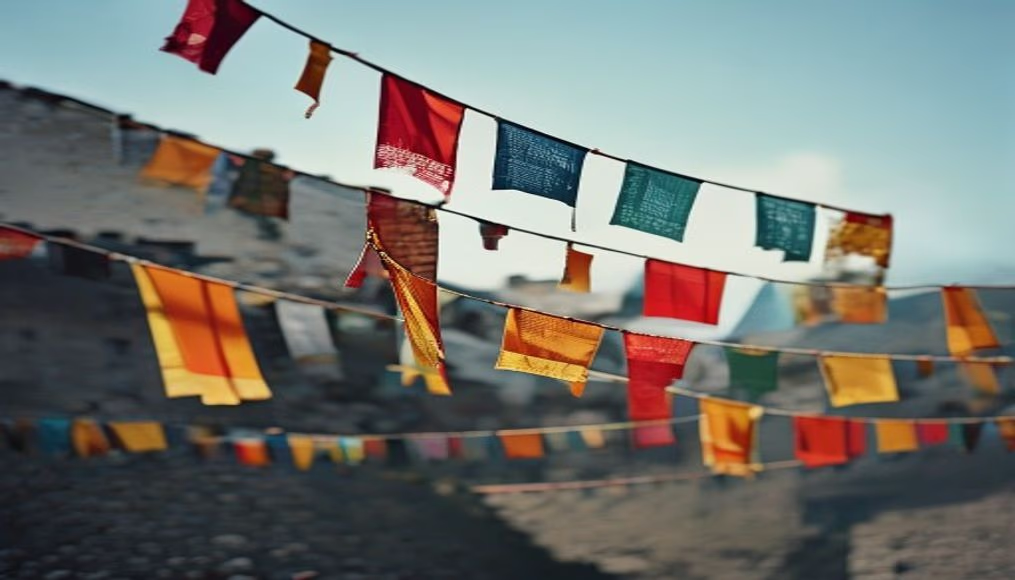
Tibetan prayer flags, known as Lungta or Dar Cho, are sacred symbols carrying mantras and prayers to the Himalayan winds.
About this subject
Tibetan prayer flags, known as Lungta (wind horse) or Dar Cho, are colorful rectangular cloth pieces sewn onto cords or raised on poles. Traditionally placed at high points such as mountain passes, monastery rooftops, and summits, the wind is believed to carry the blessings and prayers inscribed on them. The five colors represent the elements: blue (sky/space), white (air/clouds), red (fire), green (water), and yellow (earth). The order of colors is always fixed from left to right.
The mantras printed on the flags are usually in Sanskrit or Tibetan, with Om Mani Padme Hum being the most common. It is believed that each time the wind flaps the flags, the prayer is sent to the heavens, benefiting all sentient beings. This practice is deeply rooted in Tibetan Buddhism and the Bön religion, the pre-Buddhist tradition of Tibet. The flags are renewed annually during Losar (Tibetan New Year) and other auspicious occasions.
Unlike what many think, prayer flags are not magical talismans for good luck but reminders of spiritual practice and compassion. They symbolize the impermanence of life, as they wear out with time and weather. New flags bring new symbols, while old ones are burned in special ceremonies to avoid being trampled. These flags are also common in regions of Nepal, Bhutan, and northern India, such as Sikkim and Ladakh, where Tibetan culture is preserved.
Frequently Asked Questions
What do the colors of Tibetan prayer flags mean?
Each color represents an element: blue for sky or space, white for air or clouds, red for fire, green for water, and yellow for earth. The order is fixed and follows the rainbow sequence.
What is the most common mantra on prayer flags?
The most common mantra is Om Mani Padme Hum, associated with the bodhisattva of compassion, Chenrezig. It is written in Sanskrit or Tibetan and is believed to invoke blessings and protection.
Do prayer flags need to be replaced?
Yes, they are renewed annually, especially during Losar (Tibetan New Year). Old flags are burned in a ceremonial way to prevent them from being trampled, as they are considered sacred.
Direct URL
https://pub-c7d6a6ea828543ac903a74a341ccb2e1.r2.dev/imagens/tibetan-monastery-prayer-flags-film-grain-authentic-p1.avifHow to credit
Include a visible link back to UtilizAí. Copy one of the snippets below:
<a href="https://xn--utiliza-eza.com/en/midia/imagens/tibetan-monastery-prayer-flags-film-grain-authentic-p1">Tibetan monastery prayer flags</a> by <a href="https://xn--utiliza-eza.com">UtilizAí</a>, licensed under <a href="https://creativecommons.org/licenses/by/4.0/">CC BY 4.0</a>.
[Tibetan monastery prayer flags](https://xn--utiliza-eza.com/en/midia/imagens/tibetan-monastery-prayer-flags-film-grain-authentic-p1) by [UtilizAí](https://xn--utiliza-eza.com), CC BY 4.0
License: CC-BY-4.0