Tibetan monastery prayer flags
1344×768 · AVIF · CC BY 4.0
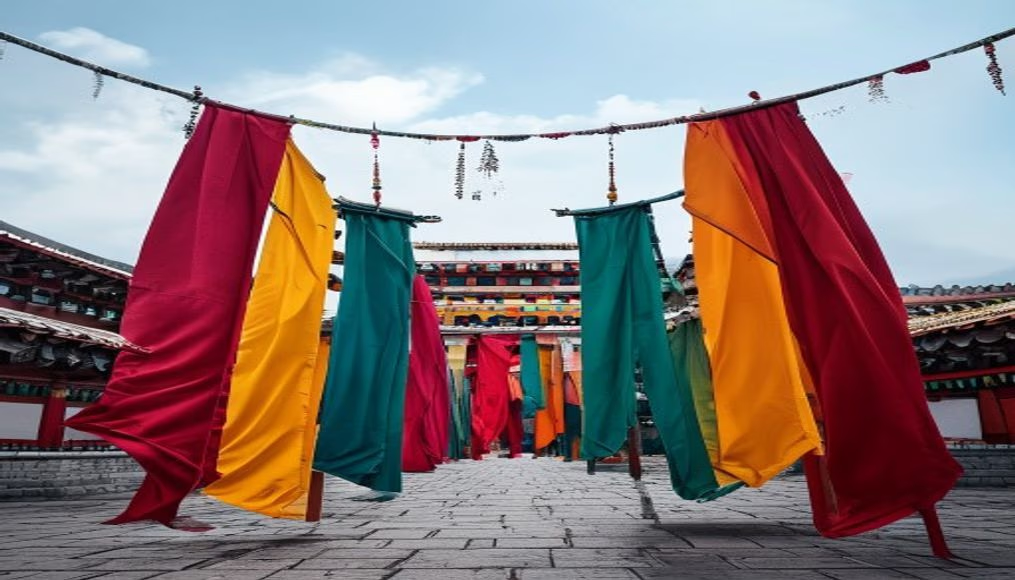
Tibetan prayer flags on a monastery rooftop, symbols of compassion and wisdom that flutter in the wind to spread blessings across the world.
About this subject
Tibetan prayer flags, known as Lungta or Dar Cho, are rectangular colored cloths hung in sacred places such as monasteries, mountain passes, and temples. Composed of five specific colors (blue, white, red, green, and yellow), each represents a natural element: sky, air, fire, water, and earth, respectively. These colors follow a fixed order from left to right and carry printed mantras and auspicious symbols. The wind, as it moves the flags, is considered a vehicle that activates the prayers and spreads them across the region, promoting peace, prosperity, and harmony. The tradition dates back to ancient Bon and was later incorporated into Tibetan Buddhism, especially from the 7th century onward with the introduction of Buddhism to Tibet. Contrary to popular belief, prayer flags are not offerings to gods but are used to purify the environment and cultivate a positive mind. Tibetan monasteries, whether on the Tibetan Plateau or in exile communities in India and Nepal, often display these flags on their structures, creating a striking visual contrast with the white and red architecture of the buildings. The practice of hanging them in high places symbolizes the connection between heaven and earth and the belief that blessings reach all sentient beings. Interestingly, flags must be renewed annually during the Tibetan New Year (Losar) to reactivate their spiritual power, and they should never be placed on the ground or discarded disrespectfully.
Frequently Asked Questions
What do the colors of Tibetan prayer flags represent?
Each color represents a natural element: blue (sky), white (air), red (fire), green (water), and yellow (earth). The fixed order symbolizes elemental balance.
Why are prayer flags hung at monasteries?
They are placed in high locations so the wind activates the mantras and spreads blessings. At monasteries, they also decorate and purify the space, promoting spiritual harmony.
Can prayer flags be reused or disposed of?
Traditionally, they are renewed annually during Losar (Tibetan New Year). Old flags should be burned or placed in clean locations, never in the trash, out of respect for their sacred meaning.
Direct URL
https://pub-c7d6a6ea828543ac903a74a341ccb2e1.r2.dev/imagens/tibetan-monastery-prayer-flags-architectural-photography-p0.avifHow to credit
Include a visible link back to UtilizAí. Copy one of the snippets below:
<a href="https://xn--utiliza-eza.com/en/midia/imagens/tibetan-monastery-prayer-flags-architectural-photography-p0">Tibetan monastery prayer flags</a> by <a href="https://xn--utiliza-eza.com">UtilizAí</a>, licensed under <a href="https://creativecommons.org/licenses/by/4.0/">CC BY 4.0</a>.
[Tibetan monastery prayer flags](https://xn--utiliza-eza.com/en/midia/imagens/tibetan-monastery-prayer-flags-architectural-photography-p0) by [UtilizAí](https://xn--utiliza-eza.com), CC BY 4.0
License: CC-BY-4.0