Thermopylae greek pass
1344×768 · AVIF · CC BY 4.0
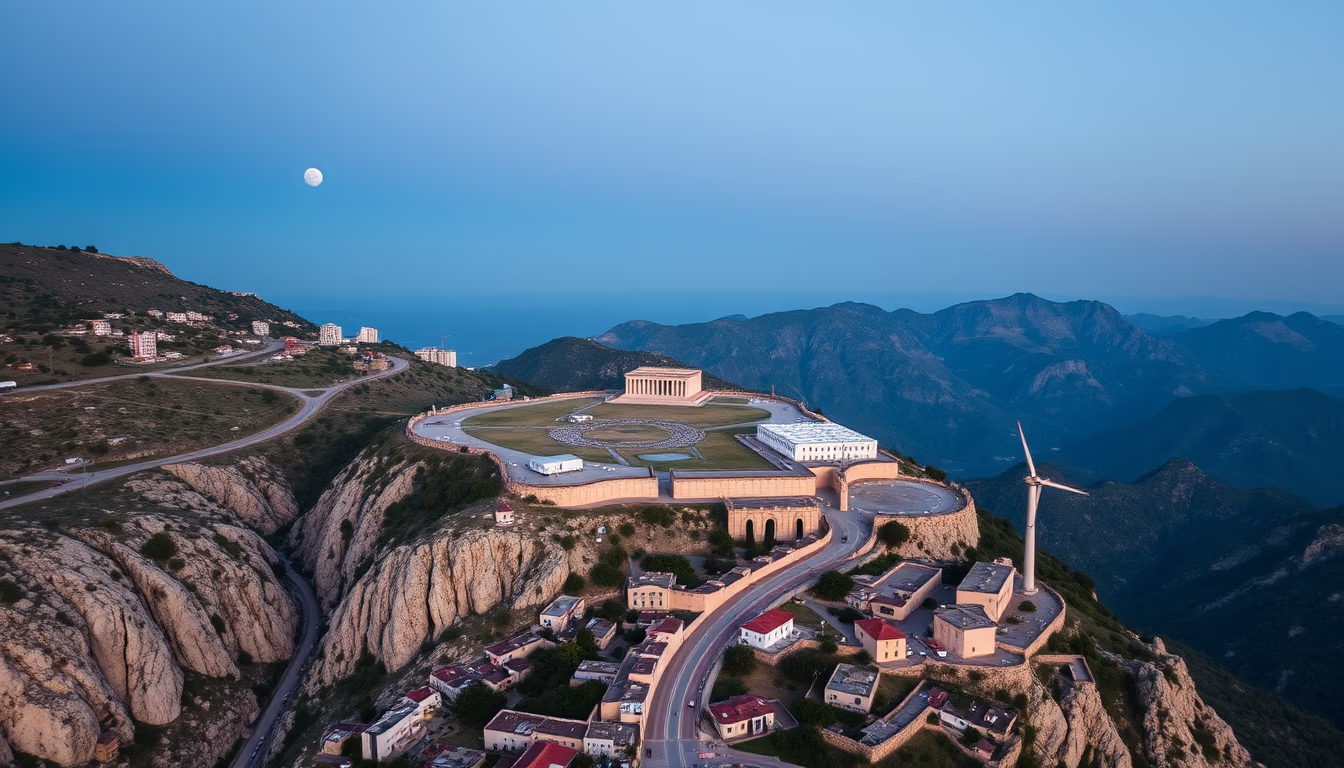
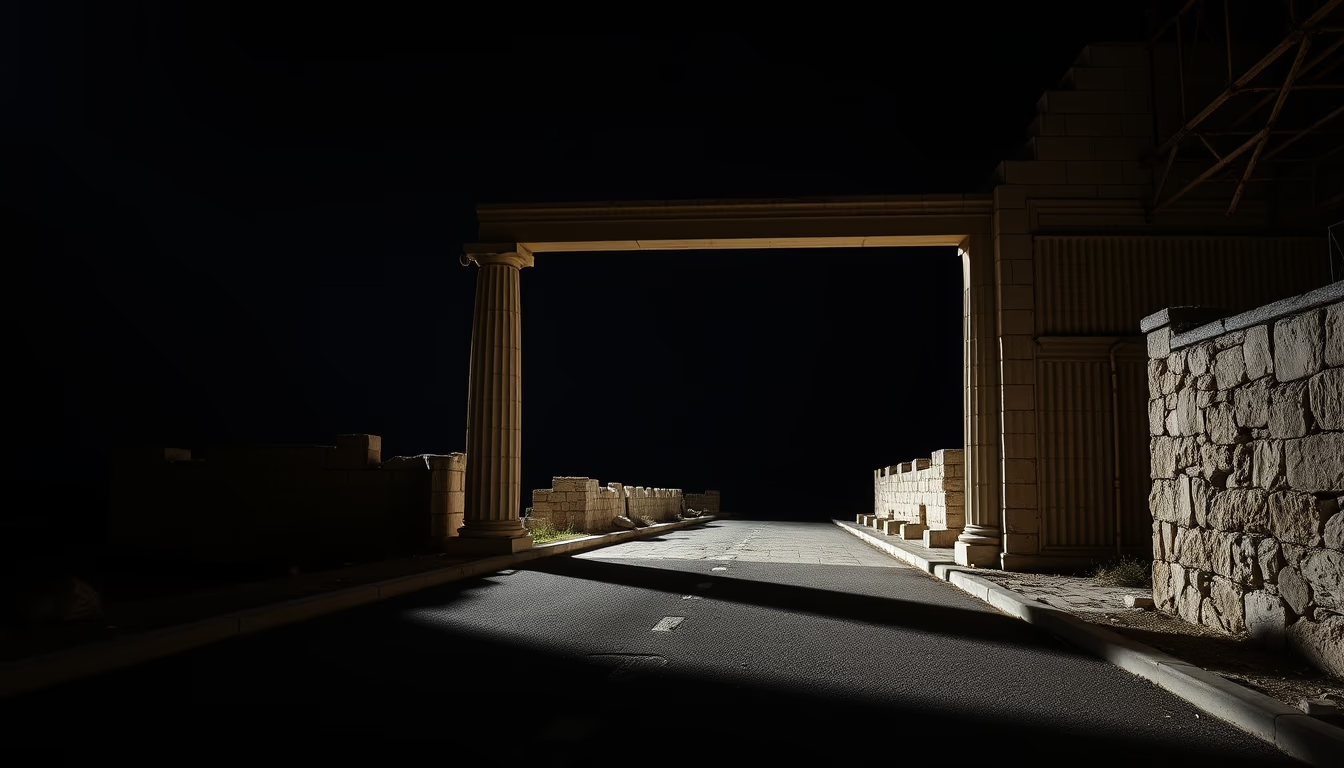
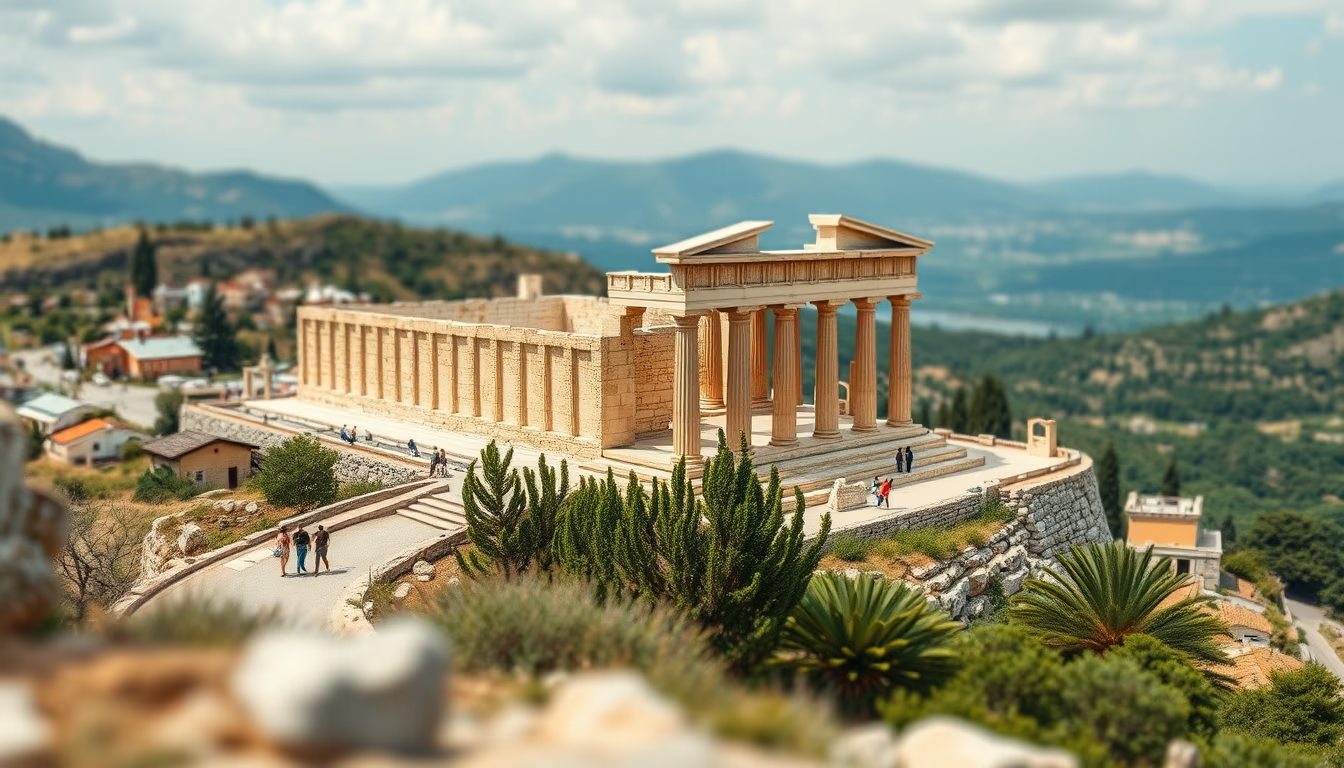
Thermopylae, the narrow Greek pass where 300 Spartans faced the Persian army in 480 BC, is a historical and geographical landmark.
About this subject
The Thermopylae pass, located in central Greece between Mount Kallidromo and the Malian Gulf, is world-famous for the battle that took place there in 480 BC during the Second Persian invasion of Greece. In this narrow corridor, a Greek force led by Spartan King Leonidas I attempted to halt the advance of the Persian army under Xerxes I. The pass's topography, only a few meters wide in some sections, was crucial to the Greek defensive strategy, allowing a vastly outnumbered contingent to neutralize the Persian numerical superiority for three days.
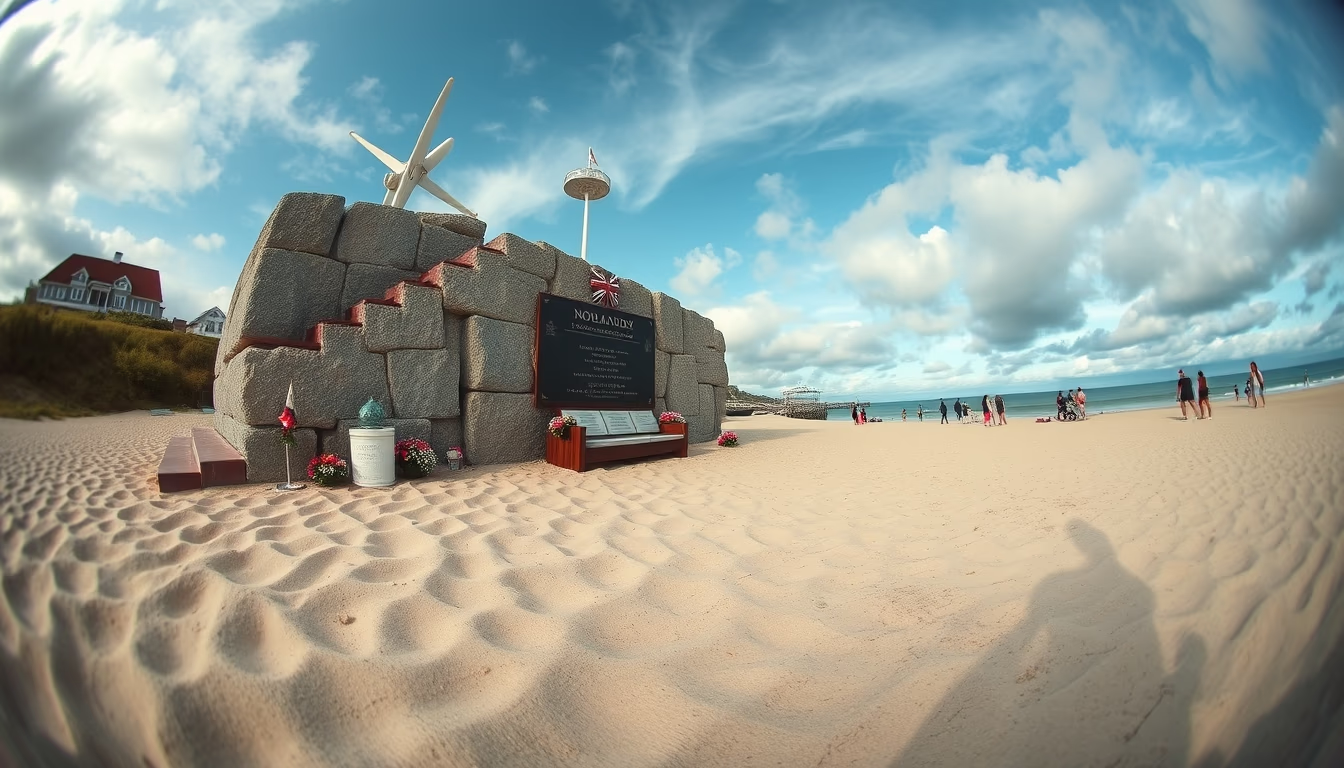
Over the centuries, the landscape of Thermopylae has changed significantly due to sediment deposition from the Spercheios River, which widened the coastal plain. Today, the pass is much broader than in antiquity, but visitors can still see the modern monument dedicated to Leonidas and his men, erected near the estimated battle site. The archaeological site attracts thousands of tourists and scholars interested in military history.
The Battle of Thermopylae has become an enduring symbol of courage and sacrifice, immortalized in works such as Zack Snyder's film "300." However, the historical accuracy of these portrayals is often debated. In reality, besides the 300 Spartans, the Greek force included about 7,000 hoplites from other city-states. After the betrayal of Ephialtes, who revealed an alternate path to the Persians, Leonidas ordered the withdrawal of most of the army, remaining with the Spartans and a few volunteers to cover the retreat.
Thermopylae's geopolitical importance extends beyond the ancient battle. During the Greco-Turkish War of 1897 and World War II, the pass was again a site of conflict. In 1941, Australian and New Zealand troops defended the pass against the German invasion, repeating the strategy of containment. Today, the national highway runs through the area, connecting Athens to Thessaly, but the historical memory remains alive in local monuments and museums.
Frequently Asked Questions
Where exactly is Thermopylae located?
Thermopylae is located in central Greece, along the coast of the Malian Gulf near the city of Lamia. The historical site lies between Mount Kallidromo and the sea, where the national highway now passes.
How many soldiers actually fought at the Battle of Thermopylae?
Leonidas commanded about 7,000 Greeks, including 300 Spartans. The Persian army was much larger, with estimates ranging from 100,000 to 300,000 troops according to ancient sources.
Why are Thermopylae considered a symbol of resistance?
The battle is remembered for the courage of the defenders, who fought to the death against overwhelming odds. This heroic stand inspired generations and became an example of sacrifice in defense of freedom.
Direct URL
https://pub-c7d6a6ea828543ac903a74a341ccb2e1.r2.dev/imagens/thermopylae-greek-pass-aerial-drone-shot-fresh1.avifHow to credit
Include a visible link back to UtilizAí. Copy one of the snippets below:
<a href="https://xn--utiliza-eza.com/en/midia/imagens/thermopylae-greek-pass-aerial-drone-shot-fresh1">Thermopylae greek pass</a> by <a href="https://xn--utiliza-eza.com">UtilizAí</a>, licensed under <a href="https://creativecommons.org/licenses/by/4.0/">CC BY 4.0</a>.
[Thermopylae greek pass](https://xn--utiliza-eza.com/en/midia/imagens/thermopylae-greek-pass-aerial-drone-shot-fresh1) by [UtilizAí](https://xn--utiliza-eza.com), CC BY 4.0
License: CC-BY-4.0