Theremin electronic
1344×768 · AVIF · CC BY 4.0
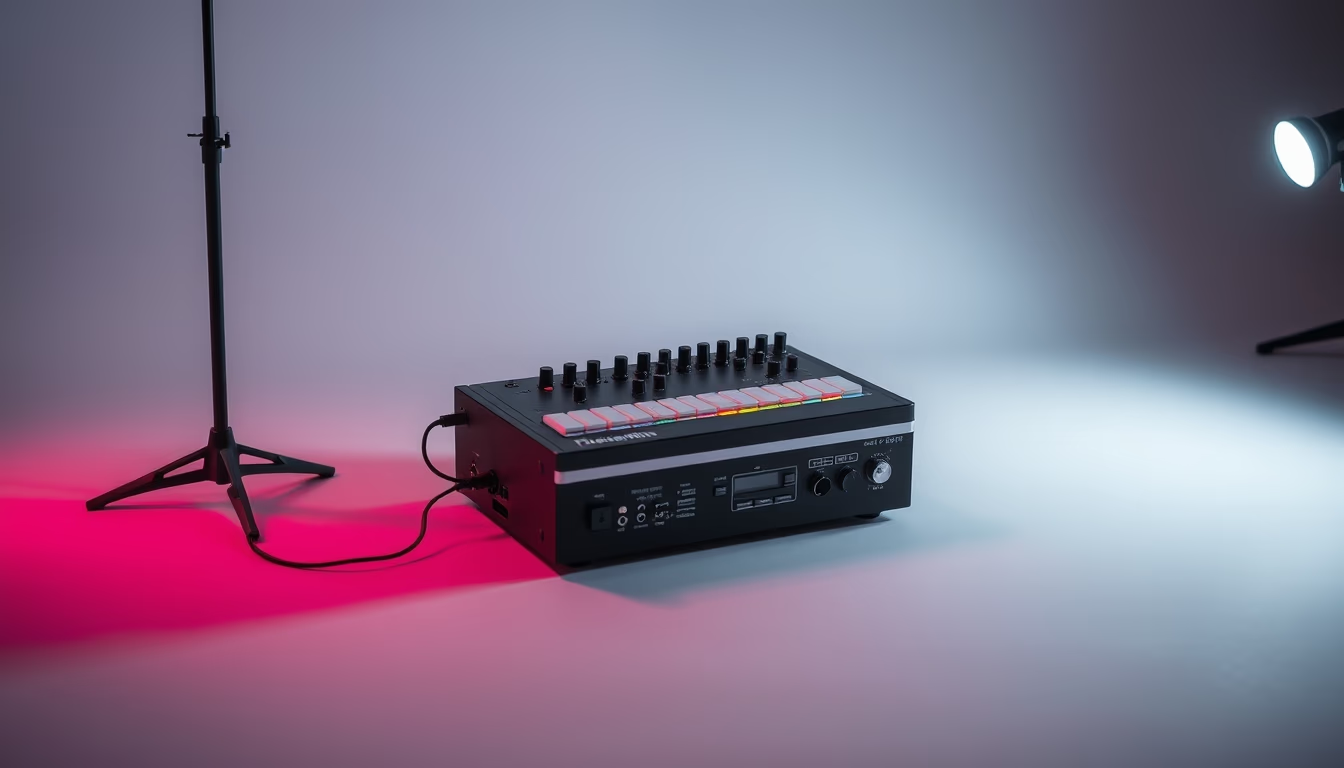
The theremin is an electronic musical instrument played without physical contact, controlled by hand movements in electromagnetic fields.
About this subject
The theremin was invented in 1920 by Russian physicist Lev Sergeevich Termen (known in the West as Léon Theremin). It is one of the first fully electronic musical instruments, operating through two radio-frequency oscillators that generate an electromagnetic field. The performer moves their hands near two antennas: a vertical one controlling frequency (pitch) and a horizontal loop controlling amplitude (volume). Since there is no physical contact, the theremin demands extreme precision and trained hearing, making it one of the most difficult instruments to master.
The instrument gained popularity in science fiction film soundtracks of the 1950s and 1960s, most notably in "The Day the Earth Stood Still" (1951), where its eerie sound became iconic. It was also used by classical and experimental musicians, such as Clara Rockmore, widely regarded as the greatest thereminist, and by The Beach Boys in "Good Vibrations," which simulated the theremin sound using a similar device called the Electro-Theremin. More recently, artists like Jean-Michel Jarre and progressive rock bands have incorporated the theremin into their work.
Culturally, the theremin represents the intersection of music and technology, inspiring everything from synthesizers to modern gestural controllers. Despite its difficulty, the instrument attracts enthusiasts and artisan builders worldwide. Variations include stage theremins with greater dynamic range and digital versions that emulate its sound. The theremin continues to be studied in audio engineering and musical performance, serving as a symbol of 20th-century electronic innovation.
Frequently Asked Questions
How does the theremin produce sound without being touched?
The theremin uses two radio-frequency oscillators that create electromagnetic fields. Bringing a hand near each antenna alters the circuit's capacitance, changing the frequency (pitch) or amplitude (volume) of the generated sound.
Who was Clara Rockmore and why is she important?
Clara Rockmore was a Lithuanian-American thereminist widely regarded as the greatest performer of the instrument. She developed a refined hand-positioning technique and helped popularize the theremin in classical music during the 1930s and 1940s.
Is the theremin still used in contemporary music?
Yes, the theremin is still used in genres like experimental, electronic, and even pop music. Artists such as Björk and progressive rock bands occasionally employ it, and there are dedicated festivals like the Theremin Festival in Moscow.
Direct URL
https://pub-c7d6a6ea828543ac903a74a341ccb2e1.r2.dev/imagens/theremin-electronic-studio-still-life-p2.avifHow to credit
Include a visible link back to UtilizAí. Copy one of the snippets below:
<a href="https://xn--utiliza-eza.com/en/midia/imagens/theremin-electronic-studio-still-life-p2">Theremin electronic</a> by <a href="https://xn--utiliza-eza.com">UtilizAí</a>, licensed under <a href="https://creativecommons.org/licenses/by/4.0/">CC BY 4.0</a>.
[Theremin electronic](https://xn--utiliza-eza.com/en/midia/imagens/theremin-electronic-studio-still-life-p2) by [UtilizAí](https://xn--utiliza-eza.com), CC BY 4.0
License: CC-BY-4.0