Telegram paper yellow
1344×768 · AVIF · CC BY 4.0
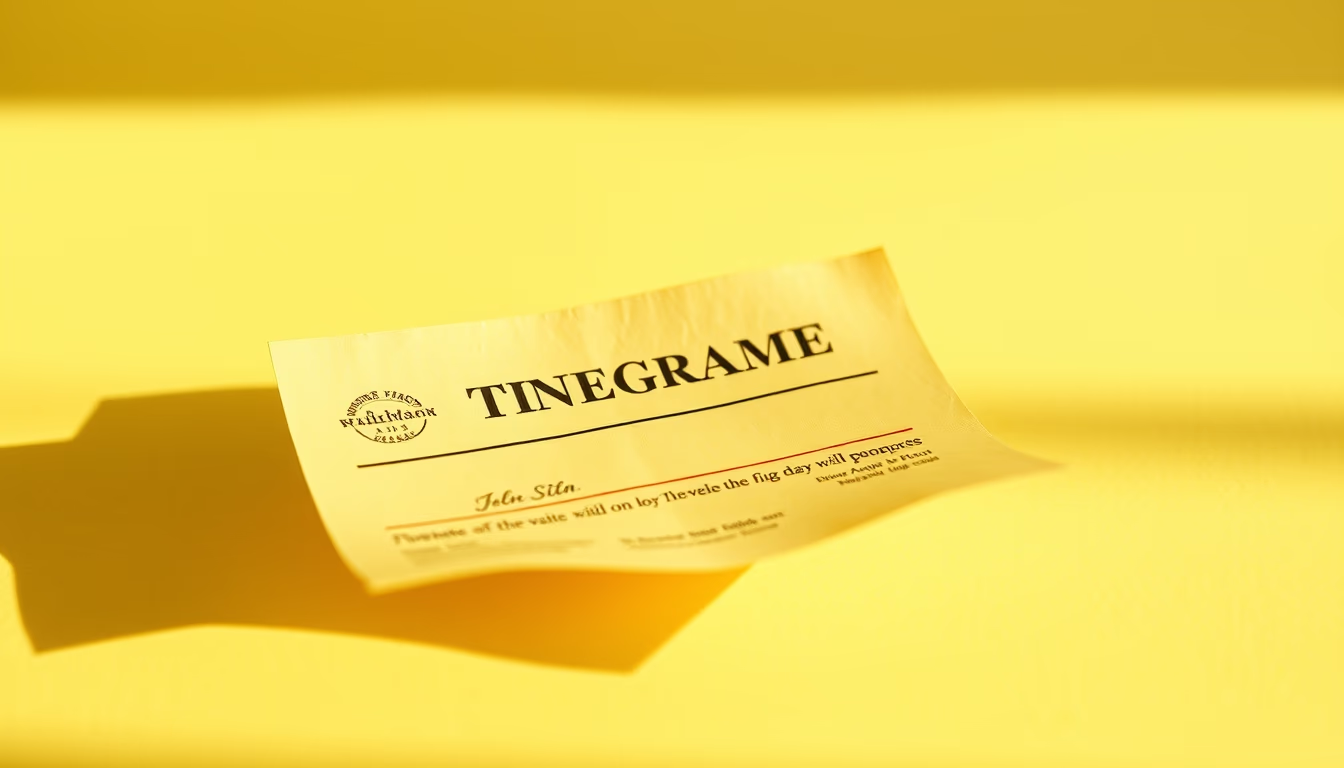
The yellow telegram paper, known for its distinctive color, was essential in telegraphic communications of the 19th and 20th centuries.
About this subject
Yellow telegram paper became an icon of instant communications before the digital age. Its color was not merely aesthetic: the yellowish tone helped mask stains and wear, as messages were often handled by multiple people and stored for long periods. Originally, telegrams were transmitted via Morse code and then printed on paper tape, which was later pasted onto standardized sheets.
The typical format was a narrow, long sheet with the telegraph company logo printed at the top, such as Western Union or Brazil's Radiobrás. In Brazil, the telegraph service was introduced in 1852 and remained popular until the mid-20th century, when the telephone and later the internet replaced it. The paper was often manufactured in pastel shades, but light yellow was the most common, as it was associated with urgency and the formality of official communications.
Interestingly, the term "telegram" derives from Greek "tele" (far) and "gramma" (writing). Messages were counted by words, and the paper had spaces to note the number of words, facilitating billing. The durability of yellow paper was low, so many historical telegrams have deteriorated, but some survive in archives such as those of the Brazilian Postal and Telegraph Company.
The minimalist aesthetic of yellow telegram paper has inspired contemporary designers, being used in invitations, decoration, and retro references. Although obsolete, yellow telegram paper remains a nostalgic symbol of rapid communications from the past.
Frequently Asked Questions
Why was telegram paper yellow?
The yellow tone helped mask dirt and wear, as telegrams were intensively handled. It also became a standard color associated with the urgency of telegraphic messages.
How were telegrams made in Brazil?
In Brazil, telegrams were sent via Morse code over telegraph lines. The message was received on perforated paper tape, which was then pasted onto standardized yellow sheets with the company logo.
Is telegram paper still used today?
No. The telegram service was discontinued in many countries, including Brazil (in 2018 by Correios). The yellow paper survives only in decorative items, historical collections, or cultural references.
Direct URL
https://pub-c7d6a6ea828543ac903a74a341ccb2e1.r2.dev/imagens/telegram-paper-yellow-minimalist-composition-fresh11.avifHow to credit
Include a visible link back to UtilizAí. Copy one of the snippets below:
<a href="https://xn--utiliza-eza.com/en/midia/imagens/telegram-paper-yellow-minimalist-composition-fresh11">Telegram paper yellow</a> by <a href="https://xn--utiliza-eza.com">UtilizAí</a>, licensed under <a href="https://creativecommons.org/licenses/by/4.0/">CC BY 4.0</a>.
[Telegram paper yellow](https://xn--utiliza-eza.com/en/midia/imagens/telegram-paper-yellow-minimalist-composition-fresh11) by [UtilizAí](https://xn--utiliza-eza.com), CC BY 4.0
License: CC-BY-4.0