Telegram paper yellow
1344×768 · AVIF · CC BY 4.0
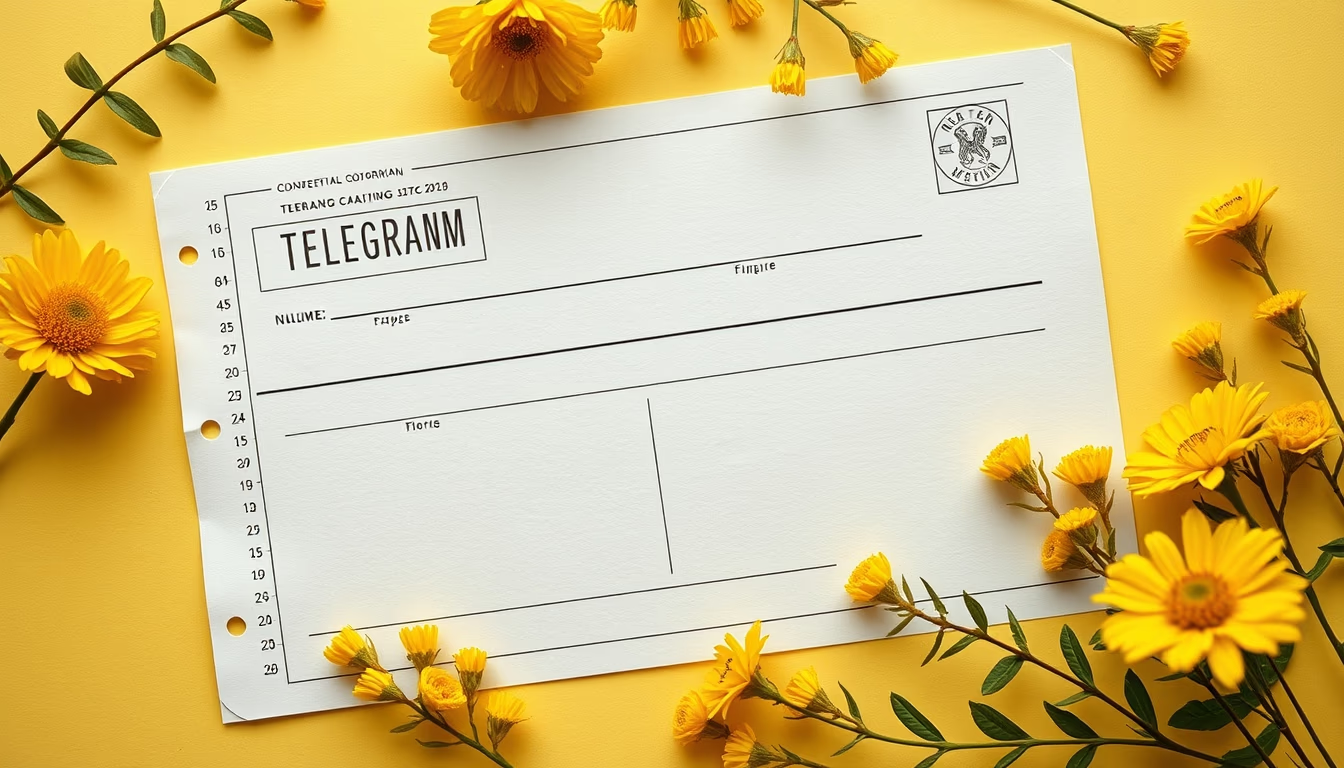
The yellow telegram paper, an icon of 19th and 20th century communication, symbolizes the revolution of instant messaging long before the internet.
About this subject
The telegram revolutionized long-distance communication from the 19th century onward. Invented by Samuel Morse in 1837, the electric telegraph used Morse code to transmit messages over wires. Telegraph networks quickly spread worldwide, connecting continents and shrinking distances. Yellow paper became the standard support for telegraph messages, mainly due to its durability and low cost. The yellow color was not accidental: black ink contrasted well with the yellowish background, making it easier for operators to read. Additionally, the paper was often treated to resist moisture and constant handling.
In Brazil, the first telegraph was installed in 1852, linking Rio de Janeiro to Petrópolis. Telegram service was widely used until the late 20th century, especially for urgent communications such as news of births, deaths, and love declarations. Messages were handwritten or typed on standardized forms, which included fields for sender, recipient, and text, usually limited to a maximum number of words to reduce costs. The yellow paper became so iconic that even after the decline of the telegraph, the expression "receiving a telegram" still evokes the image of the yellow envelope.
Interestingly, the format and color of telegram paper were so striking that they influenced later designs, such as lottery tickets and official forms. Today, the telegram survives in some remote regions and specialized services, but it has been largely replaced by email and instant messaging. However, its legacy remains as a milestone in the history of human communication, demonstrating how a simple sheet of yellow paper could connect the world so efficiently.
Frequently Asked Questions
Why was telegram paper yellow?
The yellow color was chosen for practical reasons: it provided high contrast with black ink, made it easier for operators to read, and was more resistant to handling and humidity, ensuring durability.
Does the telegram still exist today?
Yes, telegram service still exists in some countries, such as in Brazil, offered by the postal service. However, its use is residual, usually only for formal occasions or in areas without internet access.
What was the cost of sending a telegram?
The cost was calculated per word, with a minimum number of words required. It was relatively expensive, leading people to write short, objective messages, using codes like "STOP" to save money.
Direct URL
https://pub-c7d6a6ea828543ac903a74a341ccb2e1.r2.dev/imagens/telegram-paper-yellow-isometric-flat-lay-fresh2.avifHow to credit
Include a visible link back to UtilizAí. Copy one of the snippets below:
<a href="https://xn--utiliza-eza.com/en/midia/imagens/telegram-paper-yellow-isometric-flat-lay-fresh2">Telegram paper yellow</a> by <a href="https://xn--utiliza-eza.com">UtilizAí</a>, licensed under <a href="https://creativecommons.org/licenses/by/4.0/">CC BY 4.0</a>.
[Telegram paper yellow](https://xn--utiliza-eza.com/en/midia/imagens/telegram-paper-yellow-isometric-flat-lay-fresh2) by [UtilizAí](https://xn--utiliza-eza.com), CC BY 4.0
License: CC-BY-4.0