Tea room tatami
1344×768 · AVIF · CC BY 4.0
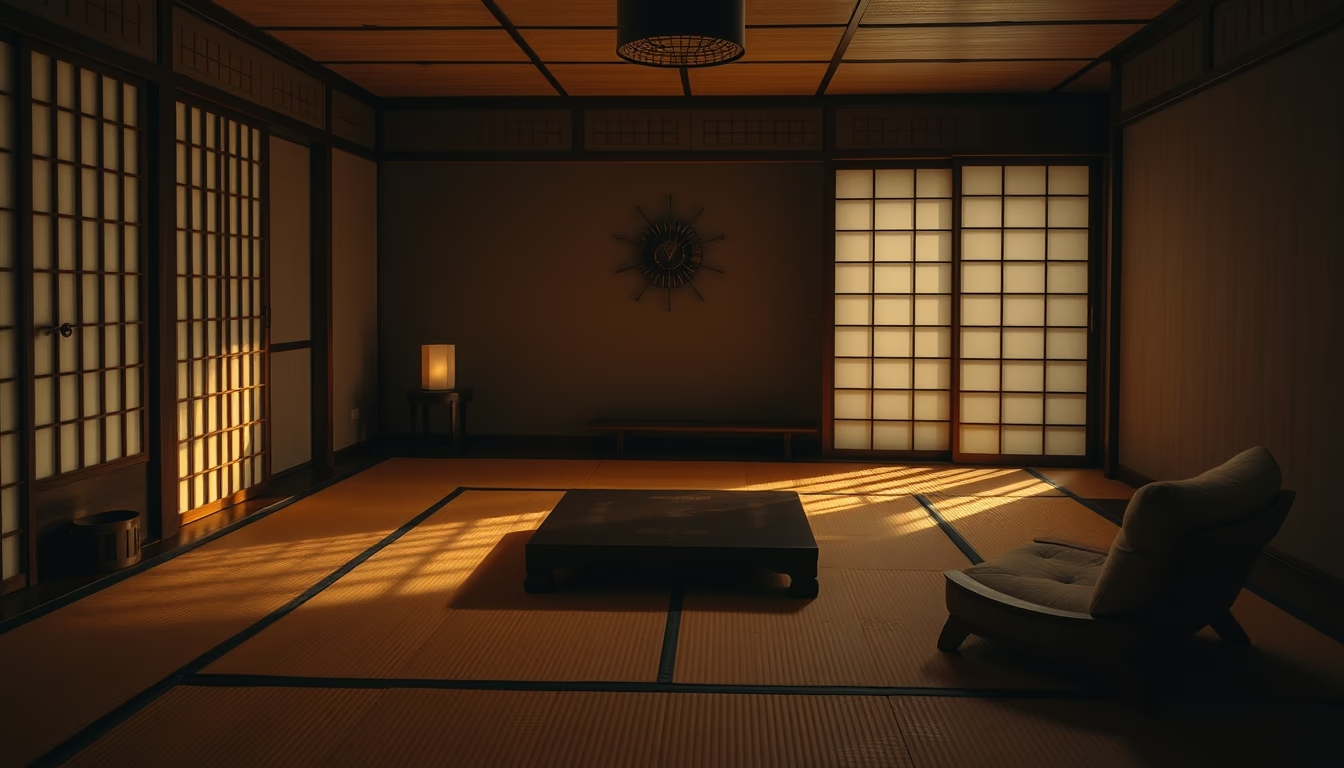
Tatami mats are the traditional flooring of Japanese tea rooms, made of rice straw and rush grass, defining the ceremonial space.
About this subject
Tatami mats are fundamental to traditional Japanese architecture, especially in tea rooms (chashitsu). Made from a core of compressed rice straw covered with woven rush grass (igusa) and bordered with cloth (heri), they are crafted by hand following strict standards. Each mat typically measures about 1.82 m by 0.91 m (a 2:1 ratio), with minor regional variations. The number of tatami mats determines a room's size and layout; tea ceremonies often use a 4.5-mat room (yojōhan).
The origin of tatami dates back to the Heian period (794, 1185), when they were portable mats for the nobility. Over time, they became fixed flooring and a status symbol. In the tea ceremony, the tatami is not just flooring: it defines the sacred space, dictates the placement of utensils (tokonoma, ro), and influences participants' posture. The tea master arranges the tea set (chabukin) harmoniously on the tatami, following aesthetic and functional rules.
Dramatic lighting with deep shadows, typical of Rembrandt style, emphasizes the rough texture and lines of the tatami. In a tea room, natural light filtered through washi paper creates soft contrasts, but directed artificial light can evoke the intimate atmosphere of an evening ceremony. Tatami mats provide thermal and acoustic insulation, absorb moisture, and contribute to comfort. Today they are iconic of Japanese culture and increasingly used in modern spaces, such as meditation rooms or oriental design interiors.
Frequently Asked Questions
How are tatami mats made?
Traditional tatami have a core of compressed rice straw and a covering of woven rush grass (igusa). They are bordered with cloth (heri) and handcrafted in standardized sizes.
Why are tatami used in tea rooms?
Tatami provide thermal and acoustic insulation, and define the ceremonial space. They help create the atmosphere of simplicity and harmony required for the tea ceremony.
What is the standard size of a tatami mat?
The standard size is approximately 1.82 m by 0.91 m (2:1 ratio). Regional variations exist, such as Kyoto mat (1.91 m x 0.95 m) and Tokyo mat (1.76 m x 0.88 m).
Direct URL
https://pub-c7d6a6ea828543ac903a74a341ccb2e1.r2.dev/imagens/tea-room-tatami-rembrandt-lighting-dramatic-shadows-fresh3.avifHow to credit
Include a visible link back to UtilizAí. Copy one of the snippets below:
<a href="https://xn--utiliza-eza.com/en/midia/imagens/tea-room-tatami-rembrandt-lighting-dramatic-shadows-fresh3">Tea room tatami</a> by <a href="https://xn--utiliza-eza.com">UtilizAí</a>, licensed under <a href="https://creativecommons.org/licenses/by/4.0/">CC BY 4.0</a>.
[Tea room tatami](https://xn--utiliza-eza.com/en/midia/imagens/tea-room-tatami-rembrandt-lighting-dramatic-shadows-fresh3) by [UtilizAí](https://xn--utiliza-eza.com), CC BY 4.0
License: CC-BY-4.0