Tea room tatami
1344×768 · AVIF · CC BY 4.0
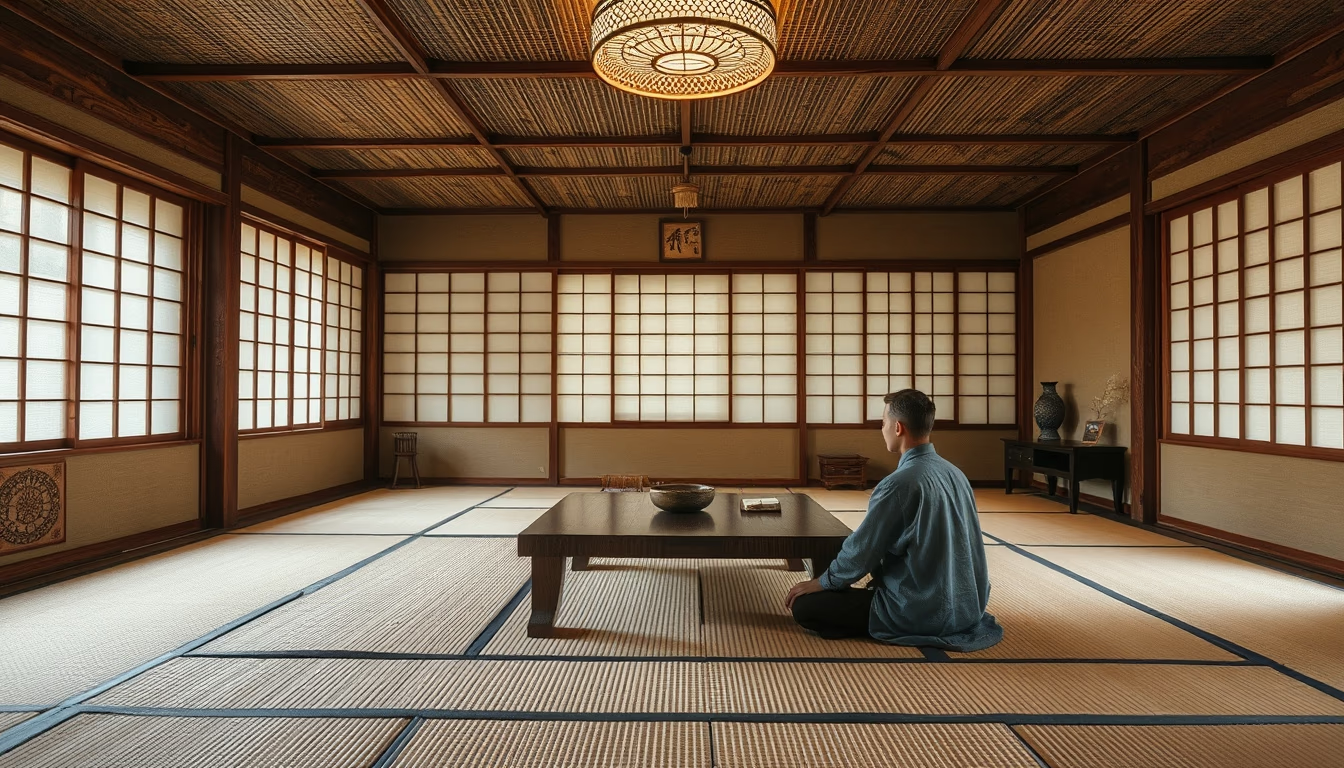
Tatami, traditional rice straw mats, are essential in the Japanese tea ceremony, defining the space and ritual.
About this subject
Tatami is a mat made from compressed rice straw, covered with a weave of soft rush grass called igusa. Originating in Japan, its use dates back to the Heian period (794-1185), when it was a privilege of the nobility. Over time it became a fundamental part of Japanese residential architecture, especially in tea ceremony rooms, known as chashitsu. The traditional tea room has dimensions based on the tatami, with a standard size of 1.82 m by 0.91 m (so-called kyoma tatami). The arrangement of tatami in the chashitsu follows strict rules that vary according to the tea ceremony school. In the tea environment, tatami represents purity and simplicity, core values of the way of tea (chadō). Practitioners must walk on the tatami carefully, avoiding stepping on the edges as a gesture of respect and mindfulness. Tatami maintenance requires special care, such as periodic airing and rotation to prevent uneven wear. Today, although many modern Japanese homes have replaced tatami with Western flooring, it remains essential in cultural and ceremonial spaces, preserving an ancient tradition.
Frequently Asked Questions
What is the standard size of a tatami for the tea ceremony?
The standard tatami size varies by region, but for the tea ceremony the most common is kyoma, measuring 1.82 m by 0.91 m. Tea rooms are typically sized in multiples of whole tatami, such as 4.5 or 6 mats.
Why is tatami important in the tea ceremony?
Tatami establishes the spatial scale and the atmosphere of simplicity and purity. Ritualized movements are performed on it, and sitting on the mat is itself part of tea discipline. The seams of the tatami guide the placement of utensils and the positioning of guests.
How is tatami maintained?
Tatami needs regular airing to prevent mold and moisture. It is also recommended to rotate the mats periodically for even wear. The igusa surface can be vacuumed, and worn edges are repaired or replaced by specialized craftspeople over time.
Direct URL
https://pub-c7d6a6ea828543ac903a74a341ccb2e1.r2.dev/imagens/tea-room-tatami-documentary-nature-style-fresh13.avifHow to credit
Include a visible link back to UtilizAí. Copy one of the snippets below:
<a href="https://xn--utiliza-eza.com/en/midia/imagens/tea-room-tatami-documentary-nature-style-fresh13">Tea room tatami</a> by <a href="https://xn--utiliza-eza.com">UtilizAí</a>, licensed under <a href="https://creativecommons.org/licenses/by/4.0/">CC BY 4.0</a>.
[Tea room tatami](https://xn--utiliza-eza.com/en/midia/imagens/tea-room-tatami-documentary-nature-style-fresh13) by [UtilizAí](https://xn--utiliza-eza.com), CC BY 4.0
License: CC-BY-4.0