Tea bricks china
1344×768 · AVIF · CC BY 4.0
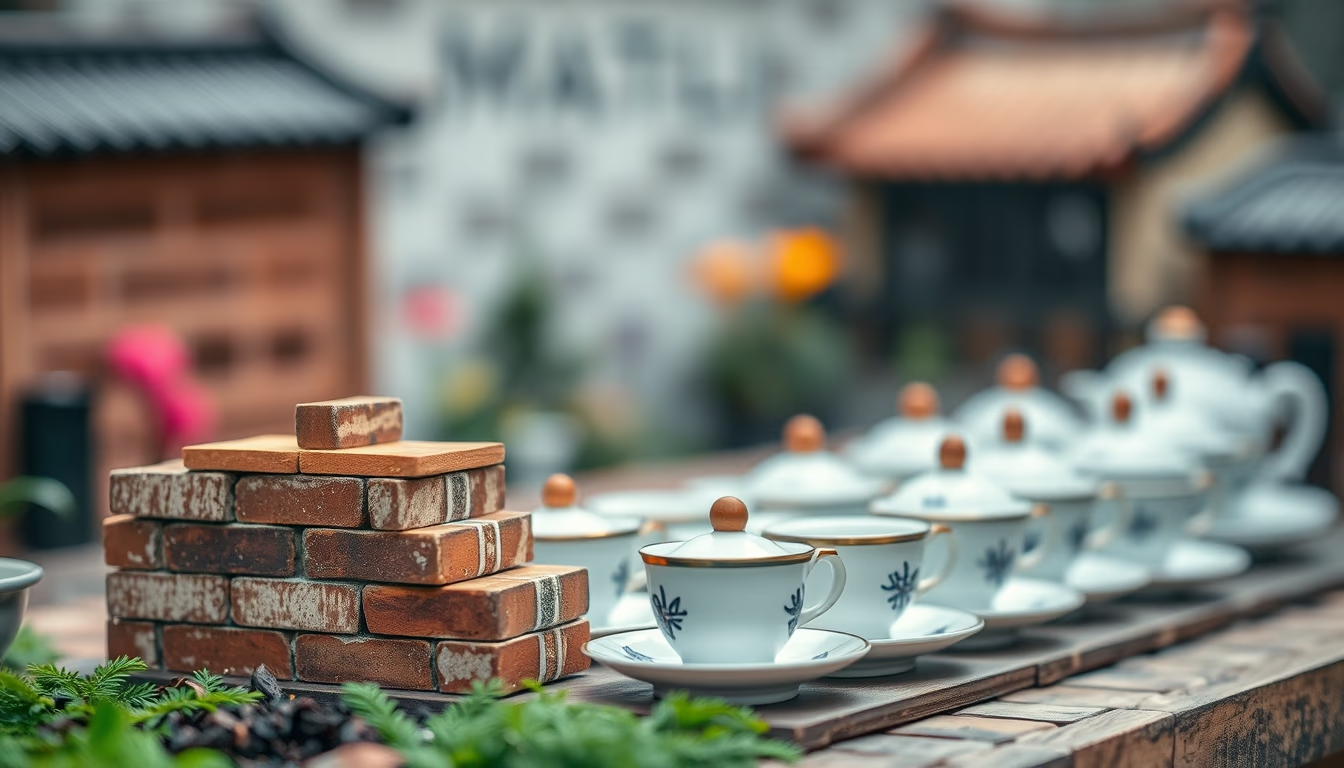
Chinese tea bricks, compacted blocks of tea leaves, served as currency and trade goods along the ancient Silk Road.
About this subject
Tea bricks, known in Chinese as cha bing or zhuan cha, have a history dating back to the Tang dynasty (618, 907 AD). To facilitate transport and storage, tea leaves were steamed, pressed into molds, and dried to form dense blocks. This method preserved the tea for years and reduced volume, making it ideal for long journeys along the Silk Road.
In Central Asia and Tibet, tea bricks became a currency as valuable as precious metals. Nomadic herders used them to buy horses, furs, and other goods. Tea was often mixed with yak butter and salt to make traditional Tibetan butter tea. Different qualities existed: green tea bricks were more prized in China, while fermented black tea bricks dominated foreign trade.
Production methods varied by region. In Yunnan, pu'er tea was pressed into discs or bowls; in Hunan and Hubei, rectangular black tea bricks were common. The standard size allowed bricks to be used as units of account: one brick equaled a set amount of salt or silk. Even today, tea bricks are produced for collectors and for aged teas like pu'er, which gain complexity over time.
Interestingly, the practice of pressing tea influenced European tea culture: when tea arrived in England in the 17th century, it came in large blocks that had to be chipped and ground. Tea bricks also played a role in Japanese history, as matcha powder derives from pressed and ground leaves. Today, bricks are valued as heritage items and recall a time when tea was not just a beverage but a global economic driver.
Frequently Asked Questions
How were tea bricks used as currency?
Along the Silk Road and in Tibet, tea bricks were accepted as payment for horses, furs, and other goods. Their value was standardized by weight and quality, functioning as a universal medium of exchange.
What is the difference between green tea bricks and black tea bricks?
Green tea bricks are made from unfermented leaves, keeping a fresher flavor. Black tea bricks undergo fermentation, resulting in a richer taste and longer shelf life. Both can be aged.
How to prepare tea from a brick?
Chisel or scrape a small amount (about 3, 5 grams) from the block. Steep in hot water (around 90°C) for 30 seconds to 2 minutes, depending on the type. The leaves can be reinfused multiple times.
Direct URL
https://pub-c7d6a6ea828543ac903a74a341ccb2e1.r2.dev/imagens/tea-bricks-china-tilt-shift-miniature-fresh4.avifHow to credit
Include a visible link back to UtilizAí. Copy one of the snippets below:
<a href="https://xn--utiliza-eza.com/en/midia/imagens/tea-bricks-china-tilt-shift-miniature-fresh4">Tea bricks china</a> by <a href="https://xn--utiliza-eza.com">UtilizAí</a>, licensed under <a href="https://creativecommons.org/licenses/by/4.0/">CC BY 4.0</a>.
[Tea bricks china](https://xn--utiliza-eza.com/en/midia/imagens/tea-bricks-china-tilt-shift-miniature-fresh4) by [UtilizAí](https://xn--utiliza-eza.com), CC BY 4.0
License: CC-BY-4.0