Tapestry medieval flemish
1344×768 · AVIF · CC BY 4.0
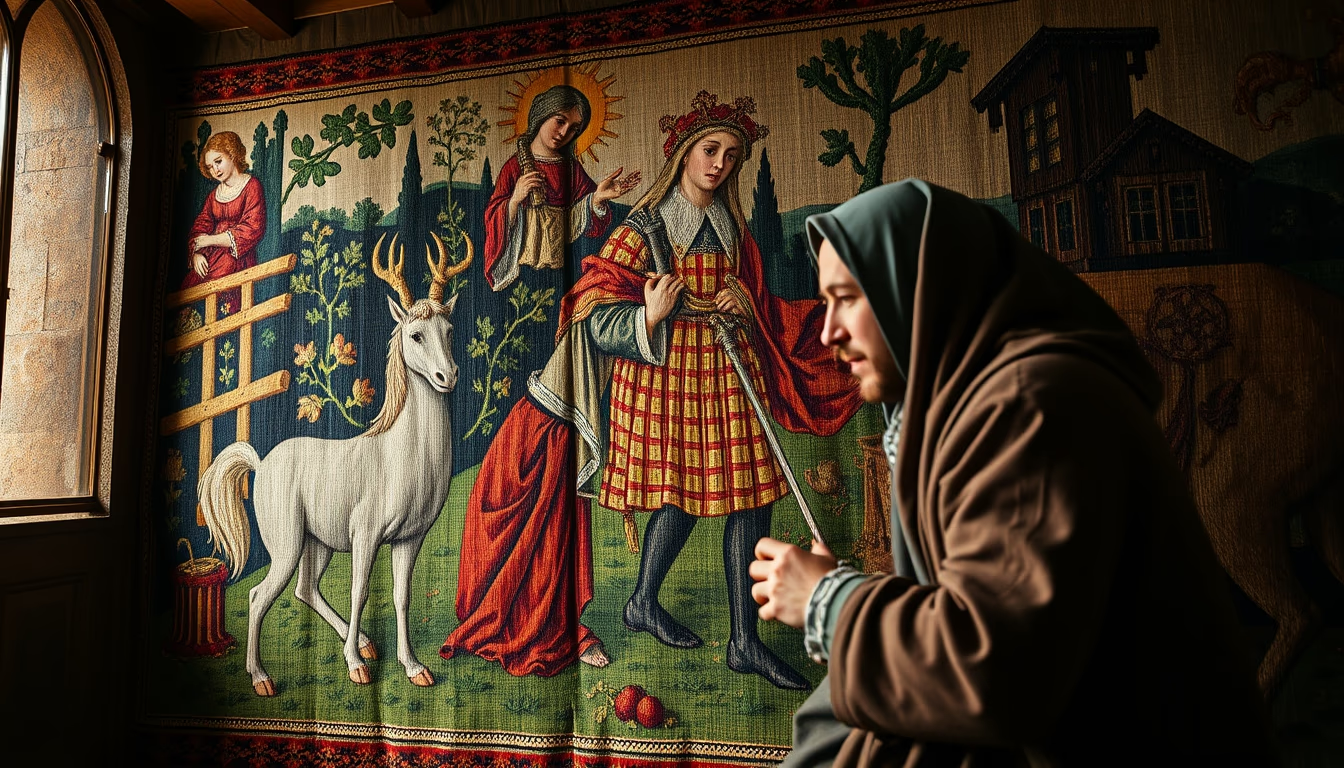
Flemish medieval tapestries are textile masterpieces that combined refined technique and visual narrative, mainly produced in the 15th and 16th centuries in the Low Countries.
About this subject
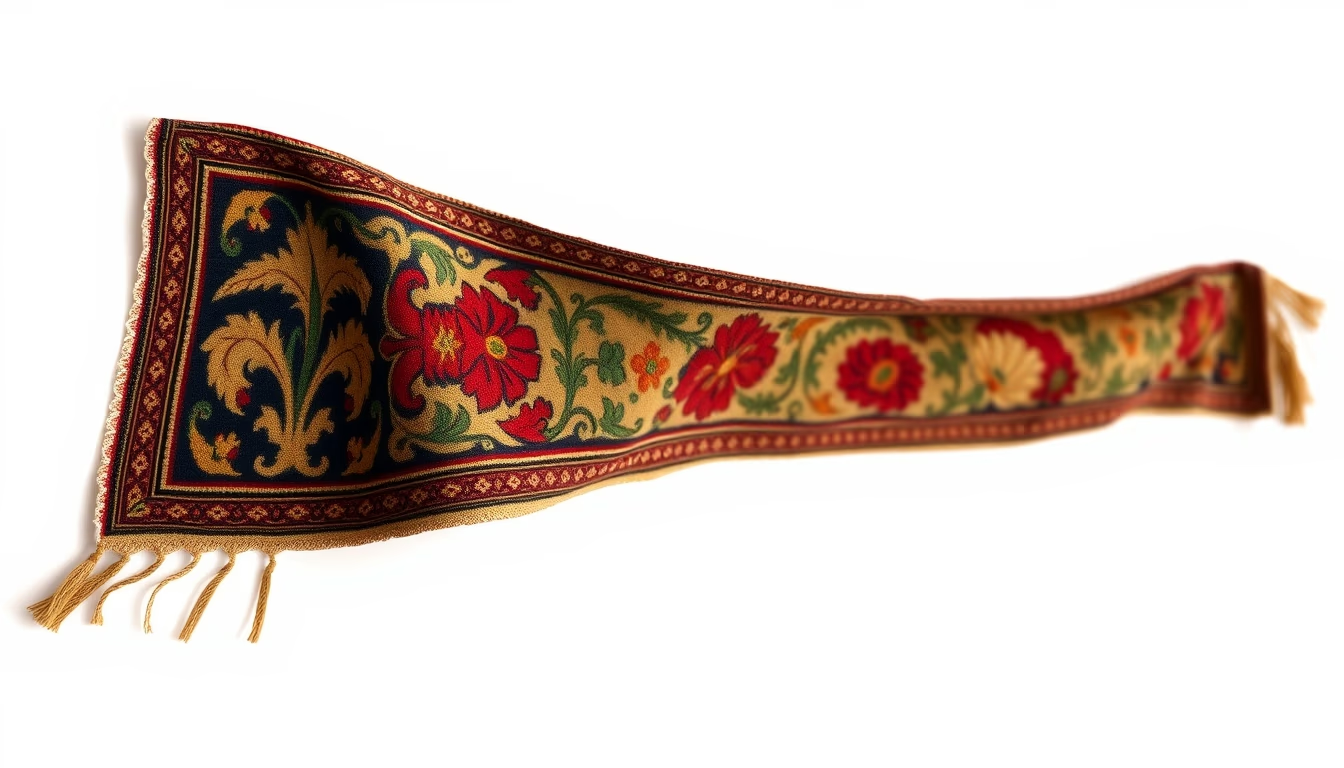
Flemish medieval tapestries represent one of the pinnacles of European textile art, especially flourishing between the 15th and 16th centuries. Centers such as Brussels, Tournai, and Arras became famous for their workshops that produced huge panels of wool and silk, often enriched with gold and silver threads. These works were commissioned by kings, nobles, and religious institutions to decorate castles and churches, serving both as thermal insulation and as status symbols.
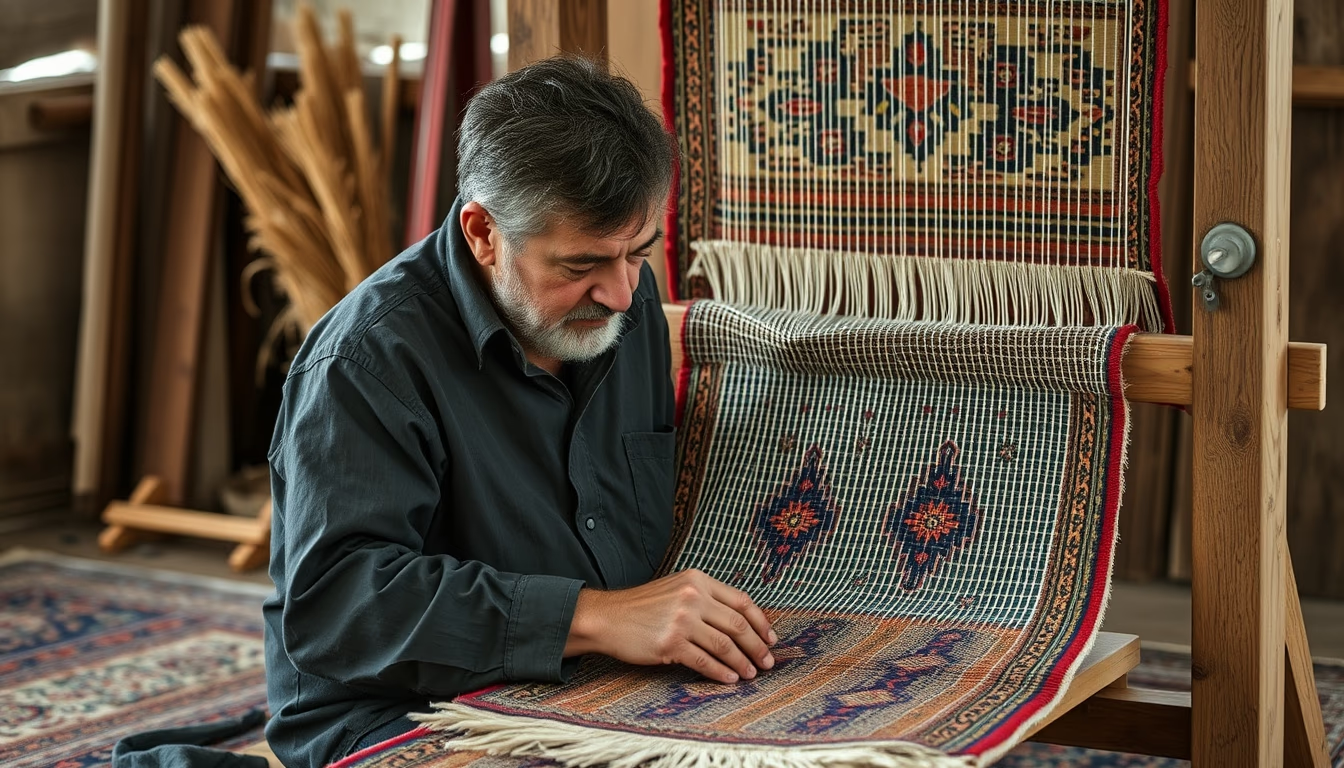
The Flemish tapestry technique involved weaving on a high-warp loom, where the designer (cartoonist) created a full-scale model called the "cartoon". Weavers followed this guide to interlace colored threads, creating complex scenes with human figures, animals, and detailed landscapes. The series "The Lady and the Unicorn" is a famous example, although it is French; while "The Hunt of the Unicorn" (Metropolitan Museum of Art) is attributed to Flemish workshops.
A notable aspect is mass export throughout Europe. Flemish tapestries were so valued that entire collections were acquired by monarchs such as Henry VIII of England and the Medici of Florence. During the religious wars of the 16th century, many workshops were destroyed or migrated, leading to a gradual decline. Today, surviving examples are treasures in museums like the Louvre, the Victoria and Albert, and the Musée de Cluny.
Interestingly, the Portuguese word "arras" derives from the city of Arras, one of the first major centers. These tapestries also documented historical and mythological events, functioning as visual chronicles before the popularization of printing. The technical complexity required months or years of work by specialized teams, and each piece was unique.
Frequently Asked Questions
What distinguished Flemish tapestries from others?
Flemish tapestries stood out for the quality of materials (fine wool, silk, metallic threads), the complexity of weaving, and the rich narrative of scenes, often based on designs by renowned artists.
Which are the most famous Flemish tapestries?
Notable examples include the series "The Hunt of the Unicorn" (1495-1505, attributed to Brussels) and Vatican sets like "The School of Athens" in tapestry, based on Raphael.
Why are Flemish tapestries so valuable today?
They are rare, required immense skill and time to produce, and many were destroyed. Survivors offer a unique record of medieval art, history, and culture.
Direct URL
https://pub-c7d6a6ea828543ac903a74a341ccb2e1.r2.dev/imagens/tapestry-medieval-flemish-documentary-photography-fresh10.avifHow to credit
Include a visible link back to UtilizAí. Copy one of the snippets below:
<a href="https://xn--utiliza-eza.com/en/midia/imagens/tapestry-medieval-flemish-documentary-photography-fresh10">Tapestry medieval flemish</a> by <a href="https://xn--utiliza-eza.com">UtilizAí</a>, licensed under <a href="https://creativecommons.org/licenses/by/4.0/">CC BY 4.0</a>.
[Tapestry medieval flemish](https://xn--utiliza-eza.com/en/midia/imagens/tapestry-medieval-flemish-documentary-photography-fresh10) by [UtilizAí](https://xn--utiliza-eza.com), CC BY 4.0
License: CC-BY-4.0