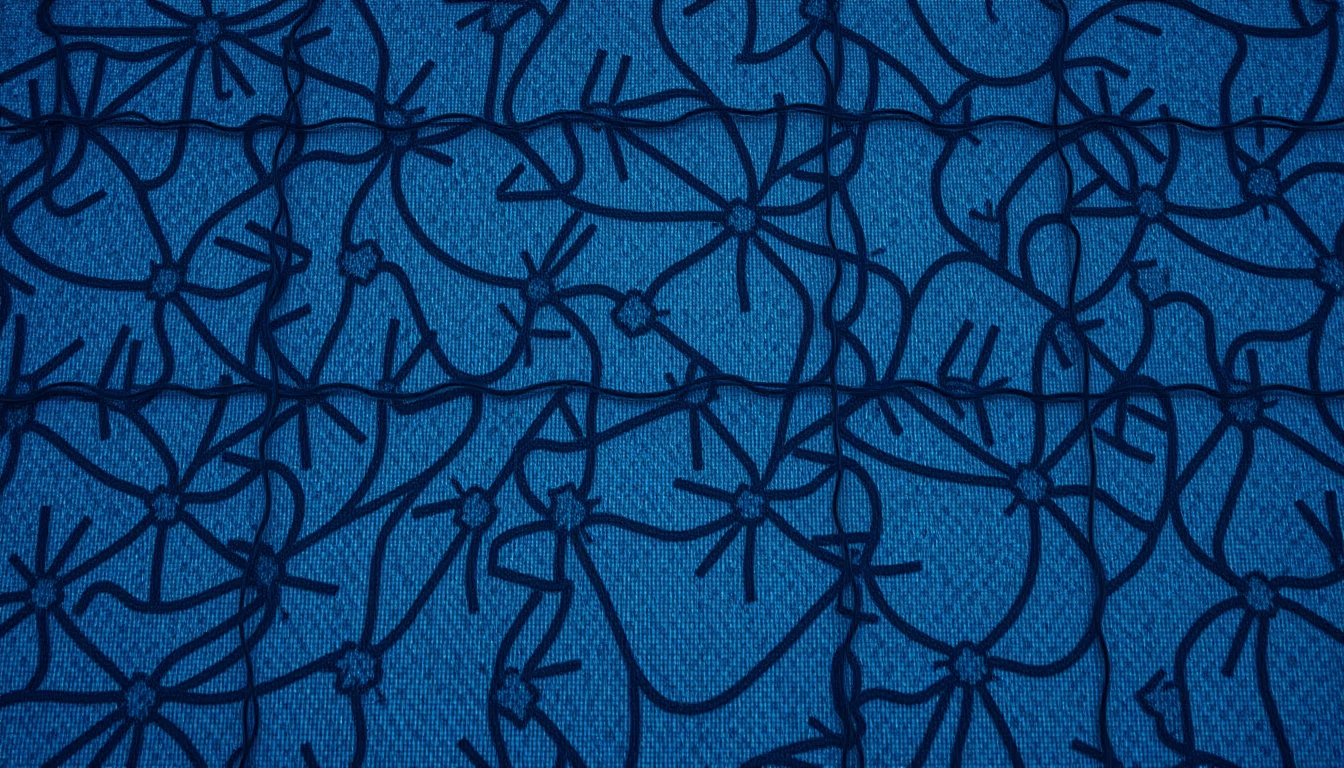
Tapestry medieval flemish
1344×768 · AVIF · CC BY 4.0

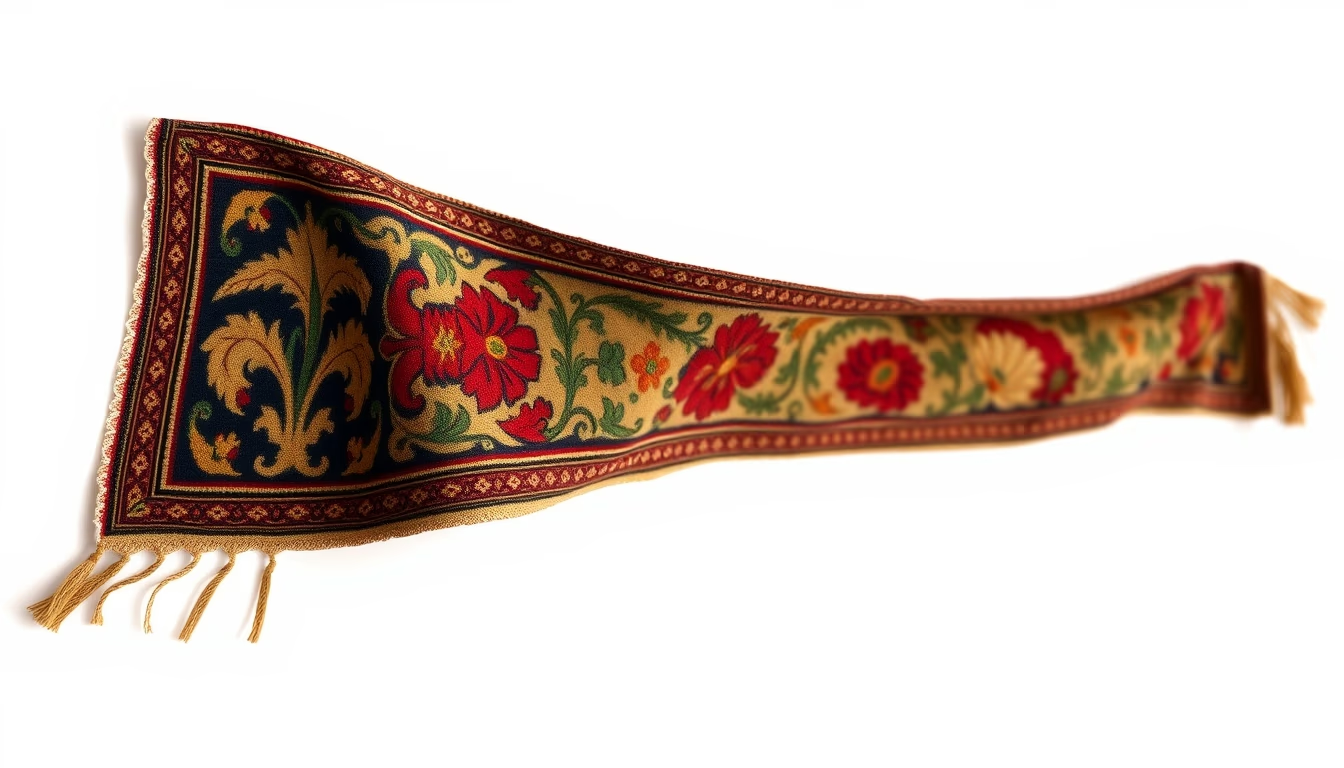
Medieval Flemish tapestries are masterpieces woven in wool and silk, produced in the Low Countries between the 14th and 16th centuries, depicting historical and mythological scenes with impressive detail.
About this subject
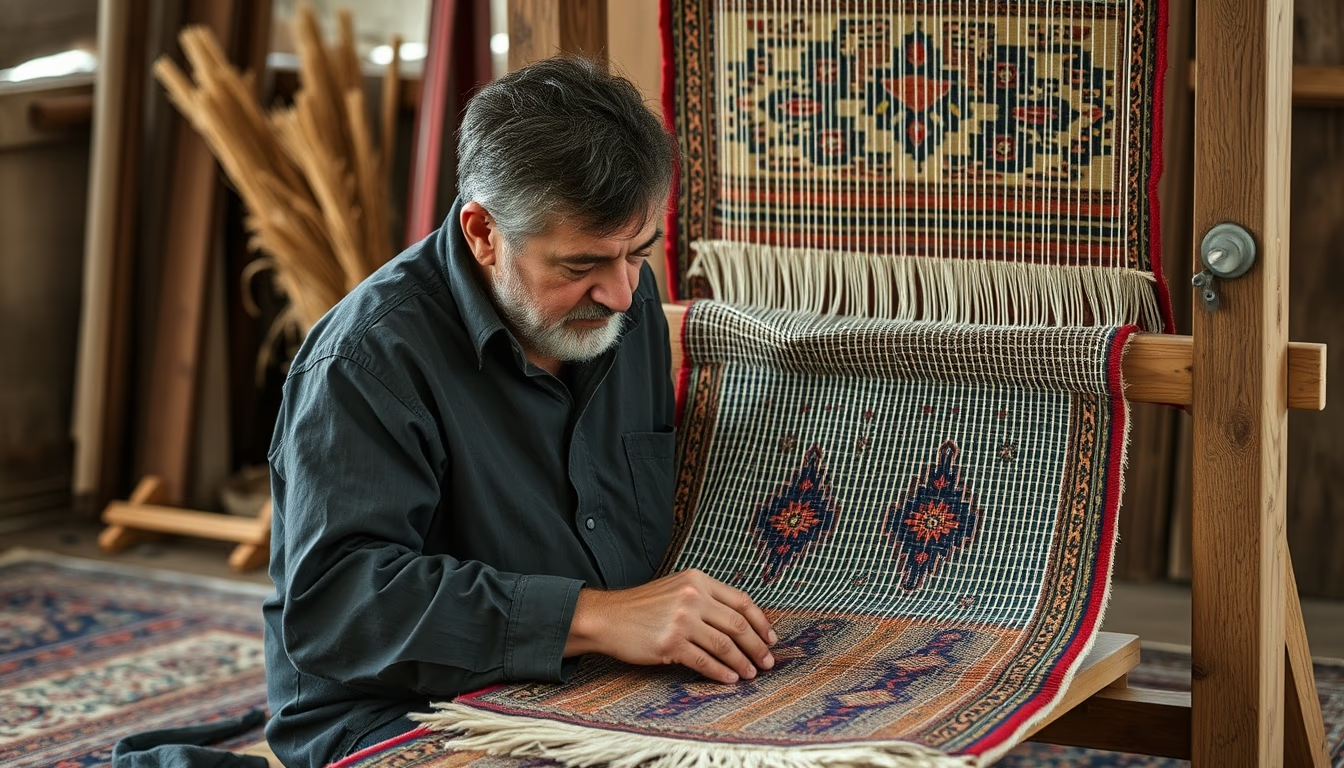
Medieval Flemish tapestries represent one of the most refined crafts of late medieval and Renaissance Europe. Produced mainly in cities like Brussels, Tournai, and Arras (which gave the word 'arras' to Portuguese), these pieces were woven on high-warp looms using wool, silk, and occasionally gold and silver threads. The artisans, known as liciers, copied cartoons designed by great artists of the time, such as Bernard van Orley and Pieter van Aelst, ensuring a high aesthetic standard.
These tapestries served multiple functions: beyond insulating the cold stone walls of castles, they were symbols of wealth and power. Narrative series, such as the famous 'The Lady and the Unicorn' (though French) or the 'Hunting Series', depicted battles, hunts, courtly scenes, and moral allegories. Patronage from nobility and the Church drove production, often requiring months or years for a single piece, with some examples measuring over 20 meters in length.
The Flemish technique was distinguished by a high thread density (over 10 wefts per centimeter), enabling color nuance and shading that rivaled painting. The use of English wool, considered the best in Europe, and the presence of strict guilds ensured superior quality. Many tapestries were exported throughout Europe, especially to Italy and Spain, influencing palatial decoration. Today, examples can be seen at the Musée de Cluny (Paris), the Rijksmuseum (Amsterdam), and the Palace of Versailles.
Interestingly, the term 'tapestry' in Portuguese derives from French 'tapisserie', but the Flemish tradition is so significant that for centuries 'Flemish tapestry' was synonymous with luxury and refinement. Unfortunately, many treasures were lost in fires, wars, and natural decay, making surviving specimens extremely valuable. The tapestry 'The Battle of Pavia', from the 16th century, for example, took three years to weave and was used to celebrate Charles V's victory.
Frequently Asked Questions
What distinguished Flemish tapestries from other medieval tapestries?
The high thread density, use of superior English wool, and faithful reproduction of cartoons by renowned artists made Flemish tapestries more detailed and refined, comparable to paintings.
What was the main function of tapestries in medieval castles?
Besides insulating stone walls, they demonstrated social status and wealth, and often told epic or religious stories to educate and entertain inhabitants.
Where can I see medieval Flemish tapestries today?
Important examples are displayed at the Musée de Cluny in Paris, the Rijksmuseum in Amsterdam, the Palace of Versailles, and the Metropolitan Museum of Art in New York, among others.
Direct URL
https://pub-c7d6a6ea828543ac903a74a341ccb2e1.r2.dev/imagens/tapestry-medieval-flemish-aerial-drone-shot-fresh13.avifHow to credit
Include a visible link back to UtilizAí. Copy one of the snippets below:
<a href="https://xn--utiliza-eza.com/en/midia/imagens/tapestry-medieval-flemish-aerial-drone-shot-fresh13">Tapestry medieval flemish</a> by <a href="https://xn--utiliza-eza.com">UtilizAí</a>, licensed under <a href="https://creativecommons.org/licenses/by/4.0/">CC BY 4.0</a>.
[Tapestry medieval flemish](https://xn--utiliza-eza.com/en/midia/imagens/tapestry-medieval-flemish-aerial-drone-shot-fresh13) by [UtilizAí](https://xn--utiliza-eza.com), CC BY 4.0
License: CC-BY-4.0