Taj mahal symmetric reflection
1344×768 · AVIF · CC BY 4.0
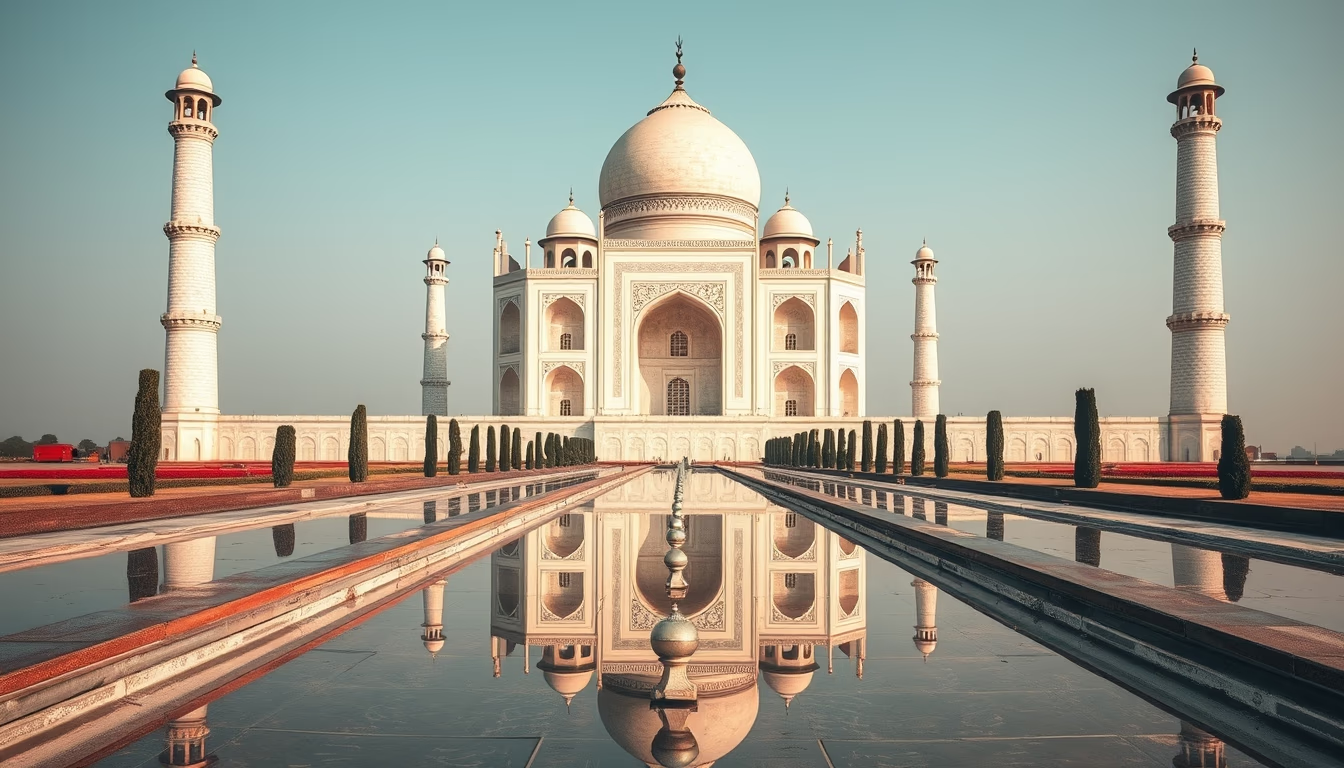
The Taj Mahal, a monument symbolizing love, displays perfect symmetry and its reflection in the waters of the central pool, a masterpiece of Mughal architecture.
About this subject
The Taj Mahal is a white marble mausoleum located in Agra, India, on the banks of the Yamuna River. It was commissioned by Emperor Shah Jahan in 1632 to house the tomb of his beloved wife Mumtaz Mahal and completed in 1653. Regarded as a masterpiece of Mughal architecture, it blends Islamic, Persian, Ottoman, and Indian influences. Its symmetry is striking: the main building, four minarets, central dome, and gardens follow a strict axis. The central reflecting pool, part of the Chahar Bagh (square garden divided by water channels), was designed to create a mirrored image of the Taj Mahal, symbolizing paradise on earth. This reflection technique was common in Persian architecture to represent the duality between heaven and earth. The Taj Mahal has been a UNESCO World Heritage Site since 1983 and is one of the New Seven Wonders of the World. Its construction involved around 20,000 artisans and materials sourced from across India and Asia, including jade from Tibet, crystal from the Himalayas, and lapis lazuli from Afghanistan. The main dome rises 73 meters and is flanked by four smaller domes. Throughout the day, the marble changes color: pink at dawn, milky white in the afternoon, and golden under moonlight, a phenomenon that captivates visitors worldwide.
Frequently Asked Questions
Why is the Taj Mahal so symmetrical?
The absolute symmetry of the Taj Mahal reflects Mughal and Islamic architectural principles aiming for perfection and celestial order. The building is mirrored on all four sides, except for Shah Jahan's tomb, added later, which slightly breaks the symmetry.
What is the purpose of the reflecting pool at the Taj Mahal?
The central reflecting pool, part of the Chahar Bagh garden, serves an aesthetic and symbolic function. It creates the mirror image of the mausoleum, representing paradise on earth, and also helps cool the environment and purify the air.
How long did it take to build the Taj Mahal?
The main construction of the Taj Mahal took about 21 years, from 1632 to 1653. However, completion of the entire complex, including gardens and ancillary structures, extended for a few more years.
Direct URL
https://pub-c7d6a6ea828543ac903a74a341ccb2e1.r2.dev/imagens/taj-mahal-symmetric-reflection-minimalist-composition-p5.avifHow to credit
Include a visible link back to UtilizAí. Copy one of the snippets below:
<a href="https://xn--utiliza-eza.com/en/midia/imagens/taj-mahal-symmetric-reflection-minimalist-composition-p5">Taj mahal symmetric reflection</a> by <a href="https://xn--utiliza-eza.com">UtilizAí</a>, licensed under <a href="https://creativecommons.org/licenses/by/4.0/">CC BY 4.0</a>.
[Taj mahal symmetric reflection](https://xn--utiliza-eza.com/en/midia/imagens/taj-mahal-symmetric-reflection-minimalist-composition-p5) by [UtilizAí](https://xn--utiliza-eza.com), CC BY 4.0
License: CC-BY-4.0