Taj mahal symmetric reflection
1344×768 · AVIF · CC BY 4.0
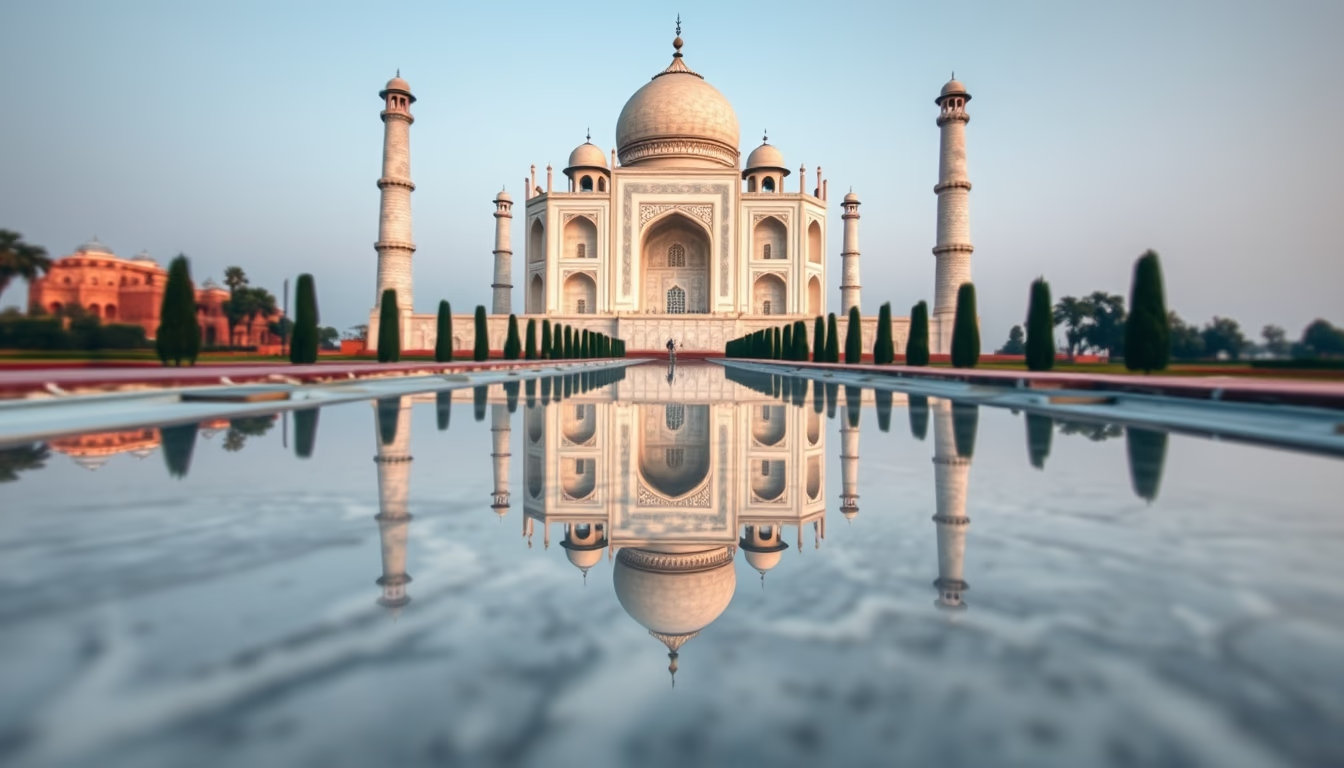
The Taj Mahal in Agra, India, is renowned for its perfect symmetry, enhanced by the reflection in the surrounding pool.
About this subject
The Taj Mahal is a white marble mausoleum built between 1632 and 1653 by Mughal emperor Shah Jahan in memory of his wife Mumtaz Mahal. Located in Agra on the banks of the Yamuna River, it was designed by architect Ustad Ahmad Lahauri and has been a UNESCO World Heritage site since 1983.
Symmetry is one of the Taj Mahal's most striking features. The complex is divided by a central axis, with the mausoleum exactly at the center, flanked by two red sandstone buildings, the mosque and the jawab (response), creating visual balance. The Char Bagh gardens, inspired by Islamic paradise, are cut by water channels that meet at a central pool, where the structure is reflected.
The reflection in the marble pool, also known as the water tank, is one of the Taj Mahal's photographic icons. This mirror of water not only duplicates the mausoleum's image but also symbolizes purity and the transience of life. However, symmetry is not absolute: Shah Jahan's tomb was added later beside Mumtaz Mahal's, breaking internal symmetry, but this is not visible from the outside.
The Taj Mahal attracts about 7 to 8 million visitors annually, as a universal symbol of love. Recent studies indicate that air pollution causes yellowing of the marble, requiring constant care. The symmetry and reflection continue to inspire architects, artists, and travelers worldwide.
Frequently Asked Questions
Why is the Taj Mahal considered a masterpiece of symmetry?
The construction follows a strict central axis, with the gardens, pool, and mausoleum perfectly aligned, reflecting Mughal celestial harmony.
What is the significance of the reflection in the Taj Mahal's pool?
The water tank in front of the mausoleum creates a symmetrical reflection that visually duplicates the structure, making the composition even more striking and one of the most photographed spots.
Is the Taj Mahal completely symmetrical?
Almost entirely, but Shah Jahan's tomb was added later asymmetrically relative to Mumtaz Mahal's, breaking perfect symmetry inside.
Direct URL
https://pub-c7d6a6ea828543ac903a74a341ccb2e1.r2.dev/imagens/taj-mahal-symmetric-reflection-macro-closeup-p4.avifHow to credit
Include a visible link back to UtilizAí. Copy one of the snippets below:
<a href="https://xn--utiliza-eza.com/en/midia/imagens/taj-mahal-symmetric-reflection-macro-closeup-p4">Taj mahal symmetric reflection</a> by <a href="https://xn--utiliza-eza.com">UtilizAí</a>, licensed under <a href="https://creativecommons.org/licenses/by/4.0/">CC BY 4.0</a>.
[Taj mahal symmetric reflection](https://xn--utiliza-eza.com/en/midia/imagens/taj-mahal-symmetric-reflection-macro-closeup-p4) by [UtilizAí](https://xn--utiliza-eza.com), CC BY 4.0
License: CC-BY-4.0