Sushi rolls colorful
1344×768 · AVIF · CC BY 4.0
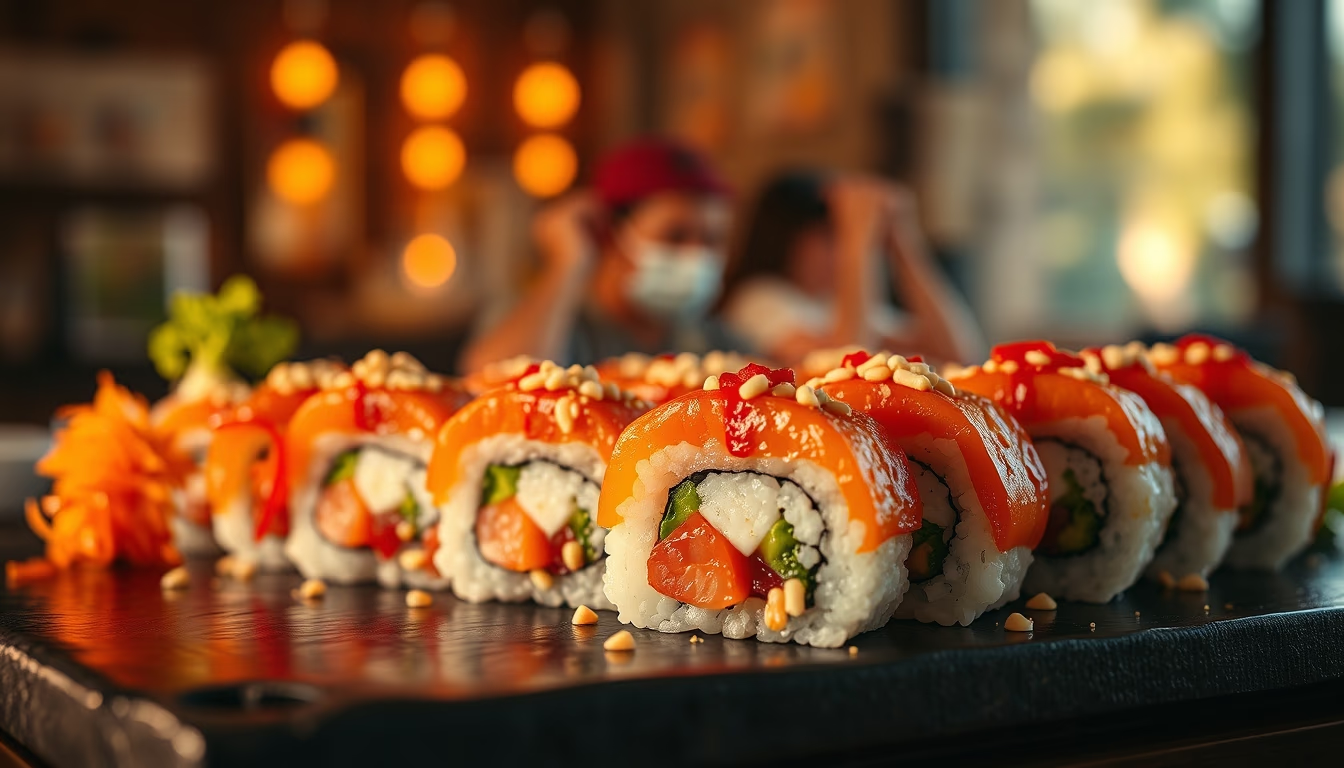
Colorful sushi rolls blend Japanese tradition with fresh ingredients and visual creativity, enjoyed worldwide.
About this subject
Colorful sushi rolls are modern variations of traditional Japanese maki that gained worldwide popularity in the 20th century. Unlike nigiri (rice balls topped with raw fish), rolls are assembled on a bamboo mat (makisu) with seasoned rice and nori seaweed either on the outside or inside. The bright colors come from ingredients such as orange salmon, green avocado, pale cucumber, orange tobiko (flying fish roe), and yellow mango. The rainbow roll, for example, is an uramaki (rice on the outside) topped with slices of raw fish arranged like a rainbow. Meanwhile, the dragon roll features shrimp tempura and avocado, shaped to resemble dragon scales.
The history of sushi rolls dates back to Edo-period Japan (17th century), when sushi was a method of preserving fermented fish with rice. In the 19th century, chef Hanaya Yohei created fresh rice nigiri, the precursor to modern sushi. Rolls became popular in the United States in the 1960s with the California roll (avocado, crab, cucumber), which inverted the seaweed to suit Western tastes. Since then, chefs worldwide have innovated with fruits, cheeses, and sauces, always maintaining a balance of flavors and colors.
Culturally, the presentation of sushi rolls reflects the Japanese principles of shun (seasonality) and ichiju-sansai (one soup, three sides). Contrasting colors are not merely aesthetic; they indicate nutritional variety and visual harmony. In Brazil, sushi has adapted with local ingredients such as cream cheese, strawberry, and even cupuaçu, creating a unique style called Brazilian sushi. The global popularity of colorful rolls shows how Japanese tradition reinvents itself while preserving its essence.
Frequently Asked Questions
What are colorful sushi rolls?
They are variations of maki (sushi rolls) that use vibrantly colored ingredients such as salmon, avocado, cucumber, fish roe, and fruits. Examples include the rainbow roll and the dragon roll.
What is the origin of sushi rolls?
Modern rolls emerged in the United States in the 1960s, like the California roll, which turned the nori seaweed inside out to suit Western tastes. Their basis, traditional Japanese maki, dates back to the 19th century.
Which ingredients give color to sushi rolls?
Ingredients like salmon (orange), tuna (dark red), avocado (green), cucumber (light green), tobiko (orange/red), and mango (yellow) are typical. Shiso leaves and green tea powder are also used for additional hues.
Direct URL
https://pub-c7d6a6ea828543ac903a74a341ccb2e1.r2.dev/imagens/sushi-rolls-colorful-cinematic-wide-shot-p2.avifHow to credit
Include a visible link back to UtilizAí. Copy one of the snippets below:
<a href="https://xn--utiliza-eza.com/en/midia/imagens/sushi-rolls-colorful-cinematic-wide-shot-p2">Sushi rolls colorful</a> by <a href="https://xn--utiliza-eza.com">UtilizAí</a>, licensed under <a href="https://creativecommons.org/licenses/by/4.0/">CC BY 4.0</a>.
[Sushi rolls colorful](https://xn--utiliza-eza.com/en/midia/imagens/sushi-rolls-colorful-cinematic-wide-shot-p2) by [UtilizAí](https://xn--utiliza-eza.com), CC BY 4.0
License: CC-BY-4.0