Sushi platter on slate elegant
1344×768 · AVIF · CC BY 4.0
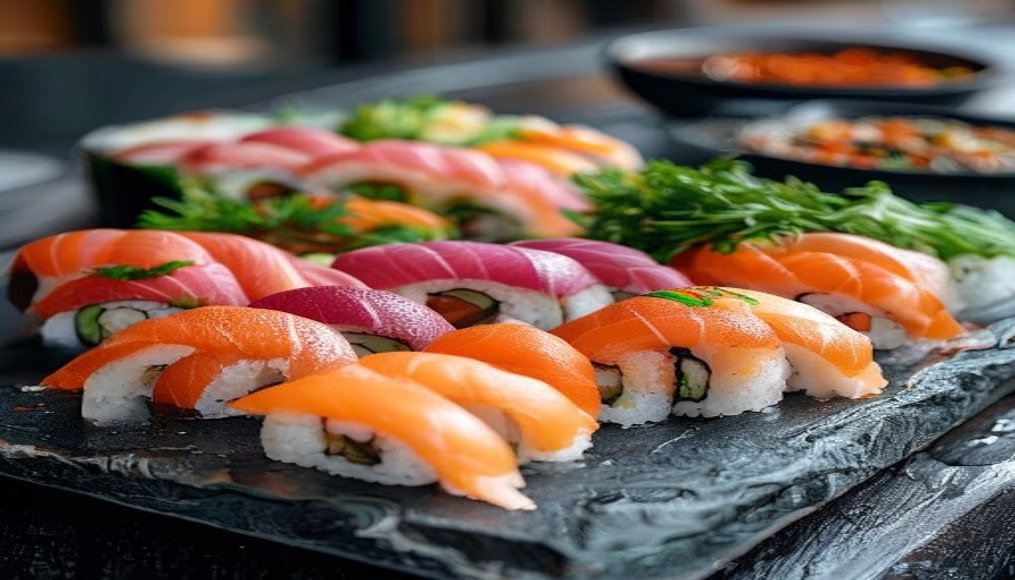
Sushi served on a slate stone offers an elegant presentation that enhances Japanese culinary tradition, combining aesthetics and ingredient freshness.
About this subject
Sushi, the iconic Japanese dish, has captivated global palates with its blend of vinegared rice, raw fish or seafood, and nori seaweed. The presentation on a slate stone, as seen in the image, is a modern choice that evokes the simplicity and sophistication of Japanese aesthetics. Slate, a fine-grained metamorphic rock, is often used in high-end restaurants for its smooth, dark surface that contrasts with the vibrant colors of salmon, tuna, and vegetables. This practice is not only visual: the stone keeps the temperature low, helping to preserve the freshness of the fish, a cornerstone of quality sushi.
In Japan, sushi dates back to the Edo period (1603, 1868), when fish was fermented with rice and salt. Over time, it evolved into nigiri style (rice balls topped with fish) and maki (nori rolls). Today, variations like Western-style sushi (with cream cheese or sauces) coexist with traditional ones. Fish selection varies by season and region; salmon is more popular in Western countries, while fatty tuna (otoro) is prized in Japan. Slate presentation has become common in fusion and omakase restaurants, where the chef decides cuts and arrangement, turning the dish into an ephemeral work of art.
Beyond aesthetics, the choice of serving surface influences the sensory experience. Slate is naturally porous and absorbs moisture, preventing the rice from becoming soggy, and its dark color highlights the shiny texture of the fish. In some cultures, stones like slate are believed to provide energetic balance (five elements philosophy). For connoisseurs, every detail matters: rice temperature, slice thickness, wasabi touch. Slate is not just a plate; it is an element that dialogues with the centuries-old tradition of respecting ingredients and seasonality, core principles of washoku (Japanese cuisine).
Frequently Asked Questions
Why is sushi served on a slate stone?
Slate is used for its smooth, dark surface that enhances ingredient colors and its ability to maintain a cool temperature, preserving fish freshness. It also adds an elegant, natural touch to the presentation.
What is the difference between sushi and sashimi?
Sushi is a dish that combines vinegared rice with other ingredients like raw fish or vegetables, served as nigiri, maki, or temaki. Sashimi is just thinly sliced raw fish or seafood, served without rice.
Is sushi a healthy food?
Yes, sushi can be healthy as it contains omega-3-rich fish, rice, and vegetables. However, watch out for sauces and fried elements like cream cheese and tempura, which may increase calories. Opt for versions with fresh fish and less rice.
Direct URL
https://pub-c7d6a6ea828543ac903a74a341ccb2e1.r2.dev/imagens/sushi-platter-on-slate-elegant-street-photography-v11.avifHow to credit
Include a visible link back to UtilizAí. Copy one of the snippets below:
<a href="https://xn--utiliza-eza.com/en/midia/imagens/sushi-platter-on-slate-elegant-street-photography-v11">Sushi platter on slate elegant</a> by <a href="https://xn--utiliza-eza.com">UtilizAí</a>, licensed under <a href="https://creativecommons.org/licenses/by/4.0/">CC BY 4.0</a>.
[Sushi platter on slate elegant](https://xn--utiliza-eza.com/en/midia/imagens/sushi-platter-on-slate-elegant-street-photography-v11) by [UtilizAí](https://xn--utiliza-eza.com), CC BY 4.0
License: CC-BY-4.0