Sushi platter on slate elegant
1344×768 · AVIF · CC BY 4.0
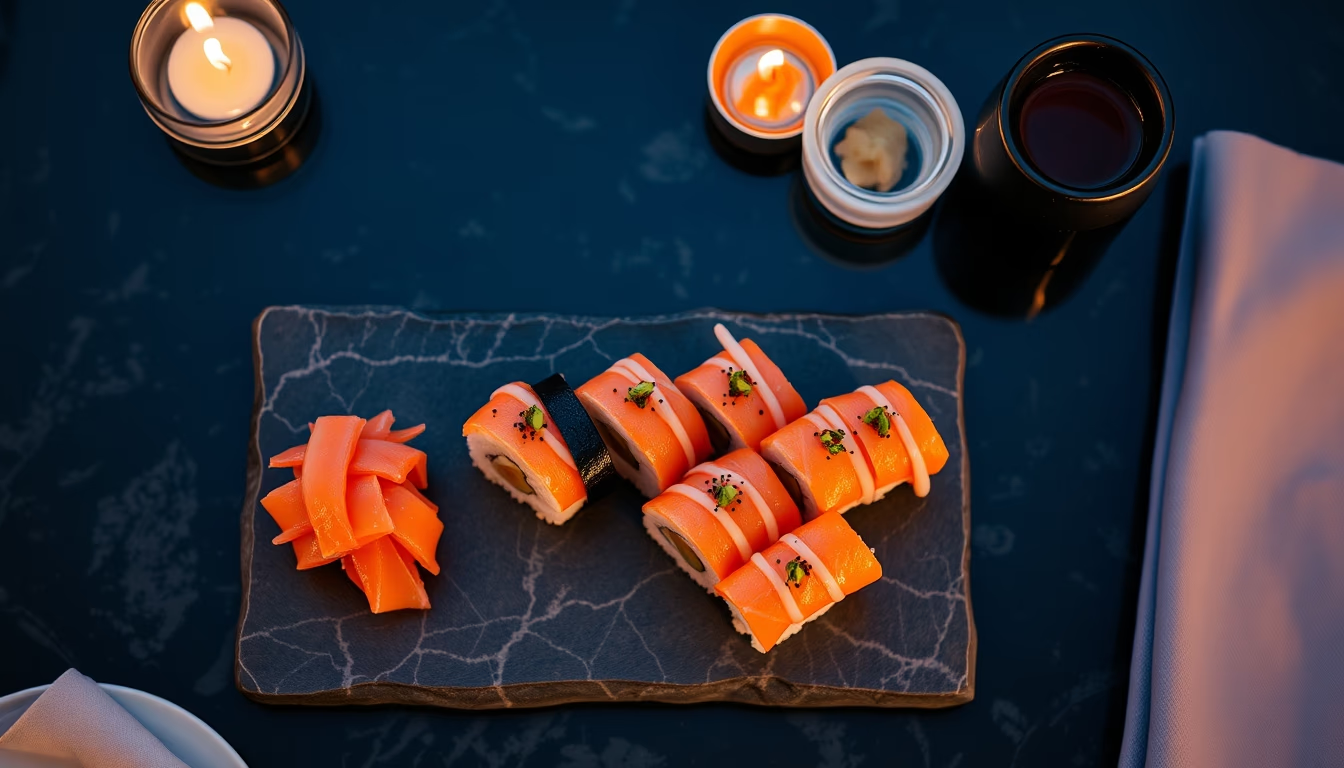
Sushi on a slate platter combines minimalist presentation with ancient Japanese culinary technique.
About this subject
Sushi, a hallmark of Japanese cuisine, traces its origins back to the 8th century when fish was fermented with rice for preservation. The modern version, featuring vinegared rice and fresh fish, emerged during the Edo period (1603-1868) in Tokyo. Presentation on slate platters, as seen in the image, is a contemporary trend that highlights the visual contrast between the dark stone and the vibrant colors of the ingredients.
Slate, a fine-grained metamorphic rock, is valued for its flat, non-porous surface, ideal for serving cold foods. In Japan, aesthetic presentation is as crucial as flavor, following the principle that one eats with the eyes. The arrangement of nigiri, sashimi, and maki rolls on the platter follows rules of color, texture, and height balance, creating a harmonious composition.
In Brazil, sushi gained popularity from the 1980s onward, driven by Japanese immigration and local ingredient adaptations such as cream cheese and salmon. Today, Brazil hosts one of the largest Japanese communities outside Japan, and Japanese cuisine is enjoyed nationwide. The use of slate platters is common in upscale restaurants seeking a refined visual experience.
Interestingly, slate is also used for school blackboards and roofing, but in gastronomy it stands out for its ability to maintain food temperature and its elegant aesthetic. The black platter enhances the natural colors of ingredients, such as the orange of salmon, green of wasabi, and white of rice, making the dish even more appetizing.
Frequently Asked Questions
Why is sushi served on slate platters?
Slate is a non-porous rock that maintains the temperature of cold foods and provides a flat, elegant surface. The contrast of black with the colors of sushi enhances visual presentation, valuing Japanese aesthetics.
What is the difference between nigiri, sashimi, and maki?
Nigiri is a ball of rice with a slice of raw fish on top. Sashimi are thin slices of raw fish served without rice. Maki are rolls of rice and fish wrapped in nori seaweed and cut into cylinders.
Is sushi healthy?
Yes, sushi is generally healthy as it is rich in omega-3, protein, and low in saturated fats. However, versions with cream cheese or fried ingredients can increase calorie content.
Direct URL
https://pub-c7d6a6ea828543ac903a74a341ccb2e1.r2.dev/imagens/sushi-platter-on-slate-elegant-aerial-drone-shot.avifHow to credit
Include a visible link back to UtilizAí. Copy one of the snippets below:
<a href="https://xn--utiliza-eza.com/en/midia/imagens/sushi-platter-on-slate-elegant-aerial-drone-shot">Sushi platter on slate elegant</a> by <a href="https://xn--utiliza-eza.com">UtilizAí</a>, licensed under <a href="https://creativecommons.org/licenses/by/4.0/">CC BY 4.0</a>.
[Sushi platter on slate elegant](https://xn--utiliza-eza.com/en/midia/imagens/sushi-platter-on-slate-elegant-aerial-drone-shot) by [UtilizAí](https://xn--utiliza-eza.com), CC BY 4.0
License: CC-BY-4.0