Surgical instruments laid out sterile
1344×768 · AVIF · CC BY 4.0
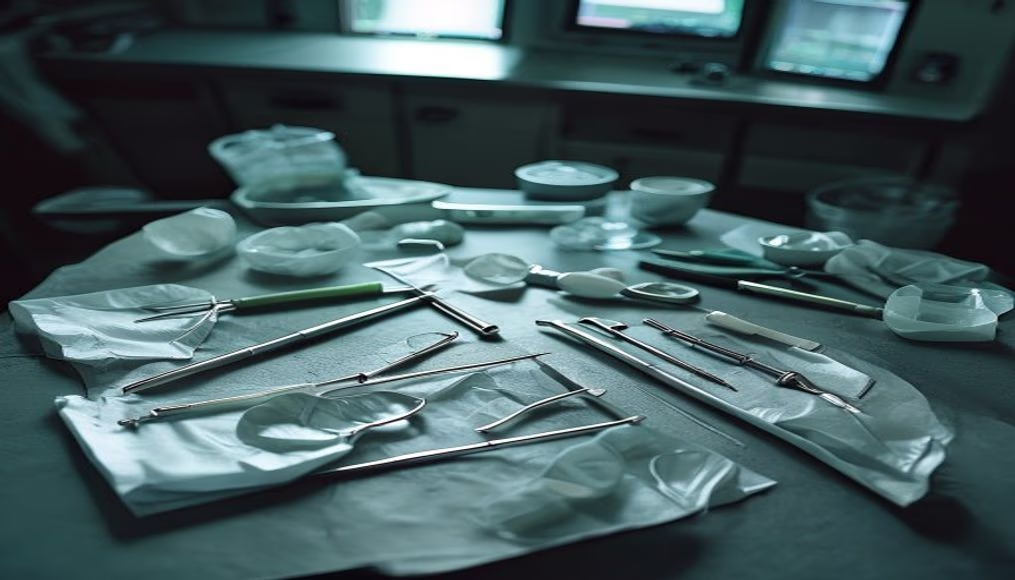
Surgical instruments arranged on a sterile tray, essential for aseptic and safe medical procedures.
About this subject
Surgical instruments are tools designed to perform specific actions during surgeries, such as cutting, dissecting, grasping, clamping, or suturing tissues. Their sterilization is a critical step to prevent infections, following rigorous protocols of cleaning, disinfection, and autoclaving. The World Health Organization estimates that surgical site infections affect up to 30% of patients in low- and middle-income countries, underscoring the importance of properly sterilized instruments.
In Brazil, the Collegiate Board Resolution RDC 15/2012 from Anvisa regulates the requirements for good practices in processing health products, including surgical instruments. The most common sterilization method is steam autoclaving, reaching temperatures of 121°C to 134°C. Instruments are organized on trays with sterile fields, and chemical or biological indicators confirm the cycle's effectiveness.
The history of surgical instruments dates back to ancient civilizations, such as the Egyptians, who used obsidian blades for trepanation. However, the modern era began in the 19th century with Joseph Lister, who introduced antisepsis using carbolic acid. Today, there are thousands of instrument types, including scalpels, forceps, retractors, and scissors, each with specialized designs for different specialties like neurosurgery, orthopedics, or cardiology.
Interesting fact: stainless steel is the most common material, but some sophisticated instruments are coated with titanium or diamond for greater durability and precision. Additionally, robotic surgery, such as the Da Vinci system, uses articulated instruments that are sterilized similarly, ensuring patient safety in minimally invasive procedures.
Frequently Asked Questions
What is the most common method of sterilizing surgical instruments?
The most common method is autoclaving, which uses pressurized steam at temperatures between 121°C and 134°C. This process eliminates microorganisms, including bacterial spores.
Why is proper sterilization of instruments so important?
Proper sterilization prevents surgical site infections, which can lead to serious complications, prolonged hospital stays, and even death. Rigorous protocols ensure patient safety.
What are the main types of surgical instruments?
Main types include scalpels (for cutting), forceps (for grasping or holding), retractors (for exposing tissues), scissors (for cutting), and needles (for suturing). Each specialty has specific instruments.
Direct URL
https://pub-c7d6a6ea828543ac903a74a341ccb2e1.r2.dev/imagens/surgical-instruments-laid-out-sterile-street-photography-v11.avifHow to credit
Include a visible link back to UtilizAí. Copy one of the snippets below:
<a href="https://xn--utiliza-eza.com/en/midia/imagens/surgical-instruments-laid-out-sterile-street-photography-v11">Surgical instruments laid out sterile</a> by <a href="https://xn--utiliza-eza.com">UtilizAí</a>, licensed under <a href="https://creativecommons.org/licenses/by/4.0/">CC BY 4.0</a>.
[Surgical instruments laid out sterile](https://xn--utiliza-eza.com/en/midia/imagens/surgical-instruments-laid-out-sterile-street-photography-v11) by [UtilizAí](https://xn--utiliza-eza.com), CC BY 4.0
License: CC-BY-4.0