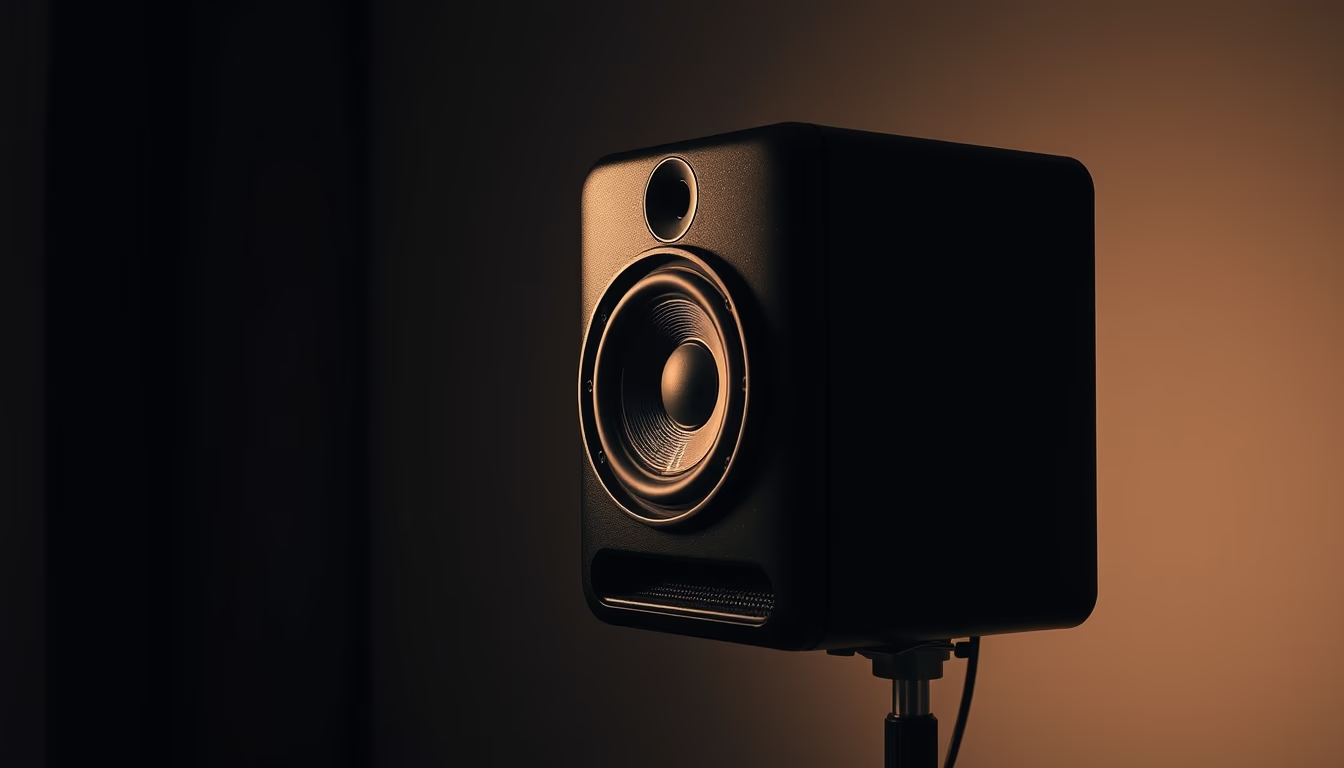
Studio monitor speaker
1344×768 · AVIF · CC BY 4.0
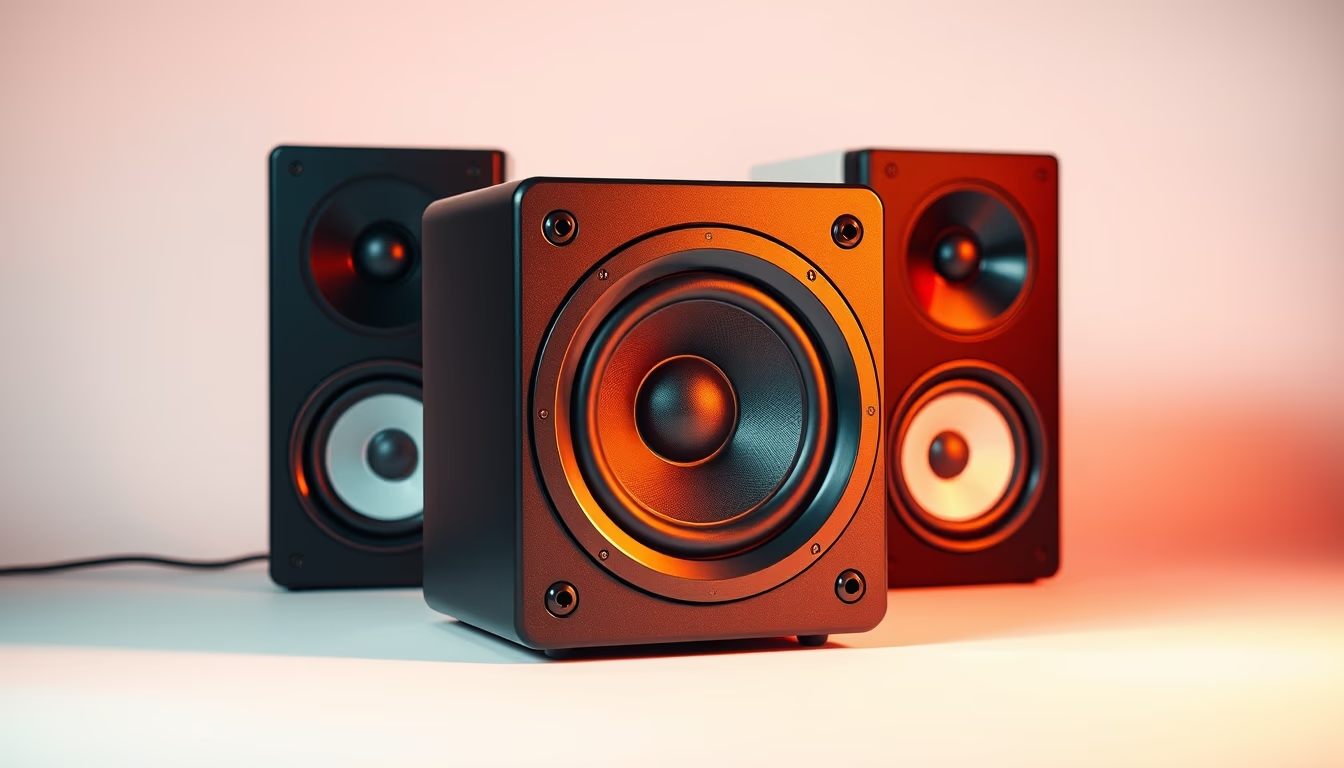
Professional loudspeakers designed for accurate and neutral sound reproduction, essential in recording, mixing and mastering studios.
About this subject
Studio monitors are loudspeakers designed to reproduce audio with minimal distortion and coloration, offering a flat frequency response. Unlike consumer speakers that often boost bass or treble to sound more pleasing, studio monitors aim for fidelity to the original signal, allowing sound engineers to identify flaws in recording or mixing.
There are two main types: active and passive. Active monitors have built-in amplifiers dedicated to each driver (woofer and tweeter), simplifying setup and providing better power control. Passive models require an external amplifier. Legendary models like the Yamaha NS-10 became industry standards for their ability to reveal mixing problems, while brands such as Genelec, Neumann, and KRK are widely used in professional studios.
The choice of monitor depends on room size, work type (recording, mixing, mastering), and budget. Nearfield monitors are placed close to the listener to minimize room acoustics interference. Mid-field and far-field models are used in larger rooms. Room acoustics are critical: even high-end monitors can sound poor in an untreated room, as reflections and resonances distort sound perception.
Trivia: the famous Yamaha NS-10 was originally released as a home speaker, but its mid-forward sound and paper cone construction made it a studio standard. Despite criticism for limited bass response, it is still used as a complementary reference in many professional setups today.
Frequently Asked Questions
What are studio monitors?
They are loudspeakers designed for neutral and accurate sound reproduction, used by audio professionals for recording, mixing and mastering. They differ from consumer speakers by having a flat frequency response and low distortion.
What is the difference between studio monitors and regular speakers?
Regular speakers often have a colored frequency response to sound pleasing. Studio monitors aim for neutrality, revealing imperfections in the audio. Monitors also handle higher sound pressure levels without distortion.
How to choose the best studio monitor?
Consider room size, listening distance, and type of work. Nearfield monitors are ideal for home studios. Prefer active models for simplicity. Test room acoustics and, if possible, listen to different monitors before purchasing.
Direct URL
https://pub-c7d6a6ea828543ac903a74a341ccb2e1.r2.dev/imagens/studio-monitor-speaker-studio-still-life-fresh13.avifHow to credit
Include a visible link back to UtilizAí. Copy one of the snippets below:
<a href="https://xn--utiliza-eza.com/en/midia/imagens/studio-monitor-speaker-studio-still-life-fresh13">Studio monitor speaker</a> by <a href="https://xn--utiliza-eza.com">UtilizAí</a>, licensed under <a href="https://creativecommons.org/licenses/by/4.0/">CC BY 4.0</a>.
[Studio monitor speaker](https://xn--utiliza-eza.com/en/midia/imagens/studio-monitor-speaker-studio-still-life-fresh13) by [UtilizAí](https://xn--utiliza-eza.com), CC BY 4.0
License: CC-BY-4.0