Studio monitor speaker
1344×768 · AVIF · CC BY 4.0
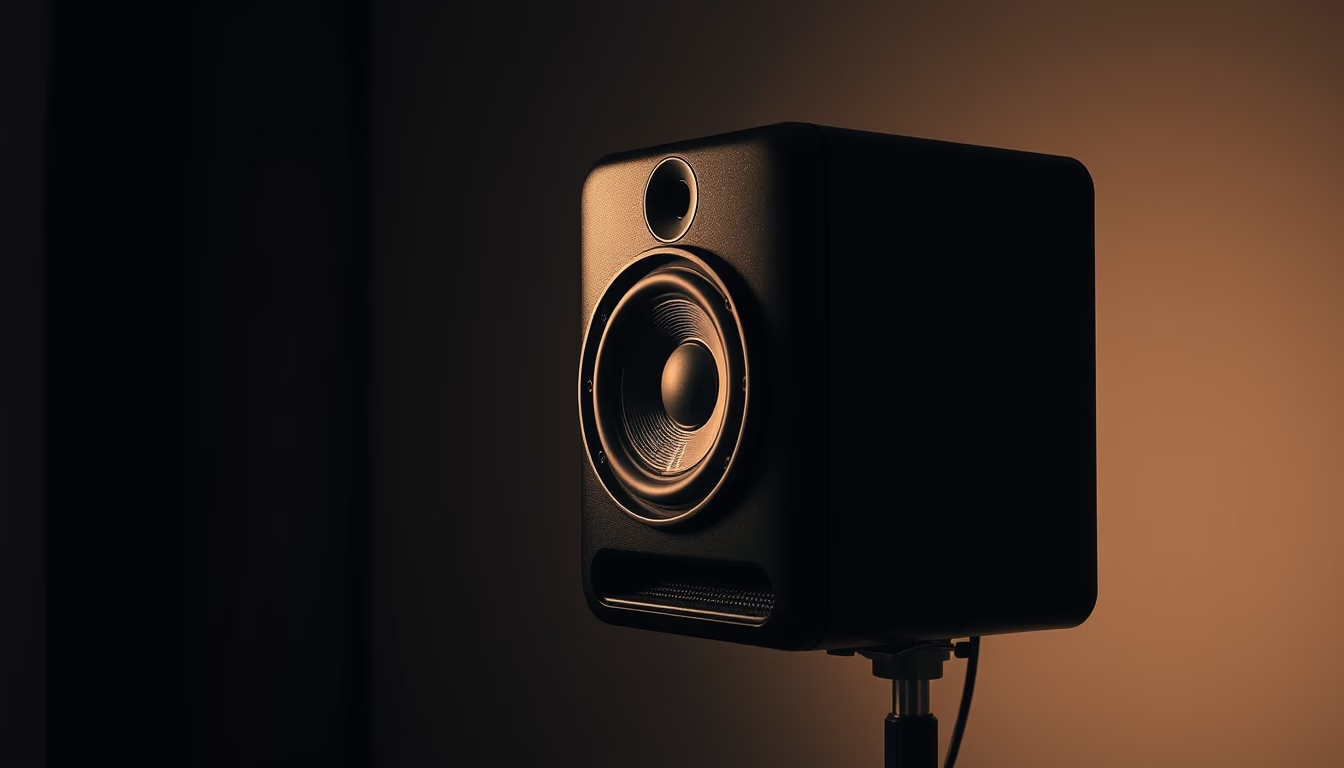
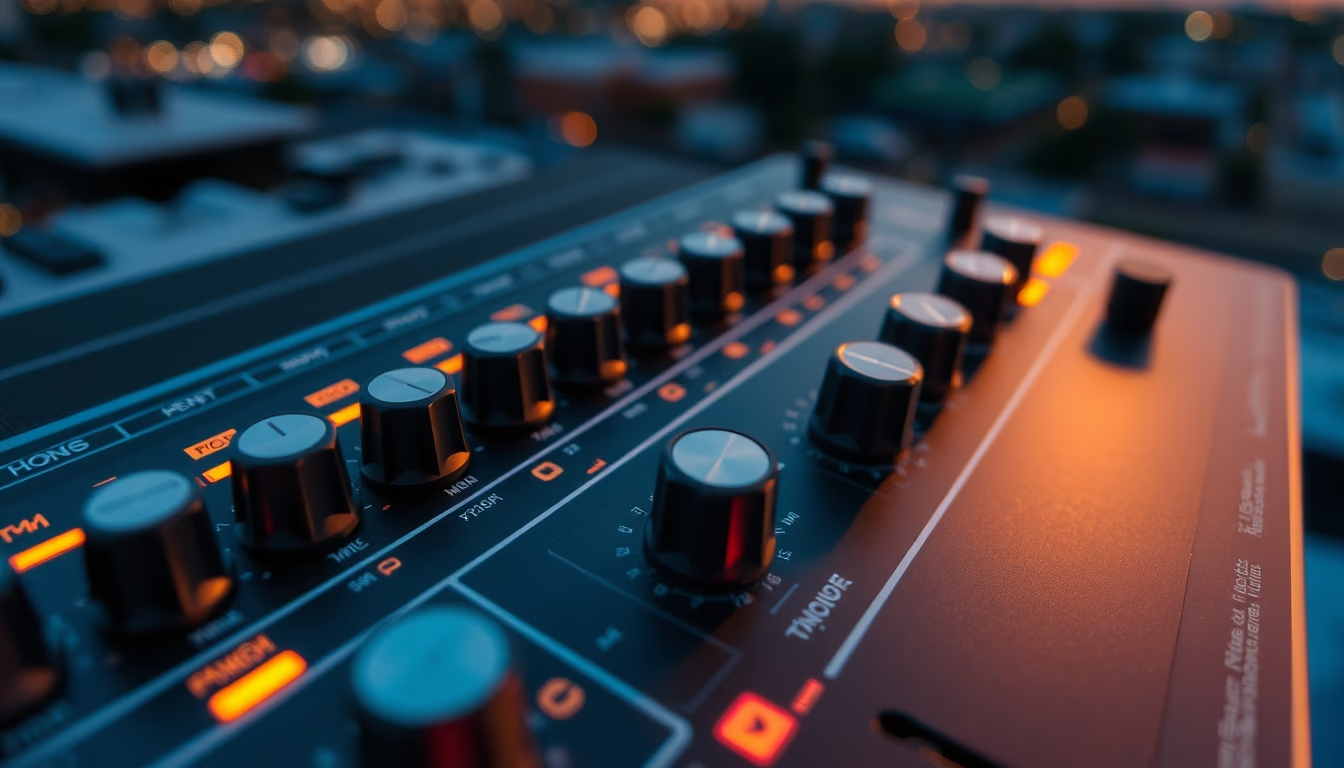
Studio monitor speakers are critical tools for professional audio mixing and mastering, offering accurate sound reproduction.
About this subject
Studio monitor speakers are loudspeakers designed to produce sound with minimal distortion and coloration, allowing audio engineers to critically evaluate recordings. Unlike consumer speakers, which often boost frequencies to please listeners, monitors aim for neutrality. This is essential for identifying issues such as sibilance, excessive bass, or tonal imbalances.
The history of studio monitors dates back to the early days of professional recording, with iconic models like the Yamaha NS-10 and the Auratone. The NS-10, released in the 1970s, became a standard due to its flat response and ability to reveal flaws. Even with modern advances, many studios still keep pairs of these monitors as complementary references. Another milestone was the development of near-field monitors, which reduce room acoustics interference by placing the speakers close to the listener.
Today, monitors from lines like KRK Rokit, Genelec, and Adam Audio dominate the market. Modern units feature built-in amplification, adjustable EQ, and balanced connections. Choosing monitors depends on budget and listening environment; it is common to combine main monitors with subwoofers for extended bass response. Besides music, studio monitors are used in film post-production, radio, and podcasting.
Interestingly, the term "monitor" comes from Latin "monere" (to warn), reflecting its role of alerting engineers to imperfections. In home studios, entry-level monitors like the Mackie CR-X offer decent accuracy at a low cost. For professional use, room acoustic calibration and careful placement are recommended, forming an equilateral triangle with the listener to achieve the ideal soundstage.
Frequently Asked Questions
What is the difference between a studio monitor and a regular speaker?
Studio monitors are designed for neutral and accurate reproduction, without frequency enhancement, while regular speakers often color the sound to be more pleasing to casual listeners. This allows engineers to detect imperfections in a mix.
Why is the Yamaha NS-10 so famous?
The NS-10 gained fame for its flat response and ability to reveal sibilance and midrange problems. It became a standard in studios during the 1980s and 1990s and is still used as a secondary reference today.
Do I need a subwoofer with studio monitors?
It depends on the monitor size and production type. Two-way monitors usually have limited bass response (down to about 50 Hz). For genres like electronic or hip-hop, a subwoofer can be helpful, but careful calibration is needed to avoid distortion.
Direct URL
https://pub-c7d6a6ea828543ac903a74a341ccb2e1.r2.dev/imagens/studio-monitor-speaker-rembrandt-lighting-dramatic-shadows-fresh18.avifHow to credit
Include a visible link back to UtilizAí. Copy one of the snippets below:
<a href="https://xn--utiliza-eza.com/en/midia/imagens/studio-monitor-speaker-rembrandt-lighting-dramatic-shadows-fresh18">Studio monitor speaker</a> by <a href="https://xn--utiliza-eza.com">UtilizAí</a>, licensed under <a href="https://creativecommons.org/licenses/by/4.0/">CC BY 4.0</a>.
[Studio monitor speaker](https://xn--utiliza-eza.com/en/midia/imagens/studio-monitor-speaker-rembrandt-lighting-dramatic-shadows-fresh18) by [UtilizAí](https://xn--utiliza-eza.com), CC BY 4.0
License: CC-BY-4.0