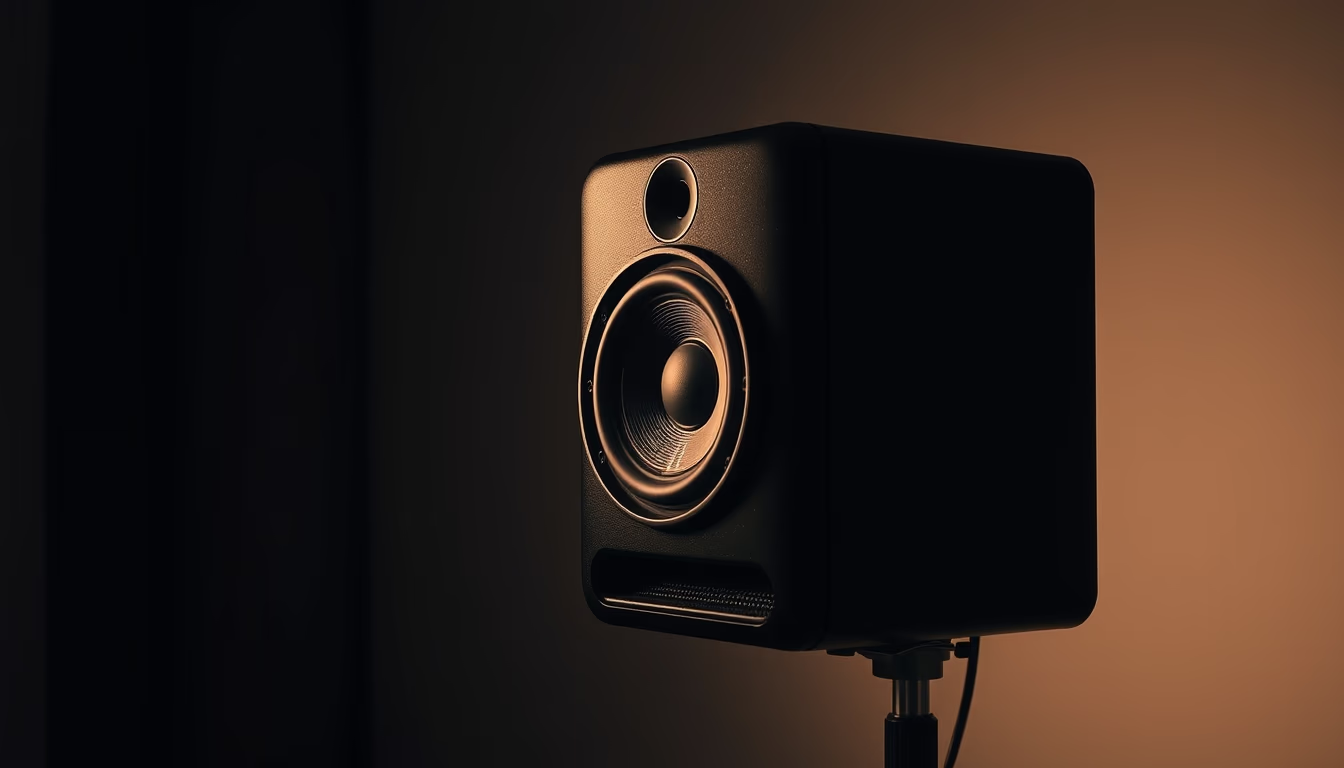
Studio monitor speaker
1344×768 · AVIF · CC BY 4.0
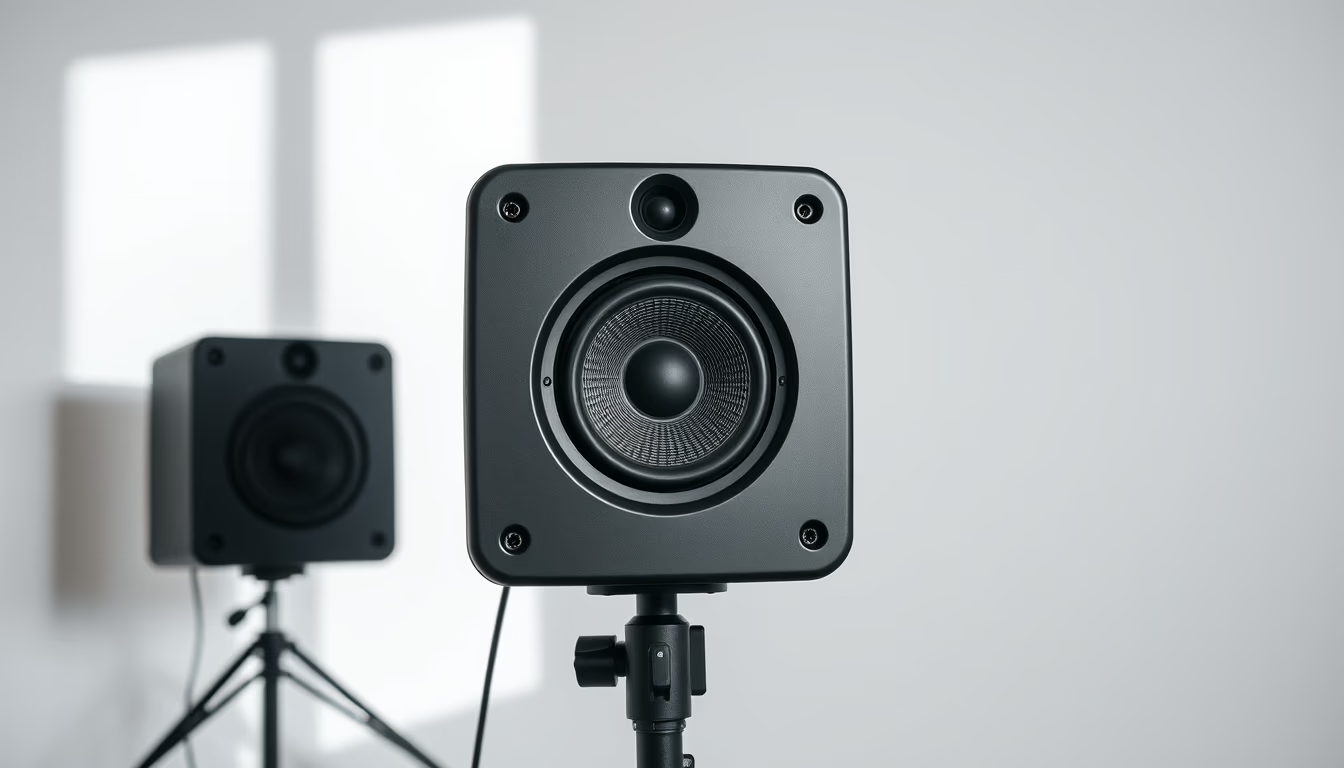
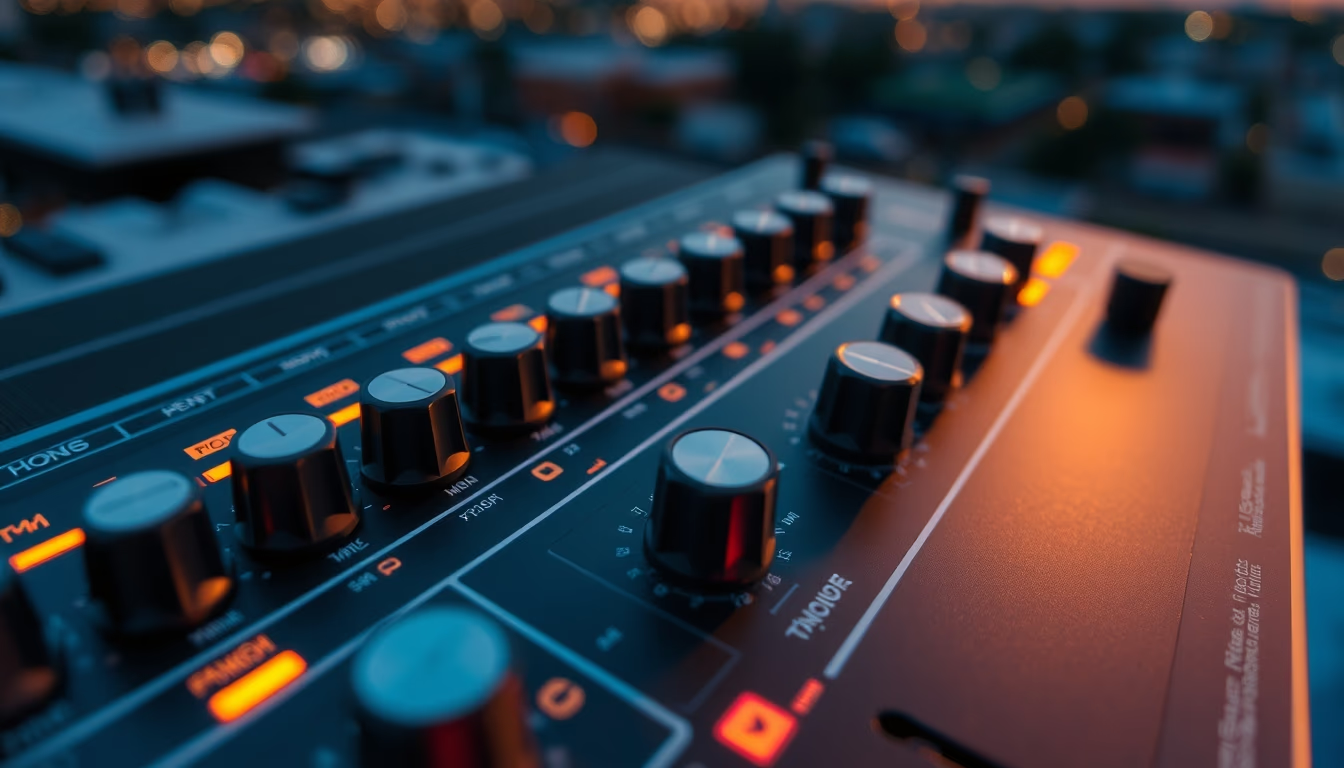
Studio monitor speaker designed for accurate and neutral audio reproduction, essential for professional mixing and mastering.
About this subject
Studio monitor speakers are loudspeakers specifically designed to provide a flat and linear frequency response, unlike consumer speakers that often boost bass or treble for listener enjoyment. This characteristic is crucial in music production environments, where sound engineers need to hear the exact content without coloration, enabling precise equalization and balancing decisions.
These devices are widely used in recording studios, radio stations, post-production rooms, and home studios. Models vary in size and power, from small nearfield monitors to larger midfield and farfield systems. Renowned manufacturers like Yamaha, Genelec, KRK, and Adam Audio dominate the market, each with specific sonic signatures. Passive studio monitors require external amplifiers, while active ones have built-in amplification, simplifying setup.
Choosing a studio monitor depends on room size, production type, and budget. A good monitor should have low distortion, fast transient response, and the ability to reproduce fine details. Additionally, room acoustics directly influence sound perception, making acoustic treatment and correction software like Sonarworks common. Interestingly, the famous Yamaha NS-10, originally a home speaker, became a studio reference due to its aggressive response that revealed mix imperfections.
In the context of the minimalist image, the simplified aesthetic reflects the design philosophy of many modern monitors, prioritizing functionality without visual excess. The "wave-fresh-10k" trend may refer to a clean, modern look common in professional audio gear. The combination of form and function is evident: every detail of the cabinet and driver is designed to reduce unwanted resonances and diffractions, ensuring sound purity.
Frequently Asked Questions
What is the difference between a studio monitor and a regular speaker?
Studio monitors have a flat frequency response without artificial enhancements, allowing professionals to hear the audio exactly as it is. Regular Hi-Fi speakers often boost bass and treble to sound more pleasing, which can mask mix imperfections.
Do I need acoustic treatment for studio monitors?
Yes, acoustic treatment is highly recommended because the room affects sound reproduction. Without it, even good monitors can provide inaccurate perception due to reflections, resonances, and standing waves.
Active vs passive monitors: which should I choose?
Active monitors are more practical with built-in amplification and optimized crossovers, ideal for simple setups. Passive monitors require external amplifiers and speaker cables but offer more flexibility in amplifier choice.
Direct URL
https://pub-c7d6a6ea828543ac903a74a341ccb2e1.r2.dev/imagens/studio-monitor-speaker-minimalist-composition-fresh4.avifHow to credit
Include a visible link back to UtilizAí. Copy one of the snippets below:
<a href="https://xn--utiliza-eza.com/en/midia/imagens/studio-monitor-speaker-minimalist-composition-fresh4">Studio monitor speaker</a> by <a href="https://xn--utiliza-eza.com">UtilizAí</a>, licensed under <a href="https://creativecommons.org/licenses/by/4.0/">CC BY 4.0</a>.
[Studio monitor speaker](https://xn--utiliza-eza.com/en/midia/imagens/studio-monitor-speaker-minimalist-composition-fresh4) by [UtilizAí](https://xn--utiliza-eza.com), CC BY 4.0
License: CC-BY-4.0