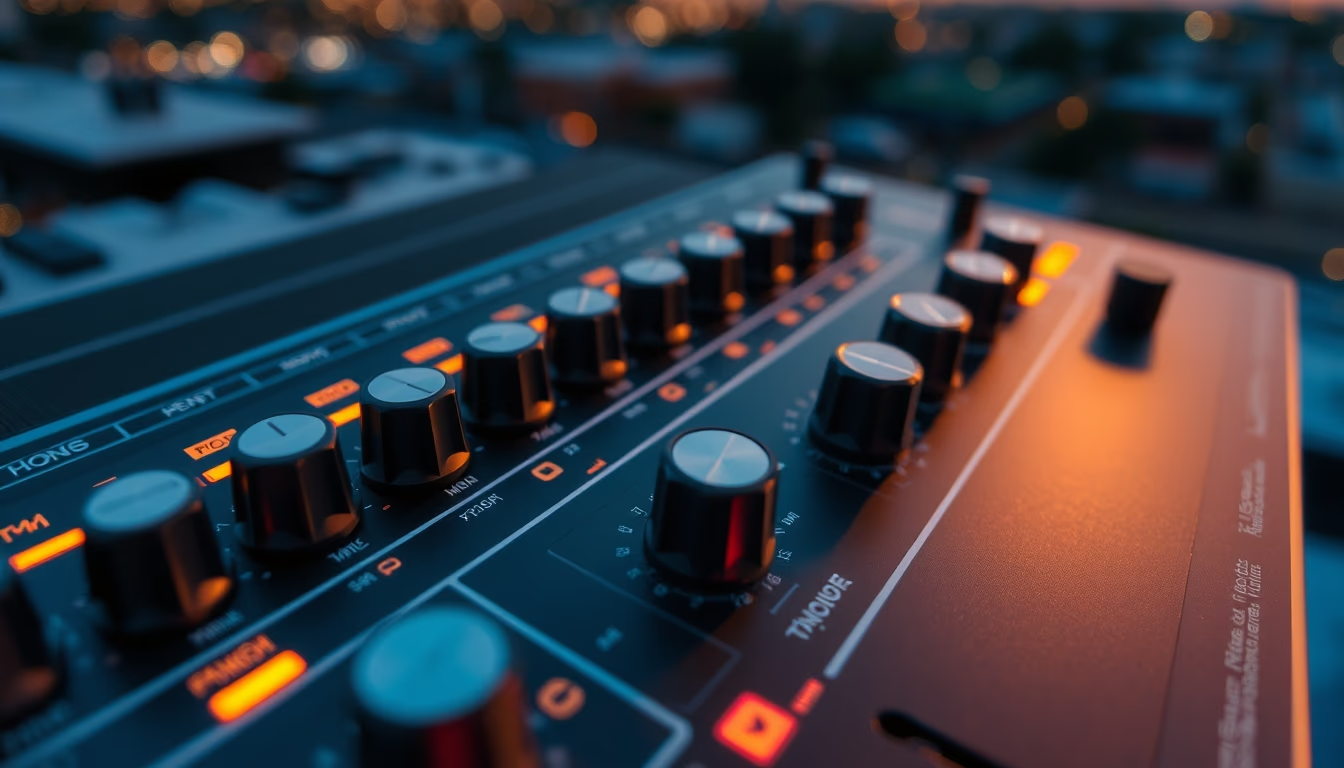
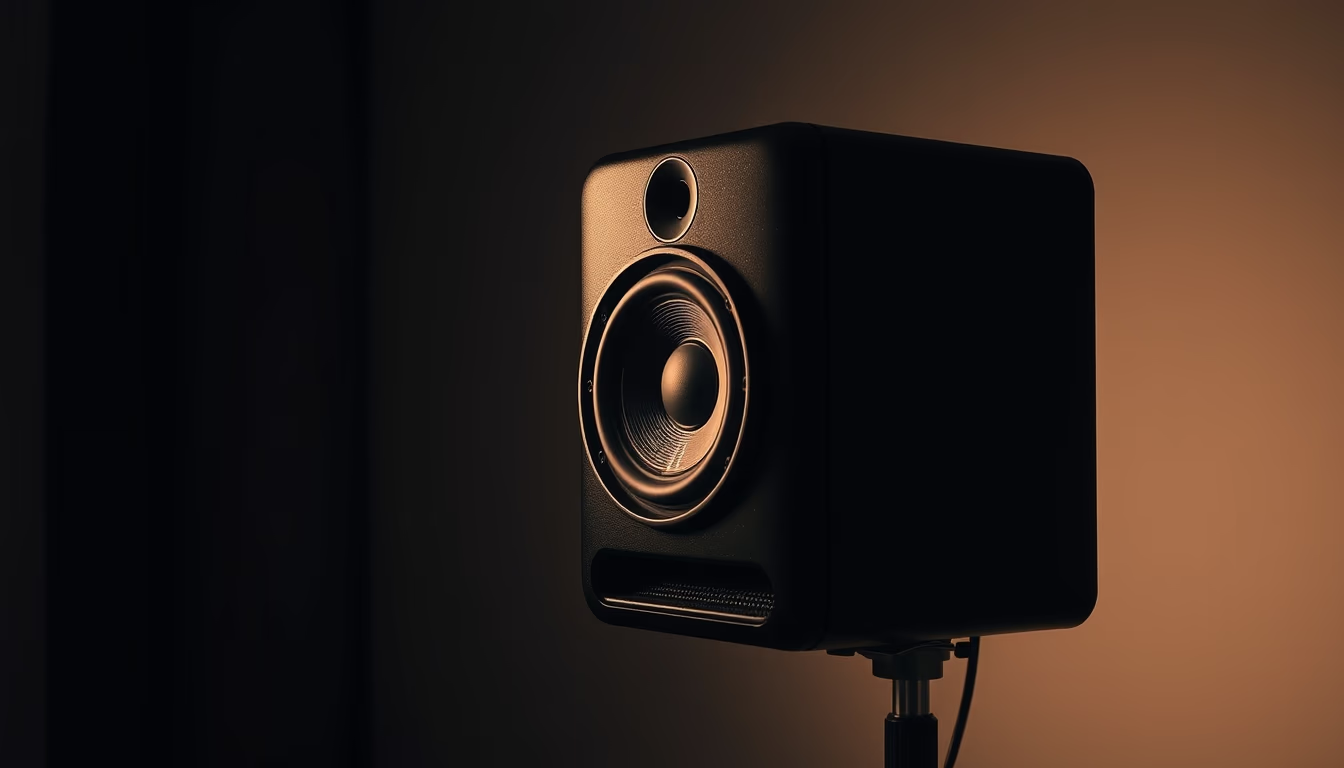
Studio monitor speaker
1344×768 · AVIF · CC BY 4.0

Studio monitors are loudspeakers designed for accurate audio reproduction, essential in professional music production.
About this subject
Studio monitors, also known as reference monitors, are audio systems designed to provide a flat frequency response, meaning no artificial boosts in bass or treble. This characteristic is essential for sound engineers and music producers, as it allows them to hear the recording exactly as it is, without coloration that could mislead the ear when making mixing and mastering adjustments. Unlike consumer speakers (such as Hi-Fi or PA systems), which often emphasize certain ranges to sound more pleasing, studio monitors aim for complete neutrality.
The history of studio monitors dates back to the 1970s, when companies like Yamaha (with the legendary NS-10) and JBL began developing specific models for control rooms in recording studios. The NS-10, in particular, became an industry standard for its ability to reveal mixing flaws, even with its considered "harsh" sound; many producers used it as a second reference. Today, there are two main categories: passive monitors, which require an external amplifier, and active monitors, which have built-in amplification. The latter are more common in home studios due to their convenience.
The choice and placement of monitors are critical for a reliable listening environment. The optimal distance between the listener and the monitors forms an equilateral triangle with the listening point, known as the "sweet spot." Additionally, the use of acoustic panels, bass traps, and absorbers helps minimize unwanted room reflections. Renowned brands such as Genelec, Neumann, and KRK are market references, each with their own technologies, such as waveguides for better sound dispersion or automatic calibration systems to correct room acoustics.
Frequently Asked Questions
What is the difference between studio monitors and regular speakers?
Studio monitors have a flat frequency response with no artificial boosts, allowing neutral audio evaluation. Regular (Hi-Fi) speakers emphasize certain frequencies to sound pleasant, making them unsuitable for mixing.
What are active and passive monitors?
An active monitor has a built-in amplifier and only needs a signal cable and power. A passive monitor requires an external amplifier, being less common in modern studios.
Why is the Yamaha NS-10 so famous?
The NS-10 became legendary for its ability to reveal mixing flaws, even with its harsh sound. Many professionals used it as a second reference, and it became a standard in the 1980s and 1990s.
Direct URL
https://pub-c7d6a6ea828543ac903a74a341ccb2e1.r2.dev/imagens/studio-monitor-speaker-high-fashion-editorial-fresh9.avifHow to credit
Include a visible link back to UtilizAí. Copy one of the snippets below:
<a href="https://xn--utiliza-eza.com/en/midia/imagens/studio-monitor-speaker-high-fashion-editorial-fresh9">Studio monitor speaker</a> by <a href="https://xn--utiliza-eza.com">UtilizAí</a>, licensed under <a href="https://creativecommons.org/licenses/by/4.0/">CC BY 4.0</a>.
[Studio monitor speaker](https://xn--utiliza-eza.com/en/midia/imagens/studio-monitor-speaker-high-fashion-editorial-fresh9) by [UtilizAí](https://xn--utiliza-eza.com), CC BY 4.0
License: CC-BY-4.0