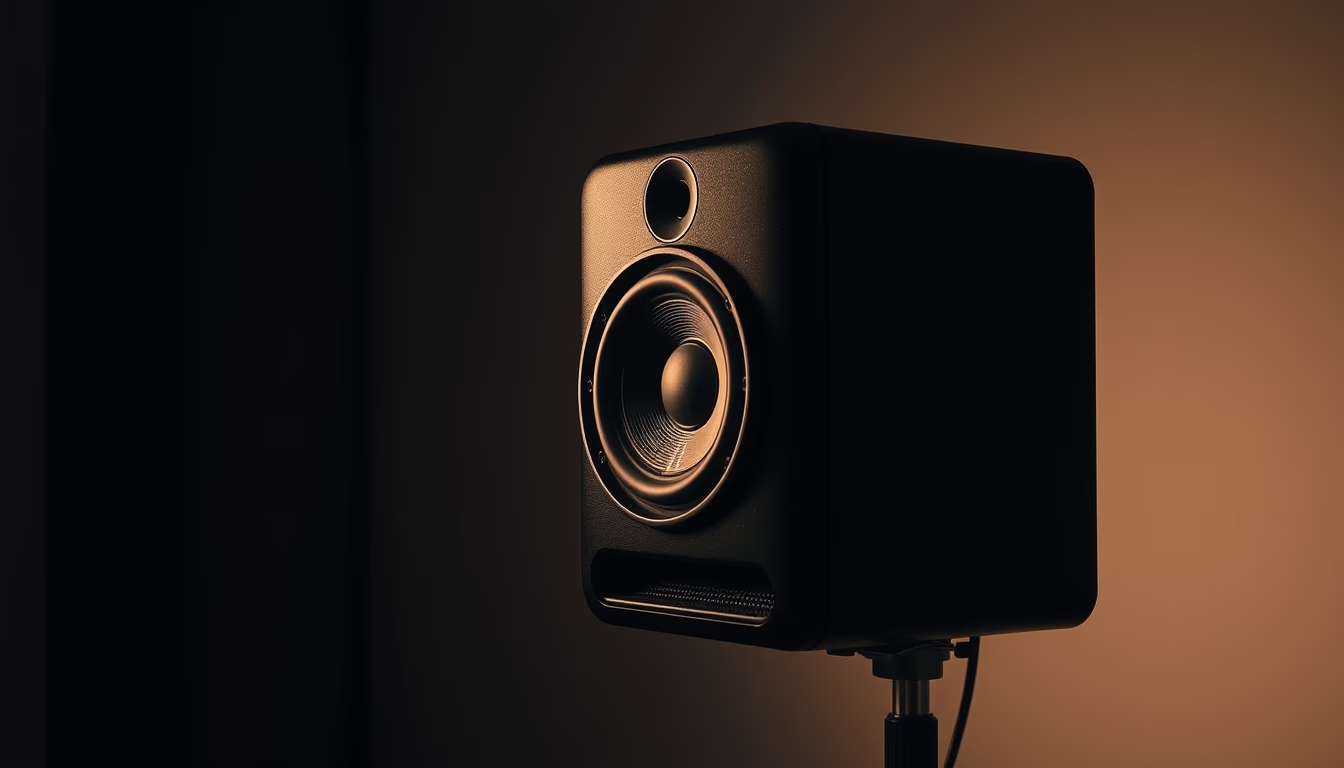
Studio monitor speaker
1344×768 · AVIF · CC BY 4.0
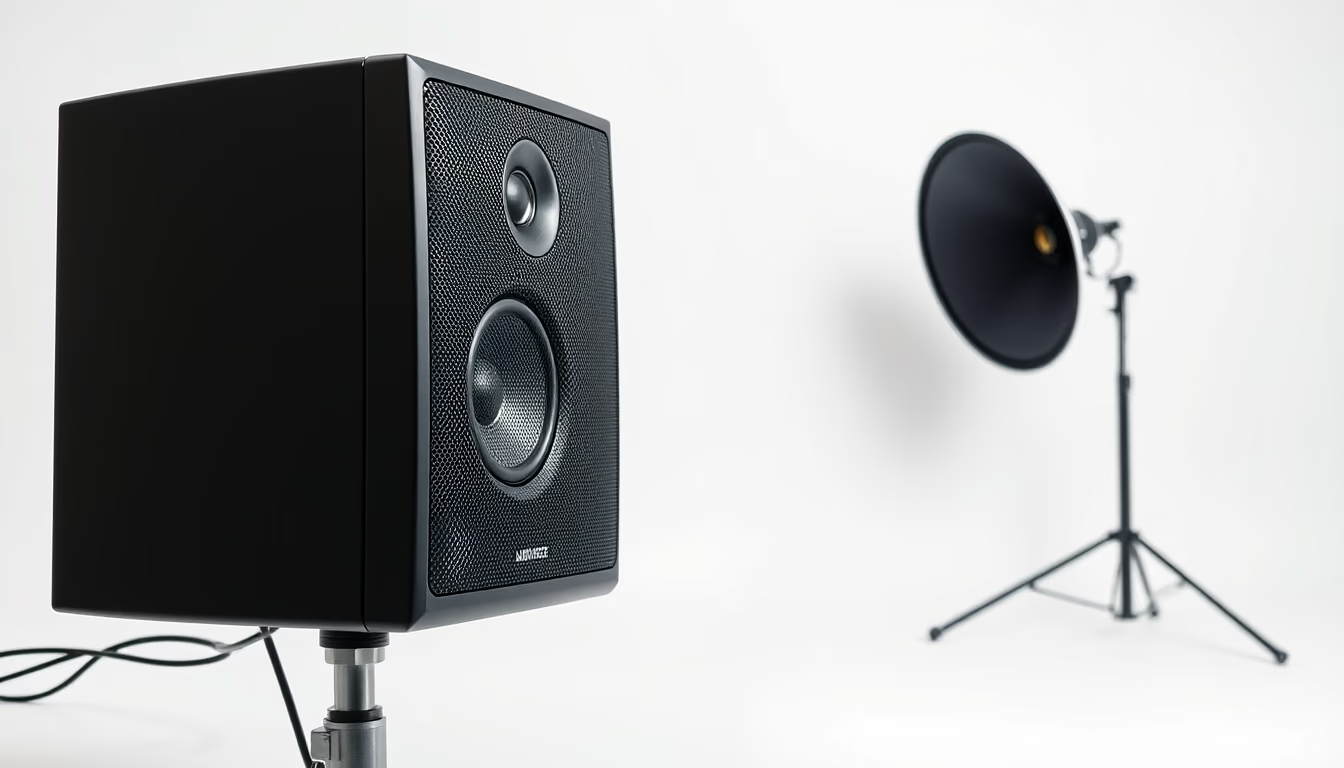
Studio monitor speakers designed for accurate, neutral sound reproduction, essential in professional music production.
About this subject
Studio monitor speakers are loudspeakers designed to deliver a flat frequency response, meaning no added coloration. Unlike consumer speakers that often boost bass or treble to please listeners, studio monitors aim for absolute fidelity to the original signal. This allows audio engineers to identify flaws in a mix, such as excessive bass or sibilant vocals, that would go unnoticed on conventional systems.
Most studio monitors are designed for near-field monitoring, placed close to the listener, typically on the mixing console. This configuration minimizes the influence of room acoustics, letting the engineer hear primarily the direct sound from the speakers. Monitors can be active, with built-in amplification, or passive, requiring an external amplifier. Active models are popular for their integration and convenience.
A milestone in studio monitor history was the Yamaha NS-10, launched in 1978. Despite having a far from flat frequency response, it became an industry standard for its ability to reveal mixing problems. Many studios still keep it as a secondary reference. Today, brands like Genelec, KRK, and Adam Audio dominate the market, with models incorporating technologies such as ribbon tweeters and digital room correction.
Interestingly, the development of studio monitors often involves anechoic chambers, rooms completely free of sound reflections, where speakers are tested to ensure linear response. The precision of these devices is so crucial that mastering studios invest in monitoring systems that can cost hundreds of thousands of dollars, highlighting the central role these equipments play in the music production chain.
Frequently Asked Questions
What is the difference between a studio monitor and a regular speaker?
Studio monitors have a flat frequency response for faithful audio reproduction, without boosting bass or treble. Regular speakers are colored to please listeners, which can mask imperfections in a mix.
What does near-field monitoring mean?
It means placing the monitors close to the listener, usually 1-2 meters away, to minimize the effect of room acoustics and hear mainly the direct sound from the speakers.
Why is the Yamaha NS-10 so famous among audio engineers?
The NS-10 became popular for its ability to reveal mixing problems, like mid-range buildup, despite its non-flat response. Many professionals use it as a secondary reference to check how a mix will sound on consumer systems.
Direct URL
https://pub-c7d6a6ea828543ac903a74a341ccb2e1.r2.dev/imagens/studio-monitor-speaker-commercial-product-photography-fresh7.avifHow to credit
Include a visible link back to UtilizAí. Copy one of the snippets below:
<a href="https://xn--utiliza-eza.com/en/midia/imagens/studio-monitor-speaker-commercial-product-photography-fresh7">Studio monitor speaker</a> by <a href="https://xn--utiliza-eza.com">UtilizAí</a>, licensed under <a href="https://creativecommons.org/licenses/by/4.0/">CC BY 4.0</a>.
[Studio monitor speaker](https://xn--utiliza-eza.com/en/midia/imagens/studio-monitor-speaker-commercial-product-photography-fresh7) by [UtilizAí](https://xn--utiliza-eza.com), CC BY 4.0
License: CC-BY-4.0