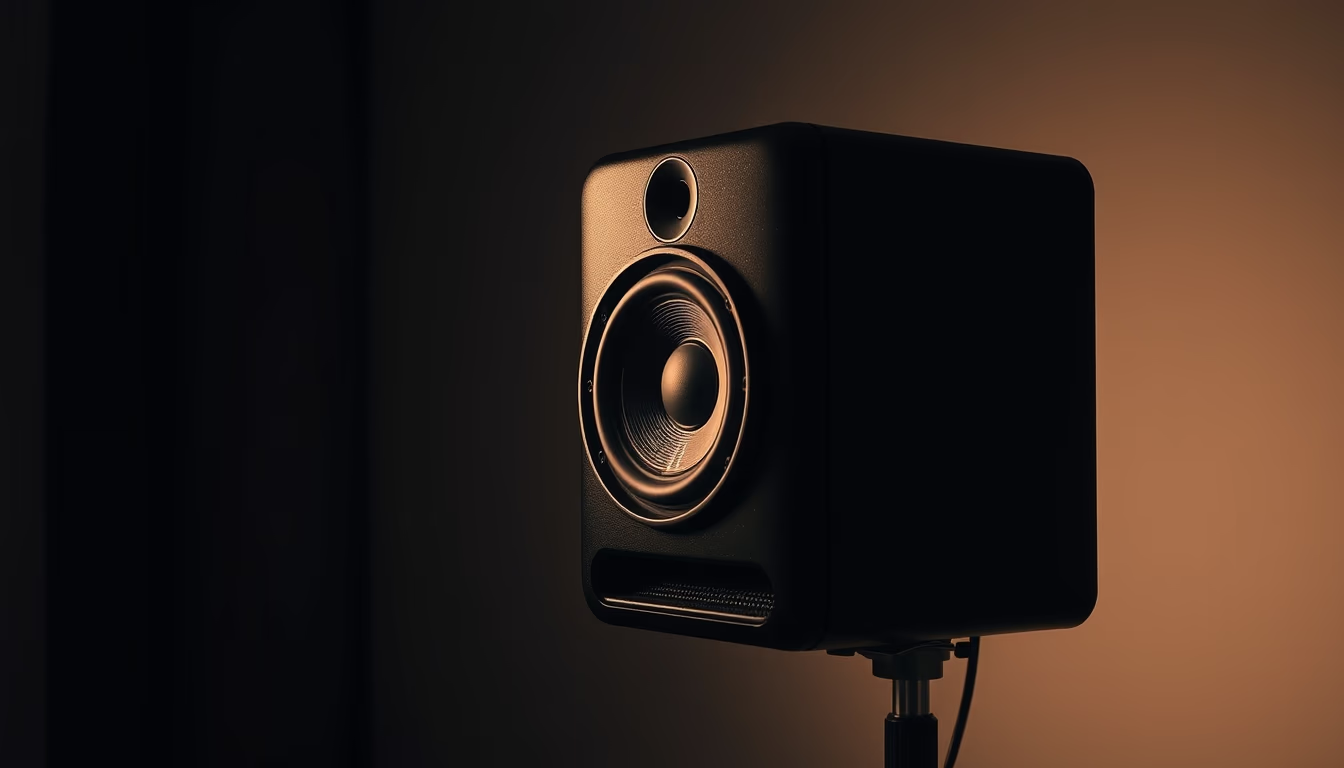
Studio monitor speaker
1344×768 · AVIF · CC BY 4.0

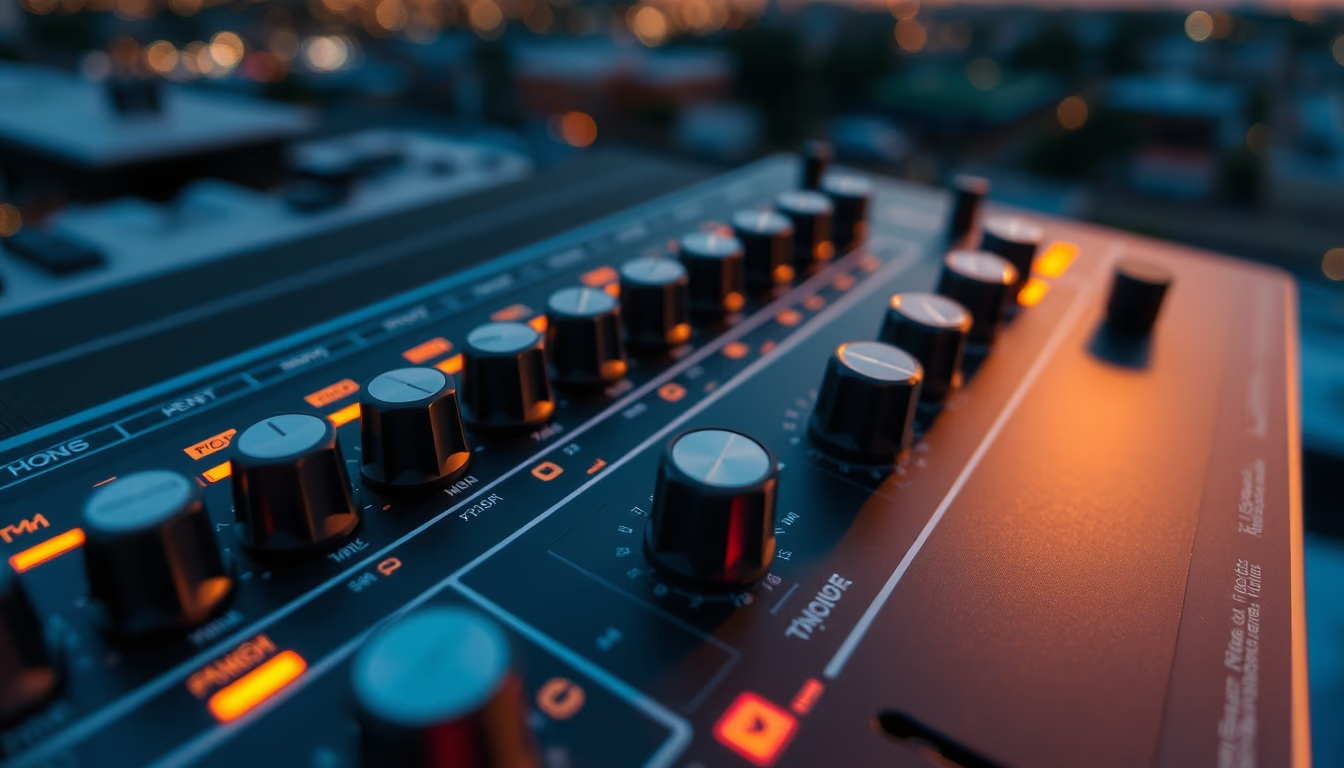
Studio monitor speakers are essential tools for music production, offering flat frequency response for accurate mixing and mastering.
About this subject
Studio monitor speakers, also known as studio monitors, are designed for audio reproduction with minimal coloration. Unlike consumer speakers that might boost bass or treble to please the ear, studio monitors have a flat frequency response, allowing sound engineers to hear the recording exactly as it is. This characteristic is critical for precise mixing and mastering decisions, ensuring the music translates well across different playback systems like headphones, car stereos, and portable speakers.
Studio monitors can be active or passive. Active monitors have built-in amplifiers, simplifying setup and ensuring the amplifier is matched to the specific driver. Passive monitors require an external amplifier, offering more flexibility in component choice. Driver configuration also varies: two-way models, with a tweeter and a woofer, are common in home studios, while three-way monitors, adding a midrange driver, are used in larger professional rooms.
The acoustics of the listening room greatly affect monitor performance. Even high-quality speakers can have their frequency response distorted by reflections, resonances, and standing waves. Therefore, many studios invest in acoustic treatment like absorbers, diffusers, and bass traps, and position monitors in an equilateral triangle with the listener to create an ideal stereo field. Brands like Yamaha, KRK, Genelec, and Adam are industry standards, each with distinct design and sonic characteristics.
Beyond music, studio monitors are used in film and TV post-production, podcast mastering, and any environment requiring accurate audio monitoring. Technology has evolved with digital room correction, using software or hardware to adjust monitor response based on measured acoustics. This has democratized professional sound, allowing independent producers to achieve high-quality results without a purpose-built studio.
Frequently Asked Questions
What is the difference between studio monitors and regular speakers?
Studio monitors have a flat frequency response for accurate playback, while consumer speakers often boost bass and treble to sound more pleasing.
Do I need acoustic treatment to use studio monitors?
Acoustic treatment is recommended to avoid distortions from reflections and resonances. Even expensive monitors can sound poor in untreated rooms.
What do active and passive mean for studio monitors?
Active monitors have a built-in amplifier, making them easier to set up. Passive monitors require an external amplifier, offering more customization choices.
Direct URL
https://pub-c7d6a6ea828543ac903a74a341ccb2e1.r2.dev/imagens/studio-monitor-speaker-cinematic-wide-shot-fresh0.avifHow to credit
Include a visible link back to UtilizAí. Copy one of the snippets below:
<a href="https://xn--utiliza-eza.com/en/midia/imagens/studio-monitor-speaker-cinematic-wide-shot-fresh0">Studio monitor speaker</a> by <a href="https://xn--utiliza-eza.com">UtilizAí</a>, licensed under <a href="https://creativecommons.org/licenses/by/4.0/">CC BY 4.0</a>.
[Studio monitor speaker](https://xn--utiliza-eza.com/en/midia/imagens/studio-monitor-speaker-cinematic-wide-shot-fresh0) by [UtilizAí](https://xn--utiliza-eza.com), CC BY 4.0
License: CC-BY-4.0