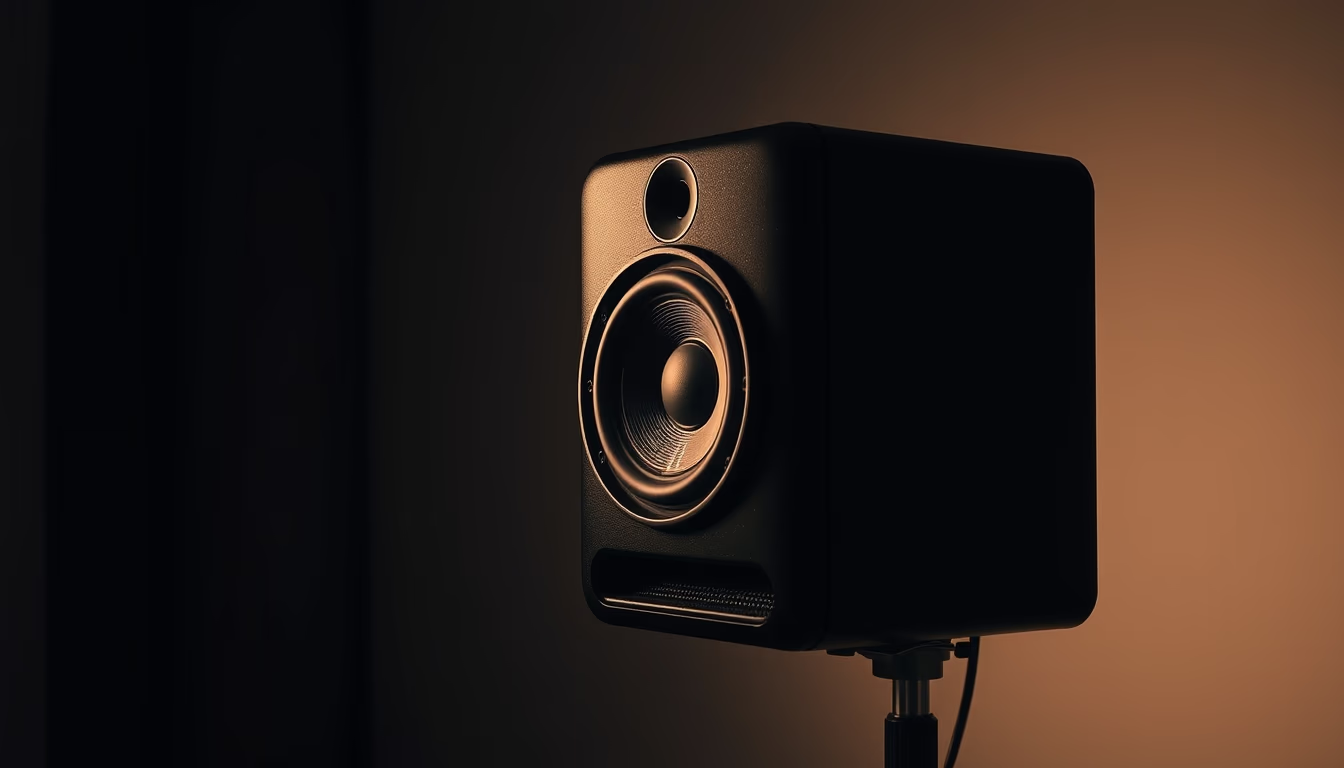
Studio monitor speaker
1344×768 · AVIF · CC BY 4.0
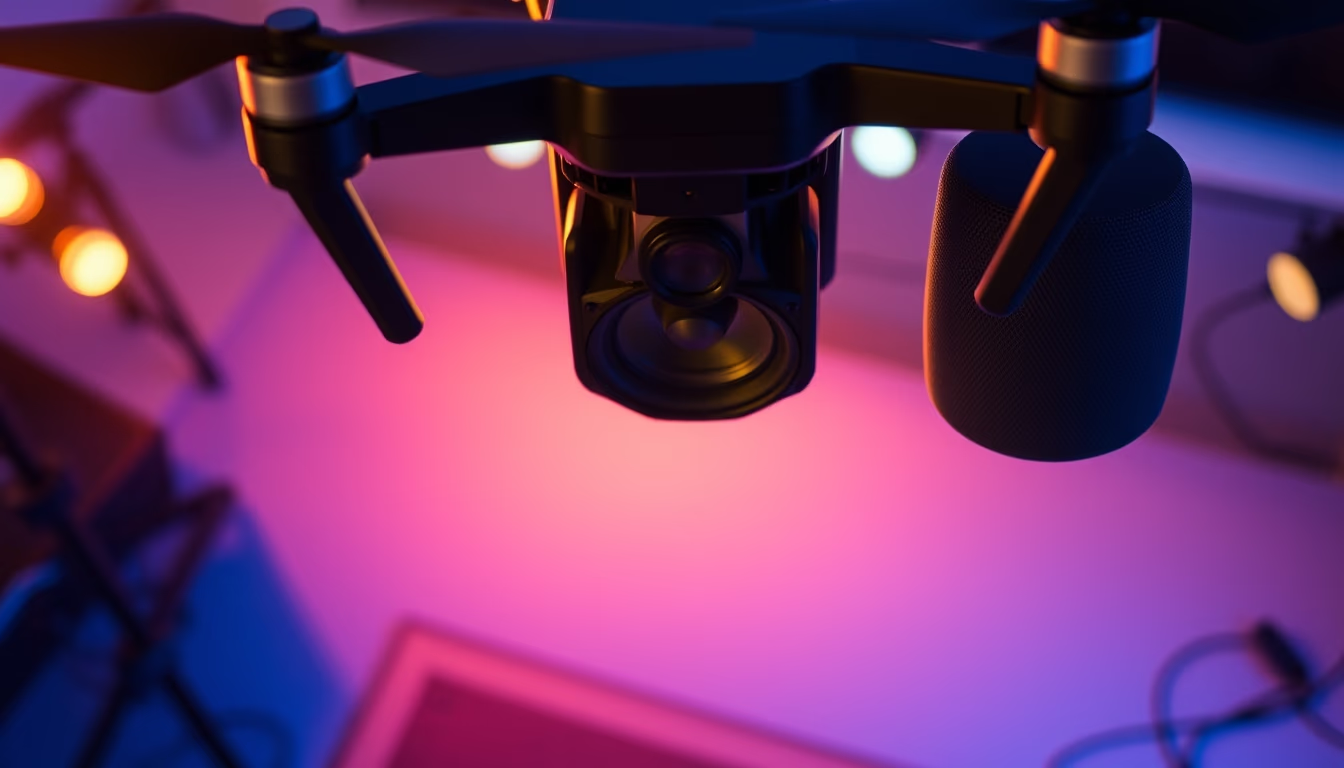
Studio monitor speakers are essential tools for music production, offering flat frequency response and sonic accuracy for professional mixing and mastering.
About this subject
A studio monitor speaker is a loudspeaker specifically designed for professional audio applications such as recording, mixing, and mastering. Unlike consumer speakers or Hi-Fi systems, which often enhance bass or treble to please the ear, studio monitors have a flat frequency response, meaning they reproduce the audio signal without coloration. This feature allows sound engineers to hear the recorded content accurately, identifying imperfections that would go unnoticed in domestic systems.
There are two main types of studio monitors: active and passive. Active monitors have internal amplifiers tailored to each driver, ensuring greater control and efficiency. Passive monitors require an external amplifier. Most professional studios opt for active models due to convenience and consistent quality. Additionally, monitors can be nearfield, positioned close to the listener to minimize room acoustics influence, or farfield, used in larger rooms.
Choosing a monitor depends on the type of work and environment. Brands like Genelec, Yamaha (especially the legendary NS-10 series), KRK, Adam Audio, and Focal are references. The Yamaha NS-10 became iconic for its prominent midrange, helping detect mixing issues. However, no monitor replaces good acoustic treatment: the room must control reflections, absorption, and diffusion so the sound heard is faithful to what the monitor reproduces. Without it, even the best monitor can mislead the engineer.
Interestingly, the recording industry has no absolute monitor standard. Engineers often use multiple pairs for cross-reference, including headphones. The key is to know the equipment well and how it behaves in different rooms. Calibration with measurement microphones and software like Sonarworks is common practice to linearize in-room response.
Frequently Asked Questions
What is the difference between a studio monitor and a regular speaker?
Studio monitors have a flat frequency response for accurate audio reproduction, while regular speakers emphasize certain frequencies to sound more pleasing. Monitors also have designs that support higher sound pressure levels and lower distortion.
Why does the frequency response need to be flat?
So that the sound engineer hears exactly what was recorded, without boosts or cuts. This allows precise mixing and mastering decisions, ensuring the music sounds good on various playback systems.
Do I need acoustic treatment to use monitors?
Yes, acoustic treatment is essential. Without it, room reflections and resonances alter sound perception, potentially leading to incorrect mixes. At minimum, position monitors away from walls and use absorbers at first reflection points.
Direct URL
https://pub-c7d6a6ea828543ac903a74a341ccb2e1.r2.dev/imagens/studio-monitor-speaker-aerial-drone-shot-fresh2.avifHow to credit
Include a visible link back to UtilizAí. Copy one of the snippets below:
<a href="https://xn--utiliza-eza.com/en/midia/imagens/studio-monitor-speaker-aerial-drone-shot-fresh2">Studio monitor speaker</a> by <a href="https://xn--utiliza-eza.com">UtilizAí</a>, licensed under <a href="https://creativecommons.org/licenses/by/4.0/">CC BY 4.0</a>.
[Studio monitor speaker](https://xn--utiliza-eza.com/en/midia/imagens/studio-monitor-speaker-aerial-drone-shot-fresh2) by [UtilizAí](https://xn--utiliza-eza.com), CC BY 4.0
License: CC-BY-4.0