Studio microphone with pop filter
1344×768 · AVIF · CC BY 4.0
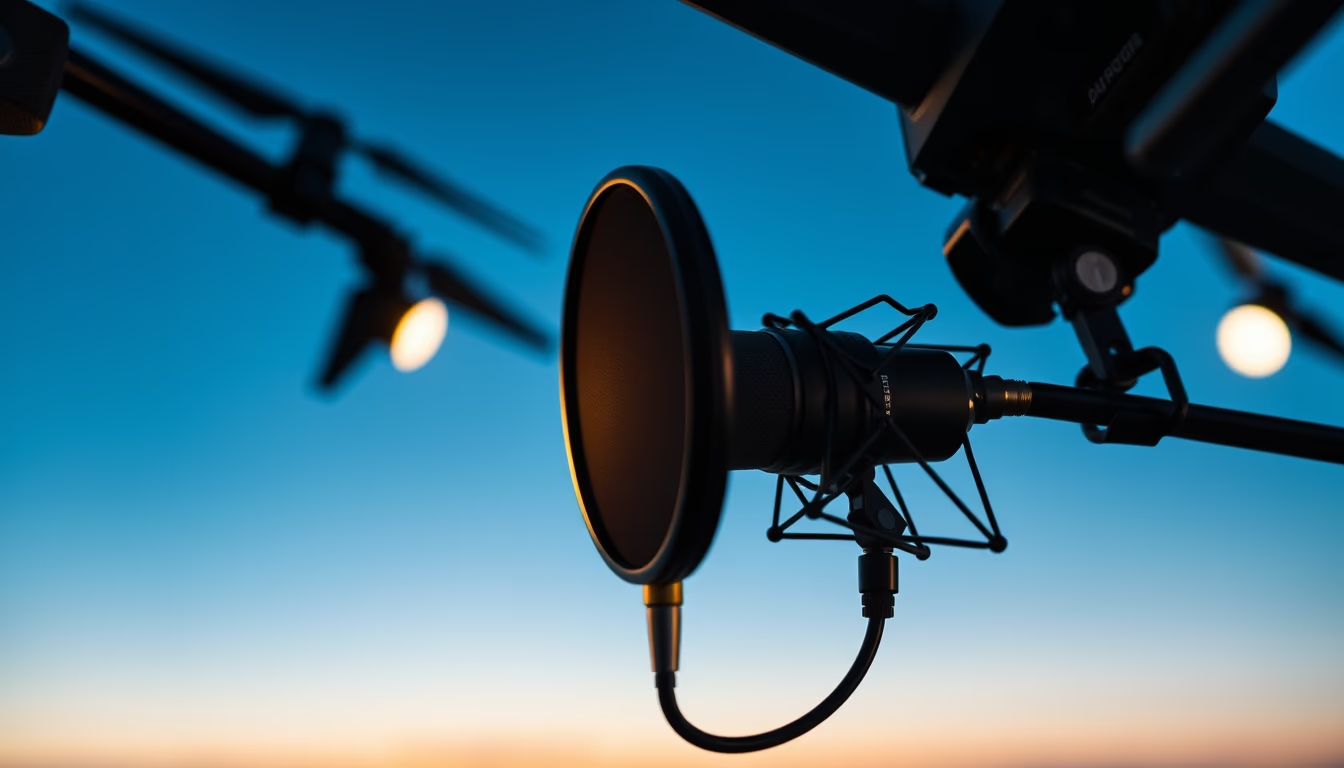
Studio microphone fitted with a pop filter, essential for professional vocal recordings and live broadcasts, minimizing plosives and breath noises.
About this subject
The studio microphone paired with a pop filter is an essential combination in professional recording environments. The pop filter, also known as a studio windscreen, consists of a thin metal or nylon mesh mounted on a gooseneck arm, placed between the microphone and the vocalist. Its primary purpose is to attenuate explosive sounds such as the consonants 'p' and 'b', which cause unwanted pressure peaks on microphone capsules, especially large-diaphragm condenser models.
Studio microphones fall into two main categories: dynamic and condenser. Condenser microphones are favored for studio vocals due to their sensitivity and wide frequency response. Dynamic microphones, like the Shure SM7B, are popular in podcasts and live broadcasts for their durability and lower ambient noise pickup. Regardless of type, a pop filter is recommended to enhance recording clarity by preventing preamp saturation and reducing the need for post-production editing.
Proper positioning of the pop filter directly impacts audio quality. It should be placed about 5 to 10 centimeters from the microphone, angled to deflect airflow without blocking sound. Additionally, the filter helps protect the microphone capsule from saliva and moisture, extending its lifespan. In both home and professional studios, using a pop filter is standard practice for achieving clean, natural recordings.
Interestingly, the concept of the pop filter originated in the 1930s and 1940s with early electrical recording systems. Initially, silk stockings stretched over homemade frames were used. Today, filters are acoustically engineered, but the principle remains the same: reducing unwanted artifacts without compromising frequency response. This simple yet effective tool is one of the secrets behind pristine vocal recordings.
Frequently Asked Questions
What is the purpose of a pop filter on a studio microphone?
A pop filter reduces plosive sounds (P, B, T) and breath noises, improving recording clarity and protecting the microphone capsule from saliva.
What is the difference between condenser and dynamic microphones for studio use?
Condenser microphones are more sensitive and capture subtle details, ideal for vocals and acoustic instruments. Dynamic microphones are more rugged and reject background noise, preferred for loud sources and live broadcasts.
How should I position the microphone and pop filter correctly?
Place the pop filter 5-10 cm from the microphone, between it and the sound source. The microphone should be 15-30 cm from the vocalist, slightly angled to avoid direct air blasts. Adjust the filter angle to deflect airflow.
Direct URL
https://pub-c7d6a6ea828543ac903a74a341ccb2e1.r2.dev/imagens/studio-microphone-with-pop-filter-aerial-drone-shot-p2.avifHow to credit
Include a visible link back to UtilizAí. Copy one of the snippets below:
<a href="https://xn--utiliza-eza.com/en/midia/imagens/studio-microphone-with-pop-filter-aerial-drone-shot-p2">Studio microphone with pop filter</a> by <a href="https://xn--utiliza-eza.com">UtilizAí</a>, licensed under <a href="https://creativecommons.org/licenses/by/4.0/">CC BY 4.0</a>.
[Studio microphone with pop filter](https://xn--utiliza-eza.com/en/midia/imagens/studio-microphone-with-pop-filter-aerial-drone-shot-p2) by [UtilizAí](https://xn--utiliza-eza.com), CC BY 4.0
License: CC-BY-4.0