Stonehenge england
1344×768 · AVIF · CC BY 4.0
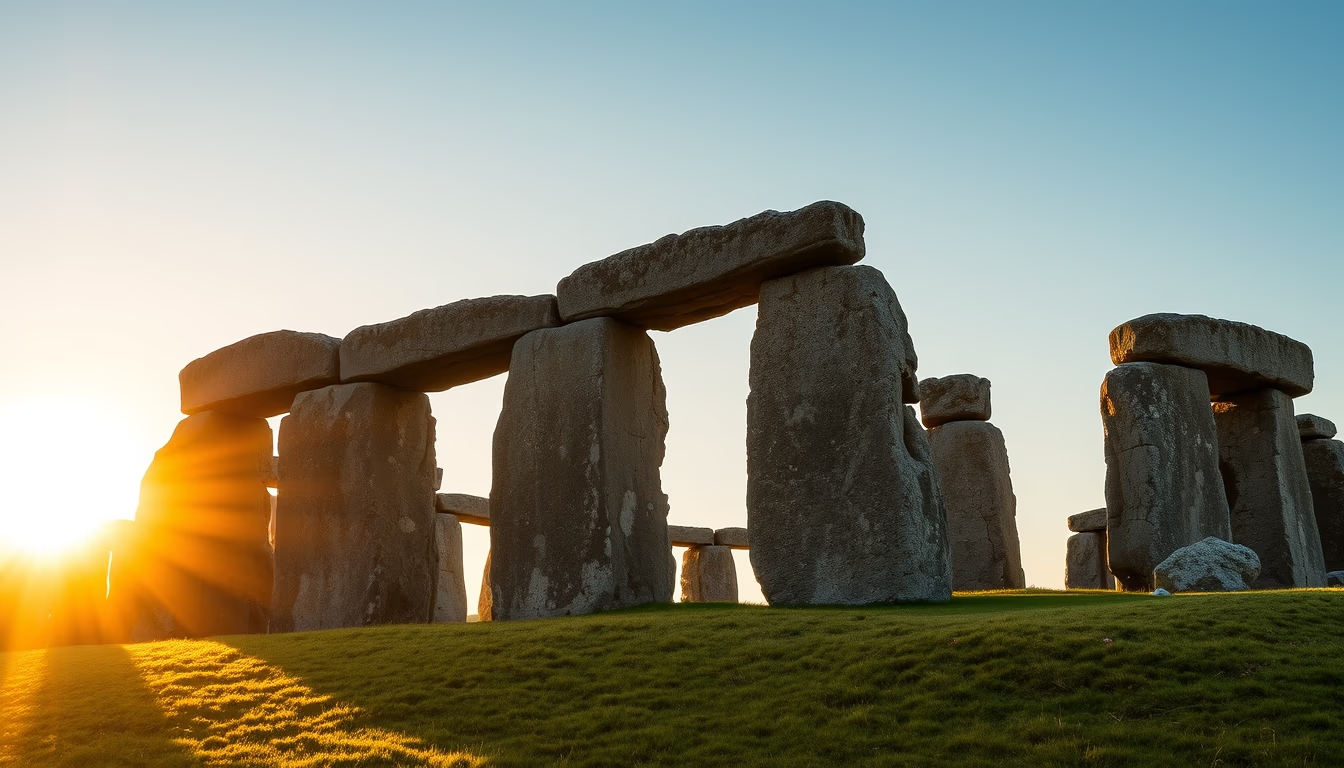
Stonehenge, on Salisbury Plain in England, is one of the world's most famous megalithic monuments, built between 3000 and 2000 BC.
About this subject
Stonehenge is a prehistoric monument located in Wiltshire, England, about 13 km north of Salisbury. Its construction is believed to have occurred in several phases between 3000 and 2000 BC, during the Neolithic and Bronze Ages. The monument consists of an outer circle of sarsen stones, some weighing up to 50 tons, and an inner circle of bluestones originating from the Preseli Hills in Wales, about 240 km away. Transporting these stones represents a remarkable feat of ancient engineering.
The purpose of Stonehenge is still debated by archaeologists. Widely accepted theories suggest it functioned as an astronomical observatory, aligned with the summer and winter solstices, and as a ceremonial or religious center. Recent excavations have found evidence of ritual activities, including burials and feasting. Stonehenge is part of a larger complex of Neolithic monuments, including the Cursus, the Avenue, and the wooden circle of Woodhenge. In 1986, it was declared a UNESCO World Heritage Site, along with Avebury and associated sites.
Public access is controlled to preserve the site. English Heritage manages the monument, which attracts over one million tourists annually. During the summer solstice, access is granted to pagan celebrants and modern druids, who perform rituals at sunrise. Despite its fame, Stonehenge retains many mysteries, such as the identity of its builders and exact construction methods. DNA analysis suggests that the builders were Neolithic immigrants who arrived in Britain around 4000 BC.
Frequently Asked Questions
Who built Stonehenge and why?
The builders were Neolithic peoples who arrived in Britain around 4000 BC. The exact purpose is uncertain, but it is believed to have served as an astronomical observatory and ceremonial center, possibly linked to funerary rituals and solar cycles.
How were the stones of Stonehenge transported?
The sarsen stones were sourced locally, while the bluestones came from the Preseli Hills in Wales. They were likely dragged on sledges and rafts over 240 km, an impressive feat of prehistoric engineering.
Can Stonehenge be visited?
Yes, the monument is managed by English Heritage and is open to the public. Advance booking is recommended, especially during solstices when access is limited and may require a special ticket.
Direct URL
https://pub-c7d6a6ea828543ac903a74a341ccb2e1.r2.dev/imagens/stonehenge-england-travel-photography-p6.avifHow to credit
Include a visible link back to UtilizAí. Copy one of the snippets below:
<a href="https://xn--utiliza-eza.com/en/midia/imagens/stonehenge-england-travel-photography-p6">Stonehenge england</a> by <a href="https://xn--utiliza-eza.com">UtilizAí</a>, licensed under <a href="https://creativecommons.org/licenses/by/4.0/">CC BY 4.0</a>.
[Stonehenge england](https://xn--utiliza-eza.com/en/midia/imagens/stonehenge-england-travel-photography-p6) by [UtilizAí](https://xn--utiliza-eza.com), CC BY 4.0
License: CC-BY-4.0