Stonehenge england
1344×768 · AVIF · CC BY 4.0
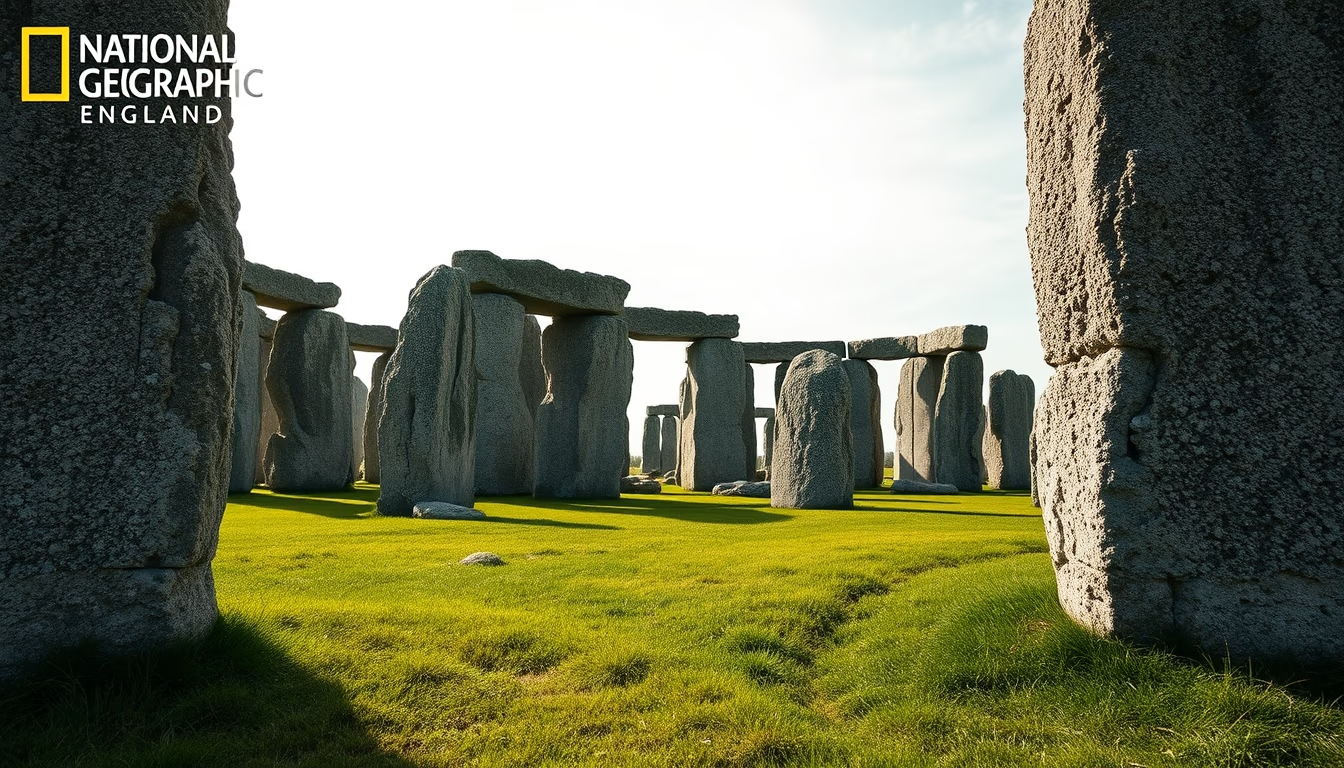
Stonehenge is a prehistoric monument in Wiltshire, England, famous for its stone circle and astronomical alignment. Dating back to 2500 BC, it is a UNESCO World Heritage site.
About this subject
Stonehenge is one of the world's most iconic prehistoric monuments, located on Salisbury Plain in Wiltshire, England. Its construction began around 3100 BC, with the final stone circle completed by 2500 BC. The monument consists of a ring of standing stones, with 30 enormous sarsen blocks up to 9 meters tall and weighing about 25 tons each. These stones were transported approximately 32 kilometers from Marlborough Downs. The smaller bluestones, weighing up to 4 tons, were brought from the Preseli Hills in present-day Wales, over 240 kilometers away, a remarkable feat of Neolithic engineering.
The exact purpose of Stonehenge remains a mystery, but archaeological evidence suggests use as an astronomical observatory and ceremonial site. Its alignment with the sunrise at the summer solstice and sunset at the winter solstice indicates an agricultural and religious calendar. Excavations have revealed hundreds of burial mounds and cremations nearby, indicating the site also served as a cemetery for over 600 years. Construction required massive labor and advanced knowledge of geometry and astronomy for the time.
In popular culture, Stonehenge is often associated with Druids and Celtic rituals, though this connection is historically inaccurate. Druids emerged long after the monument was abandoned. Today, Stonehenge is managed by English Heritage and attracts over one million visitors annually. In 1986, it was inscribed as a UNESCO World Heritage site, recognizing its outstanding universal value as a unique testimony to European prehistory.
Frequently Asked Questions
Who built Stonehenge and for what purpose?
Stonehenge was built by Neolithic peoples of the British Isles in several phases between 3100 BC and 1600 BC. Its exact purpose is unknown, but it is believed to have served as an astronomical calendar, a place of worship, and a cemetery. Evidence of cremations suggests funerary rituals.
How were the stones of Stonehenge transported?
The sarsen stones, weighing up to 25 tons, were dragged overland from Marlborough Downs, 32 km away. The 4-ton bluestones came from the Preseli Hills in Wales, likely via a combination of land and water routes using rivers and the sea.
Is Stonehenge open to the public? How much does it cost to visit?
Yes, Stonehenge is open to the public. Tickets can be purchased online; prices vary (in 2024, adults pay about £23, children £14, with discounts for English Heritage members and audio guides included). Advance booking is recommended, especially in summer.
Direct URL
https://pub-c7d6a6ea828543ac903a74a341ccb2e1.r2.dev/imagens/stonehenge-england-national-geographic-style-p7.avifHow to credit
Include a visible link back to UtilizAí. Copy one of the snippets below:
<a href="https://xn--utiliza-eza.com/en/midia/imagens/stonehenge-england-national-geographic-style-p7">Stonehenge england</a> by <a href="https://xn--utiliza-eza.com">UtilizAí</a>, licensed under <a href="https://creativecommons.org/licenses/by/4.0/">CC BY 4.0</a>.
[Stonehenge england](https://xn--utiliza-eza.com/en/midia/imagens/stonehenge-england-national-geographic-style-p7) by [UtilizAí](https://xn--utiliza-eza.com), CC BY 4.0
License: CC-BY-4.0