Stonehenge england
1344×768 · AVIF · CC BY 4.0
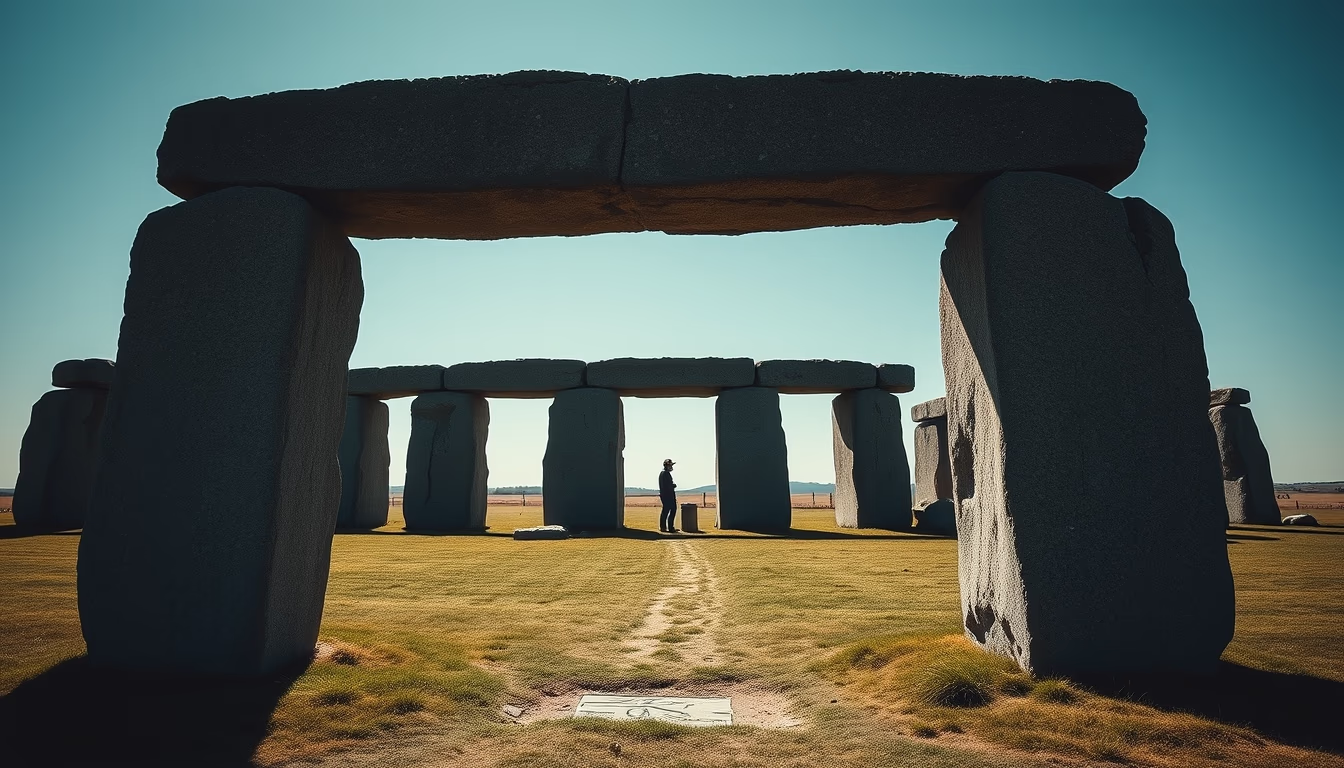
Stonehenge, the iconic stone circle on Salisbury Plain in England, is one of the world's most enigmatic prehistoric monuments, erected over 4,000 years ago.
About this subject
Stonehenge is located on Salisbury Plain in Wiltshire, southern England. Built between 3000 and 2000 BCE, the monument is a UNESCO World Heritage Site and attracts millions of visitors annually. The structure consists of two main stone types: the massive sarsens (local sandstone) and the smaller bluestones, which were transported from the Preseli Hills in Wales, over 200 km away. Construction occurred in three main phases, starting with a wooden circle and ditches, then the erection of the bluestones, and finally the assembly of the large sarsen trilithons.
The astronomical alignment of Stonehenge is remarkable: the main axis aligns with the sunrise on the summer solstice and the sunset on the winter solstice. This suggests the site was used for seasonal rituals and celestial observation. The stones were fitted together using precise mortise-and-tenon joints, without mortar. It is believed that construction required thousands of laborers, who used sledges, rollers, and possibly rafts to move the stones.
The exact purpose of Stonehenge remains a mystery. Theories include a religious temple, an astronomical observatory, a healing site, or a ceremonial burial ground. Excavations have revealed cremated remains, indicating its use for burials. The monument has inspired countless legends, including its association with the wizard Merlin from Arthurian lore. Today, it is an enduring symbol of Neolithic ingenuity and a gathering place during solstices, where modern druids and pagans hold ceremonies.
Frequently Asked Questions
How old is Stonehenge?
The earliest structures at Stonehenge date to around 3000 BCE, but the stone circle as we know it was erected between 2500 BCE and 2000 BCE, during the Neolithic and Bronze Age.
How were the stones of Stonehenge transported?
The sarsen stones were sourced locally, but the bluestones came from Preseli in Wales. They are believed to have been moved using sledges, rollers, and rafts over a distance of more than 200 km.
What was Stonehenge used for?
There is no consensus, but it is thought to have had ceremonial, astronomical, and funerary purposes. Its alignment with the solstices suggests it was a seasonal calendar, and excavations indicate use as a burial site.
Direct URL
https://pub-c7d6a6ea828543ac903a74a341ccb2e1.r2.dev/imagens/stonehenge-england-minimalist-composition-p2.avifHow to credit
Include a visible link back to UtilizAí. Copy one of the snippets below:
<a href="https://xn--utiliza-eza.com/en/midia/imagens/stonehenge-england-minimalist-composition-p2">Stonehenge england</a> by <a href="https://xn--utiliza-eza.com">UtilizAí</a>, licensed under <a href="https://creativecommons.org/licenses/by/4.0/">CC BY 4.0</a>.
[Stonehenge england](https://xn--utiliza-eza.com/en/midia/imagens/stonehenge-england-minimalist-composition-p2) by [UtilizAí](https://xn--utiliza-eza.com), CC BY 4.0
License: CC-BY-4.0