Stonehenge england
1344×768 · AVIF · CC BY 4.0
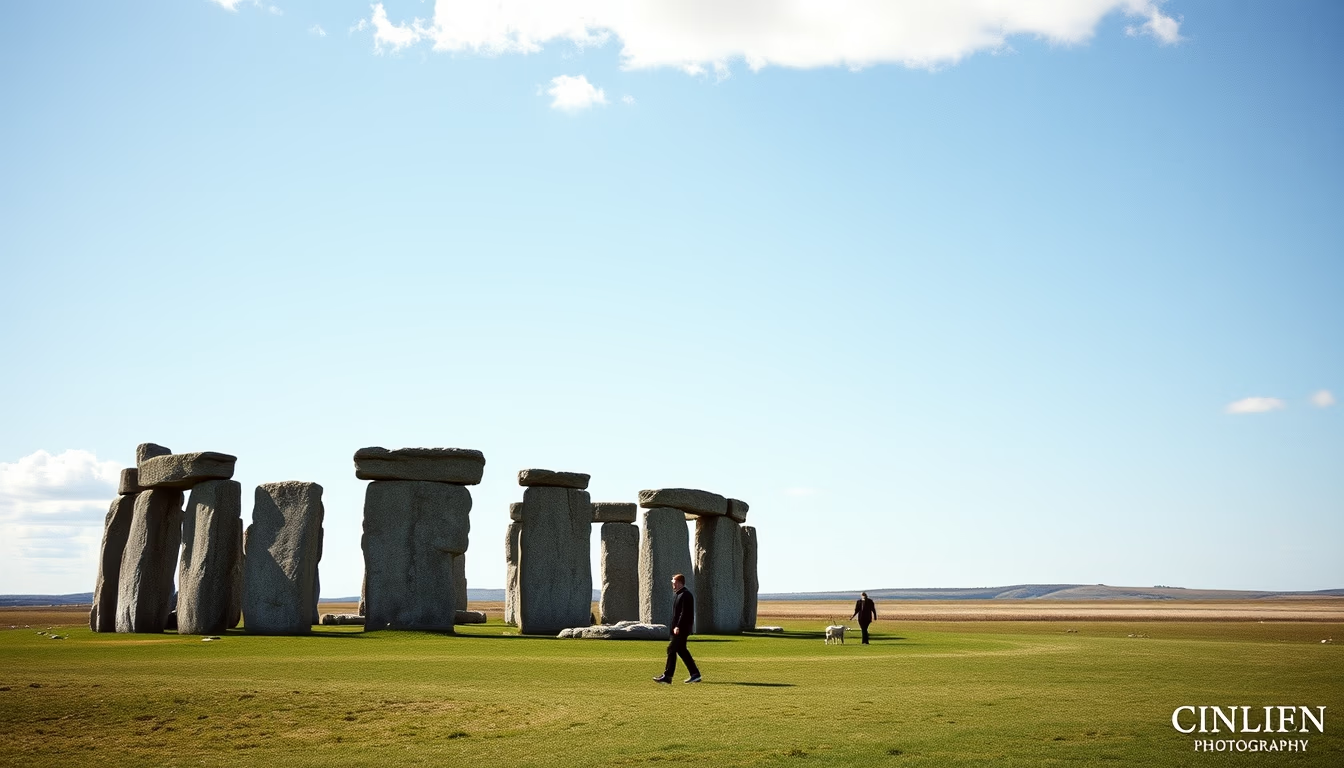
Stonehenge, a prehistoric monument in Wiltshire, England, is one of the world's most iconic archaeological sites, dating back to around 2500 BC.
About this subject
Stonehenge is a megalithic monument located on Salisbury Plain in Wiltshire, England. Its construction took place in several phases between 3000 BC and 2000 BC. The circle of standing stones, some over 4 meters tall and weighing up to 25 tons, has intrigued archaeologists and visitors for centuries. It is believed to have served as an astronomical observatory, aligned with the summer and winter solstices. The main axis of the monument points to the sunrise on the summer solstice, indicating a deep understanding of celestial cycles. The stones are of two types: sarsens, large local sandstone blocks, and bluestones, smaller dolerite and rhyolite stones that were transported from the Preseli Hills in Wales, about 240 kilometers away. This transportation is considered one of the greatest engineering feats of the Bronze Age. Recent studies suggest Stonehenge was also a place of healing and burial. Analysis of human bones found at the site indicates funerary rituals and long-distance pilgrimages. Stonehenge has been a UNESCO World Heritage Site since 1986 and attracts over one million visitors annually. Despite its fame, many questions remain: exactly how the stones were erected and the precise purpose of the monument. The site undergoes constant monitoring and conservation to preserve its millennia-old structure against erosion and human impact.
Frequently Asked Questions
How old is Stonehenge?
Stonehenge was built between 3000 BC and 2000 BC, with the main stone circle phase dating to around 2500 BC.
How were the stones of Stonehenge transported?
The smaller bluestones were transported from the Preseli Hills in Wales, 240 km away, likely by land and water. The sarsens came from Marlborough Downs, about 30 km away.
Was Stonehenge used for astronomical observations?
Yes, the alignment with the summer and winter solstices suggests Stonehenge served as a precise solar calendar, used to mark seasons and celestial events.
Direct URL
https://pub-c7d6a6ea828543ac903a74a341ccb2e1.r2.dev/imagens/stonehenge-england-film-grain-authentic-p10.avifHow to credit
Include a visible link back to UtilizAí. Copy one of the snippets below:
<a href="https://xn--utiliza-eza.com/en/midia/imagens/stonehenge-england-film-grain-authentic-p10">Stonehenge england</a> by <a href="https://xn--utiliza-eza.com">UtilizAí</a>, licensed under <a href="https://creativecommons.org/licenses/by/4.0/">CC BY 4.0</a>.
[Stonehenge england](https://xn--utiliza-eza.com/en/midia/imagens/stonehenge-england-film-grain-authentic-p10) by [UtilizAí](https://xn--utiliza-eza.com), CC BY 4.0
License: CC-BY-4.0