Stem cells petri dish
1344×768 · AVIF · CC BY 4.0
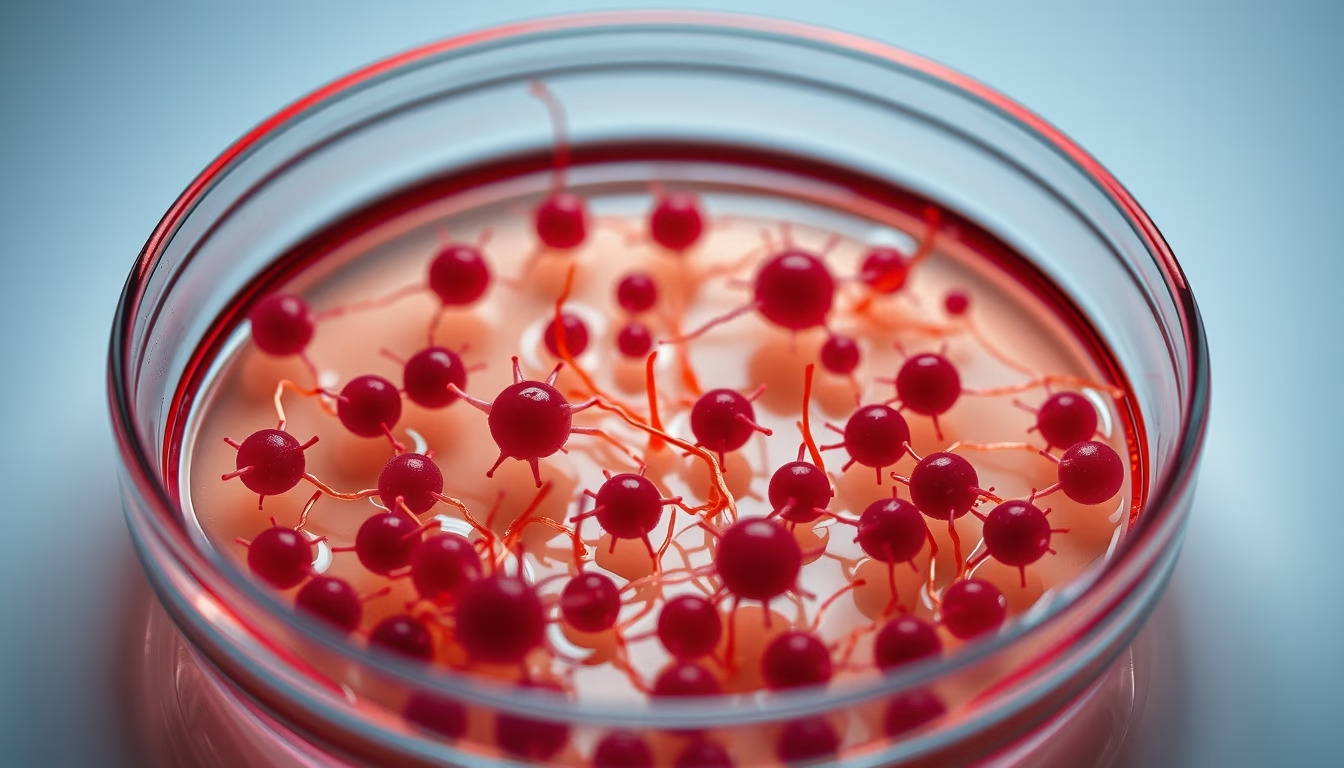
Stem cells are unspecialized cells capable of self-renewal and differentiation, crucial for research in regenerative medicine and disease treatment.
About this subject
Stem cells are undifferentiated cells with two key properties: self-renewal, the ability to divide while maintaining an undifferentiated state, and differentiation potential into various specialized cell types. They are broadly classified into embryonic stem cells, derived from the inner cell mass of the blastocyst and pluripotent, and adult stem cells, found in tissues like bone marrow and adipose tissue, generally multipotent. These cells are essential for embryonic development, tissue maintenance, and repair throughout life.
In biomedical research, stem cells have opened new frontiers. They are used to model diseases in vitro, screen drugs, and study developmental processes. A major breakthrough was the creation of induced pluripotent stem cells (iPS cells), reprogrammed from somatic cells, bypassing ethical concerns associated with embryo use. Clinical applications include bone marrow transplants for leukemia and lymphoma, and clinical trials for cardiac, neural, and retinal regeneration. Despite progress, challenges such as controlled differentiation, tumorigenesis risk, and immune rejection remain.
Culturing stem cells in the lab requires sterile conditions and specific culture media enriched with growth factors and nutrients. The petri dish is a standard container for this purpose, allowing isolation and observation of cell colonies. Techniques like feeder layers or feeder-free systems are employed to maintain pluripotency or direct differentiation. Strict control of temperature, pH, and oxygen is critical for cell viability and purity.
The future of stem cell research promises advances in personalized regenerative medicine. Novel technologies like CRISPR gene editing and stem cell-derived organoids are accelerating disease understanding and therapy development. Collaborations between academia and industry aim to deliver safe, effective treatments for conditions such as Parkinson's disease, type 1 diabetes, spinal cord injuries, and macular degeneration. However, rigorous regulatory frameworks and ongoing ethical debates continue to shape the pace of innovation in this field.
Frequently Asked Questions
What are stem cells?
Stem cells are unspecialized cells capable of self-renewal and differentiation into specialized cell types. They exist in embryos and various adult tissues, playing a crucial role in development and tissue repair.
What are the main types of stem cells?
The main types are embryonic stem cells (pluripotent), adult stem cells (multipotent), and induced pluripotent stem cells (iPS cells), reprogrammed from adult cells. Each type has different differentiation potentials and applications.
How are stem cells used in medical research?
They are used to model diseases, test drugs, study human development, and in clinical applications such as bone marrow transplants and trials for regenerating damaged tissues like heart and brain.
Direct URL
https://pub-c7d6a6ea828543ac903a74a341ccb2e1.r2.dev/imagens/stem-cells-petri-dish-studio-still-life-p3.avifHow to credit
Include a visible link back to UtilizAí. Copy one of the snippets below:
<a href="https://xn--utiliza-eza.com/en/midia/imagens/stem-cells-petri-dish-studio-still-life-p3">Stem cells petri dish</a> by <a href="https://xn--utiliza-eza.com">UtilizAí</a>, licensed under <a href="https://creativecommons.org/licenses/by/4.0/">CC BY 4.0</a>.
[Stem cells petri dish](https://xn--utiliza-eza.com/en/midia/imagens/stem-cells-petri-dish-studio-still-life-p3) by [UtilizAí](https://xn--utiliza-eza.com), CC BY 4.0
License: CC-BY-4.0