Stem cells petri dish
1344×768 · AVIF · CC BY 4.0
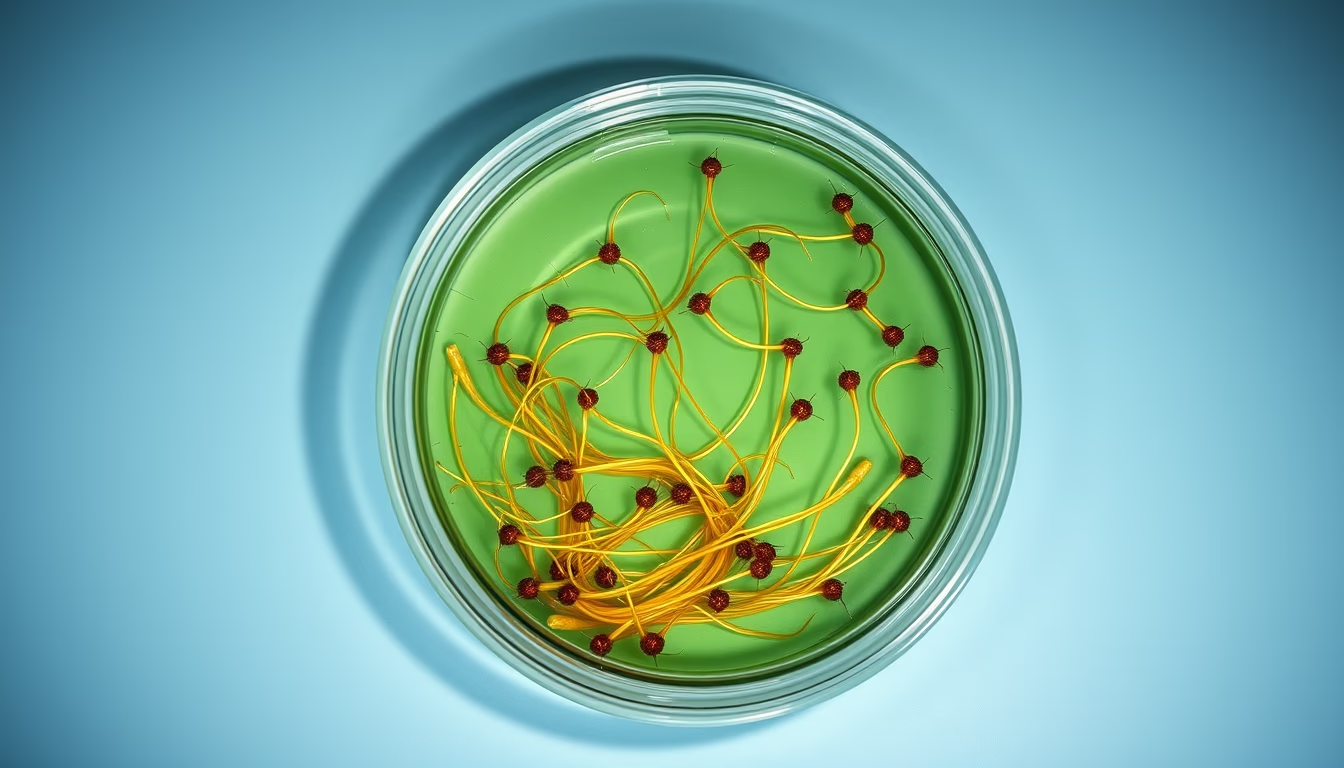
Stem cells grown in petri dishes are essential for research in regenerative medicine and developmental biology.
About this subject
Stem cells are undifferentiated cells capable of differentiating into various cell types and self-renewing. Cultured in petri dishes, they enable controlled studies on differentiation, proliferation, and tissue repair. The technique of in vitro cell culture, using petri dishes, was developed in the early 20th century and revolutionized experimental biology.
In the lab, stem cells are maintained in specific culture media supplemented with growth factors and nutrients, under sterile conditions and controlled temperature. Petri dishes, typically made of glass or treated plastic, provide an adhesive surface for cell growth. Careful handling prevents contamination and ensures cell viability.
The most promising application of stem cells is in regenerative medicine: diseases such as Parkinson's, type 1 diabetes, and spinal cord injuries may benefit from therapies that replace damaged cells with differentiated stem cells. Additionally, disease models in petri dishes allow drug testing and study of pathological mechanisms without animal use.
Interestingly, the first human embryonic stem cell cultures were established in 1998 by James Thomson. Since then, advances like induced pluripotent stem cells (iPS), created by Shinya Yamanaka in 2006, circumvented ethical issues by reprogramming adult cells. Today, stem cell research is regulated by ethics committees and agencies such as ANVISA in Brazil.
Frequently Asked Questions
What are stem cells?
Stem cells are undifferentiated cells capable of self-renewal and differentiation into specialized cell types such as neurons, heart cells, or muscle cells.
What is the purpose of a petri dish in stem cell culture?
A petri dish provides a controlled, sterile environment for stem cell growth, enabling microscopic observation and manipulation of culture conditions.
What are the main ethical challenges in stem cell research?
The main challenges involve the use of embryonic stem cells, which require embryo destruction. iPS cells circumvent this, but debates on safety and regulation persist.
Direct URL
https://pub-c7d6a6ea828543ac903a74a341ccb2e1.r2.dev/imagens/stem-cells-petri-dish-isometric-flat-lay-p5.avifHow to credit
Include a visible link back to UtilizAí. Copy one of the snippets below:
<a href="https://xn--utiliza-eza.com/en/midia/imagens/stem-cells-petri-dish-isometric-flat-lay-p5">Stem cells petri dish</a> by <a href="https://xn--utiliza-eza.com">UtilizAí</a>, licensed under <a href="https://creativecommons.org/licenses/by/4.0/">CC BY 4.0</a>.
[Stem cells petri dish](https://xn--utiliza-eza.com/en/midia/imagens/stem-cells-petri-dish-isometric-flat-lay-p5) by [UtilizAí](https://xn--utiliza-eza.com), CC BY 4.0
License: CC-BY-4.0