Stem cells petri dish
1344×768 · AVIF · CC BY 4.0
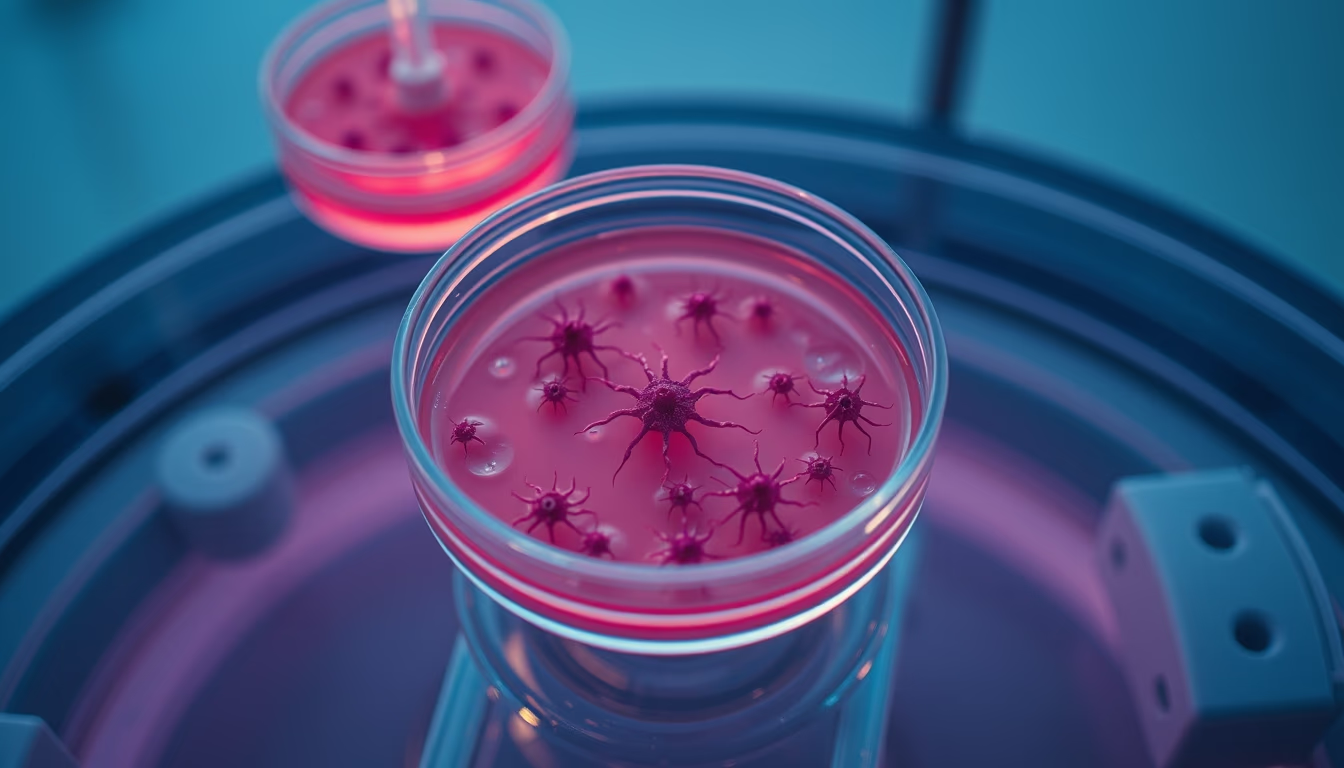
Stem cells cultured in a petri dish form the foundation of regenerative research and advanced cell therapies.
About this subject
Stem cells are undifferentiated cells capable of self-renewal and differentiation into various cell types. They are broadly classified into embryonic stem cells, derived from the inner cell mass of blastocysts, and adult stem cells found in tissues such as bone marrow, adipose tissue, and umbilical cord blood. Culturing them in a petri dish using specific media like DMEM supplemented with fetal bovine serum and growth factors is the standard laboratory technique for expansion and maintenance.
In Brazil, stem cell research is regulated by the Biosafety Law (Law 11,105/2005), which permits the use of embryonic stem cells obtained from nonviable embryos or those frozen for over three years with parental consent. Adult mesenchymal stem cells are the most commonly used in national clinical trials, with applications in type 1 diabetes, spinal cord injuries, and heart diseases.
Controlled differentiation of these cells in petri dishes enables the generation of neurons, cardiomyocytes, osteoblasts, and other cell types, paving the way for personalized regenerative medicine and drug testing without animals. Techniques such as CRISPR gene editing and 3D culture on extracellular matrices are being integrated to enhance process efficiency and safety.
A recent milestone was the creation of cerebral and hepatic organoids from induced pluripotent stem cells (iPSCs), which mimic miniature organ structures and allow studies of genetic diseases and drug development with greater accuracy. Despite the potential, challenges like controlling cellular heterogeneity, tumorigenicity, and reproducibility still drive intense global research.
Frequently Asked Questions
What is the difference between embryonic and adult stem cells?
Embryonic stem cells are pluripotent, able to differentiate into any cell type in the body. Adult stem cells are multipotent and give rise only to cells of their tissue of origin, such as mesenchymal stem cells producing bone, cartilage, and fat.
How are stem cells maintained in a petri dish?
They are cultured in sterile growth medium with nutrients, growth factors, and often on a feeder layer or extracellular matrix. Incubation occurs at 37°C with 5% CO2, with media changes every 2, 3 days.
Which diseases can be treated with stem cells in Brazil?
Currently, bone marrow transplants use hematopoietic stem cells for leukemias and lymphomas. Research advances for diabetes, spinal cord injuries, heart diseases, and neurodegenerative conditions, with ongoing clinical trials.
Direct URL
https://pub-c7d6a6ea828543ac903a74a341ccb2e1.r2.dev/imagens/stem-cells-petri-dish-aerial-drone-shot-p11.avifHow to credit
Include a visible link back to UtilizAí. Copy one of the snippets below:
<a href="https://xn--utiliza-eza.com/en/midia/imagens/stem-cells-petri-dish-aerial-drone-shot-p11">Stem cells petri dish</a> by <a href="https://xn--utiliza-eza.com">UtilizAí</a>, licensed under <a href="https://creativecommons.org/licenses/by/4.0/">CC BY 4.0</a>.
[Stem cells petri dish](https://xn--utiliza-eza.com/en/midia/imagens/stem-cells-petri-dish-aerial-drone-shot-p11) by [UtilizAí](https://xn--utiliza-eza.com), CC BY 4.0
License: CC-BY-4.0