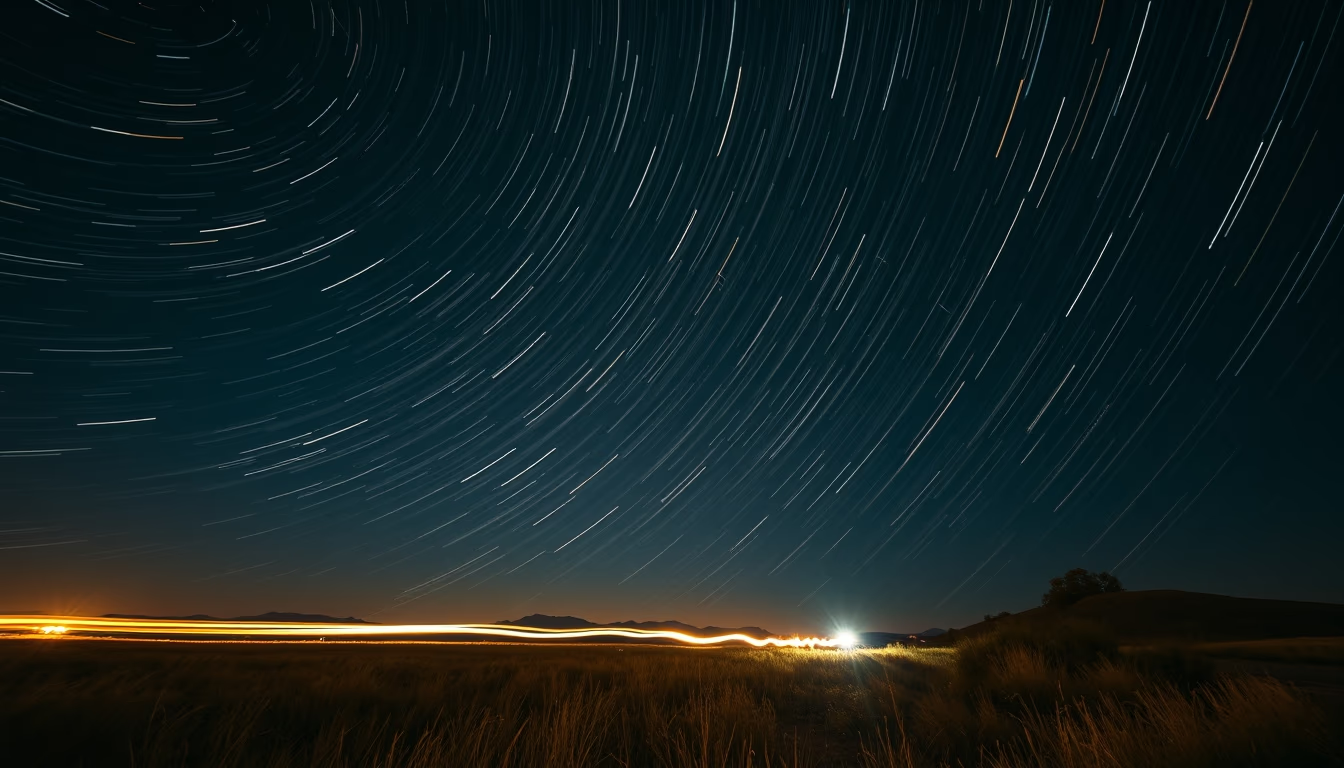
Star trails long exposure
1344×768 · AVIF · CC BY 4.0
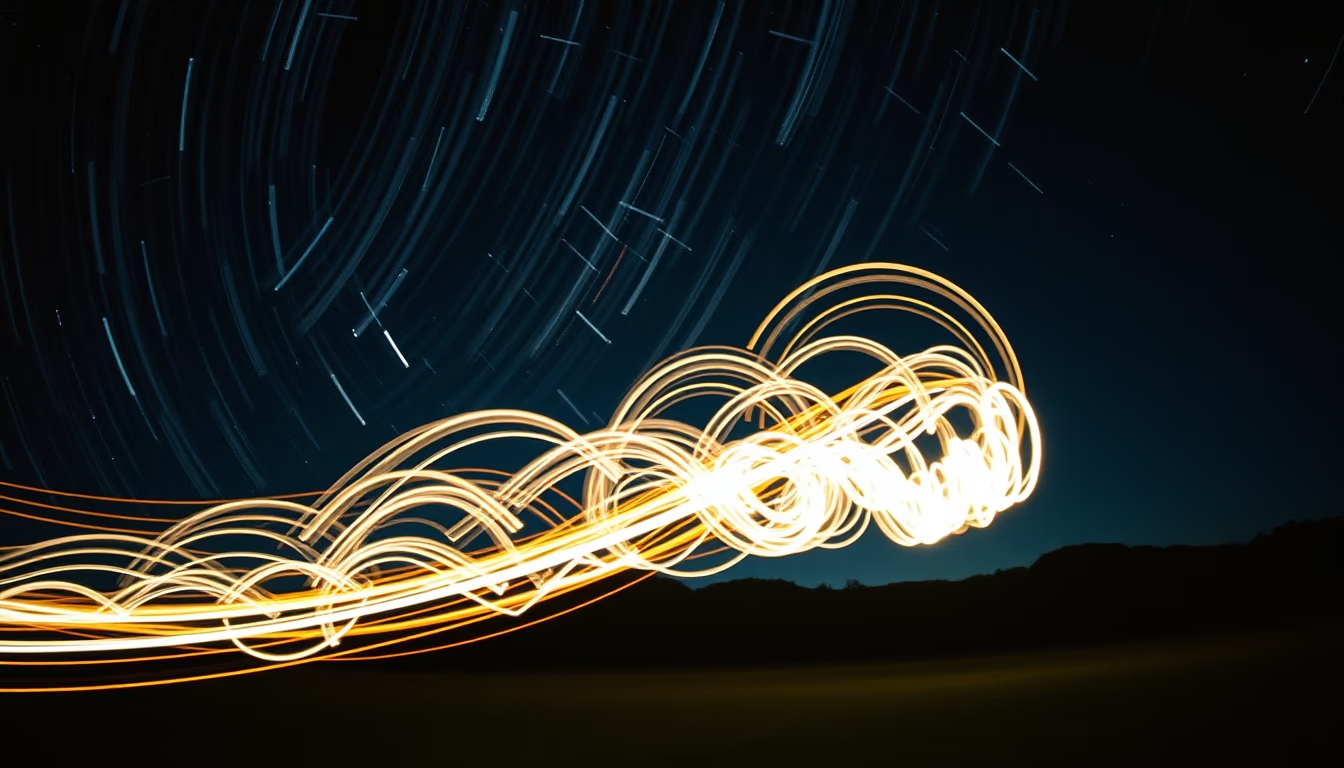
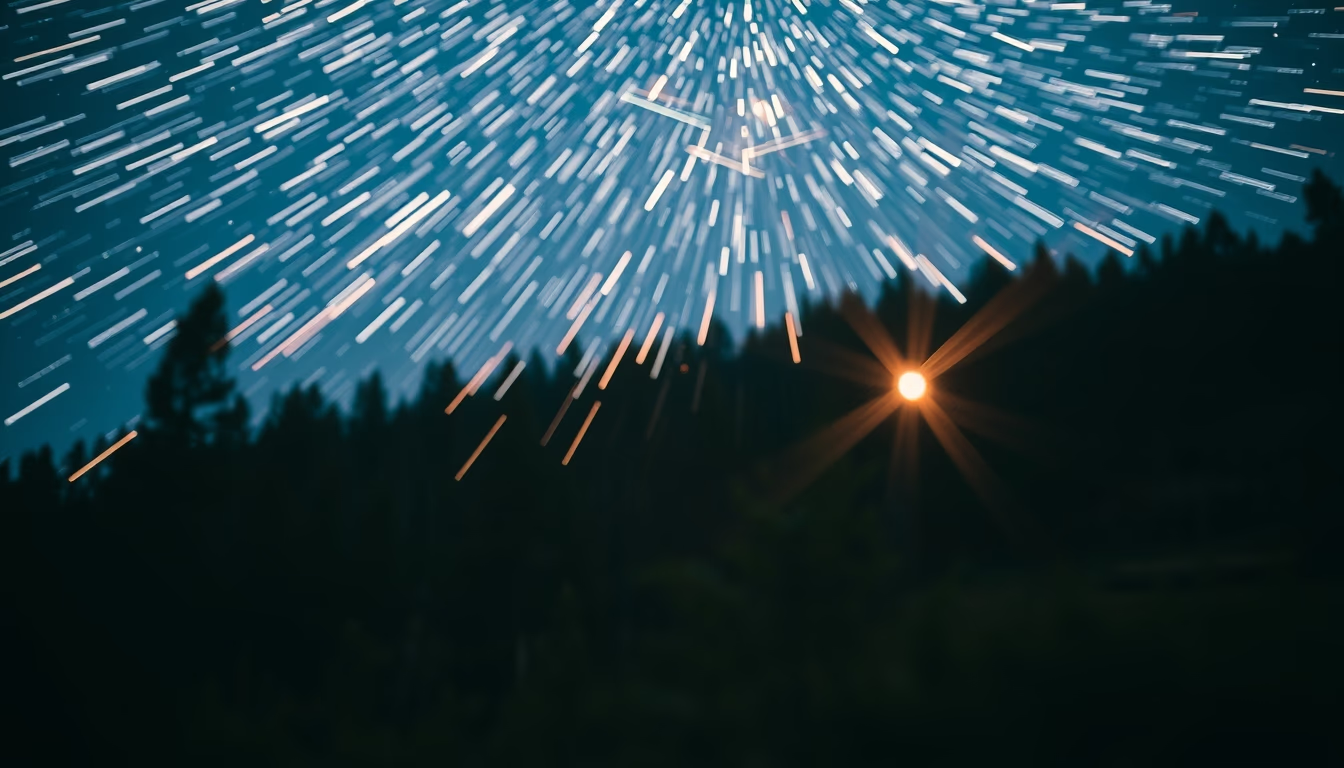
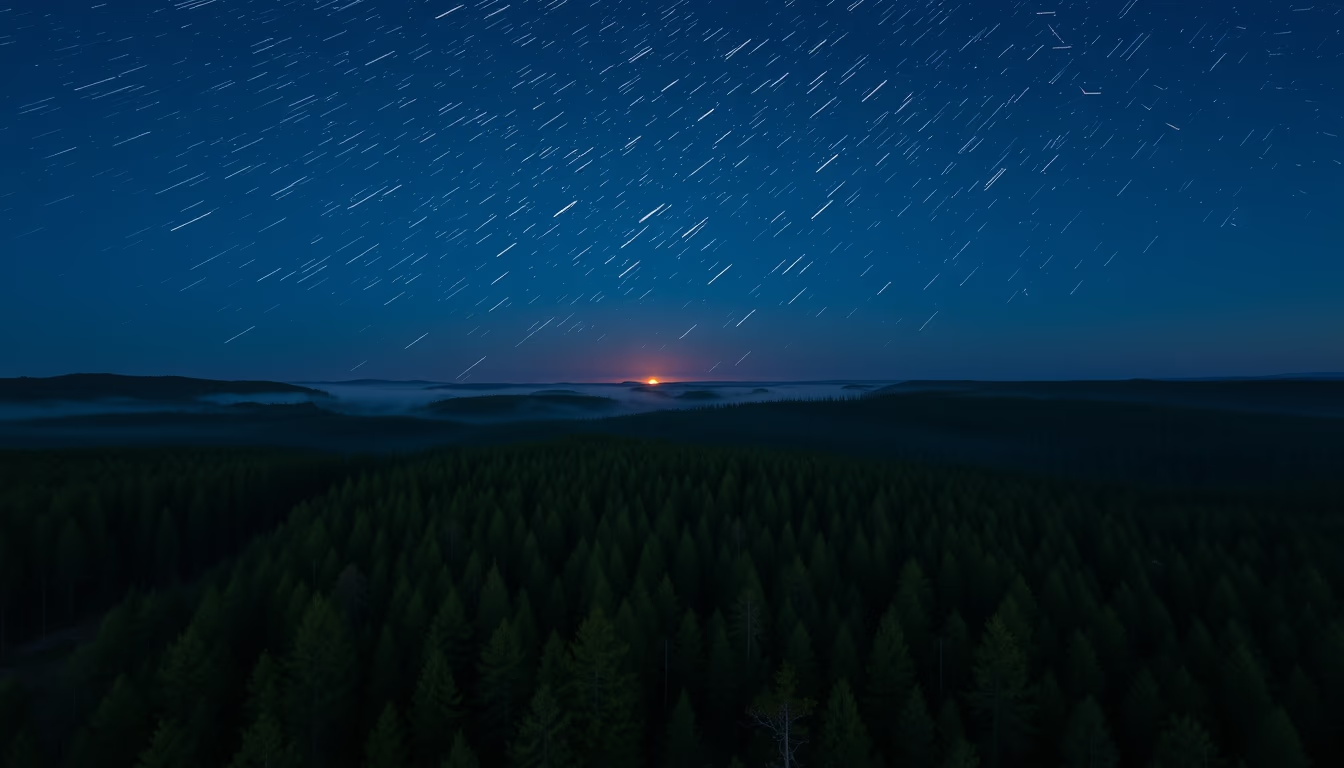
Star trails are captured through long exposure, revealing the apparent motion of the night sky. A popular technique among astrophotographers.
About this subject
Star trails are a photographic phenomenon produced when the camera shutter remains open for an extended period, typically from 30 minutes to several hours. This captures Earth's rotation, making stars appear as luminous streaks across the sky. The technique is widely used in astrophotography to create striking images that show the apparent motion of stars around the celestial pole. In the Southern Hemisphere, the south celestial pole is marked by the faint star Polaris Australis (Sigma Octantis), but many photographers use the Southern Cross as a guide.
Using lo-fi or disposable cameras to capture star trails brings a unique, grainy aesthetic reminiscent of early 19th-century astronomical photographs. These cameras often feature plastic lenses and low-sensitivity film, producing vignetting, chromatic aberrations, and a nostalgic texture. While not ideal for technical astrophotography, they add an artistic, experimental charm. Long exposures on film require careful battery management and a sturdy tripod, as well as avoiding light pollution sources.
Historically, the first star trail photograph was taken in 1893 by German astronomer Max Wolf using a photographic plate. Since then, the technique has evolved, but the principle remains the same. Today, digital cameras allow stacking multiple short exposures to reduce noise and facilitate processing. However, the allure of lo-fi lies in its imperfection: each image is a single exposure on film, with no post-processing chance. For best results, choose a dark site far from cities, with a clear, moonless sky. Aperture and ISO settings also influence the trails' intensity.
Frequently Asked Questions
What is the best time of year to photograph star trails?
The best times are during winter (longer, darker nights) and near the new moon, when natural light pollution is minimal.
Can you do star trails with disposable cameras?
Yes, but it's challenging. Disposable cameras have fixed exposure and low sensitivity, requiring long exposure times (usually impossible without modification). An alternative is to use 35mm analog cameras with a timer.
Why do star trails form circles?
They form concentric circles because stars appear to rotate around the celestial pole due to Earth's rotation. The closer to the pole, the smaller the circle.
Direct URL
https://pub-c7d6a6ea828543ac903a74a341ccb2e1.r2.dev/imagens/star-trails-long-exposure-lo-fi-disposable-camera-p3.avifHow to credit
Include a visible link back to UtilizAí. Copy one of the snippets below:
<a href="https://xn--utiliza-eza.com/en/midia/imagens/star-trails-long-exposure-lo-fi-disposable-camera-p3">Star trails long exposure</a> by <a href="https://xn--utiliza-eza.com">UtilizAí</a>, licensed under <a href="https://creativecommons.org/licenses/by/4.0/">CC BY 4.0</a>.
[Star trails long exposure](https://xn--utiliza-eza.com/en/midia/imagens/star-trails-long-exposure-lo-fi-disposable-camera-p3) by [UtilizAí](https://xn--utiliza-eza.com), CC BY 4.0
License: CC-BY-4.0