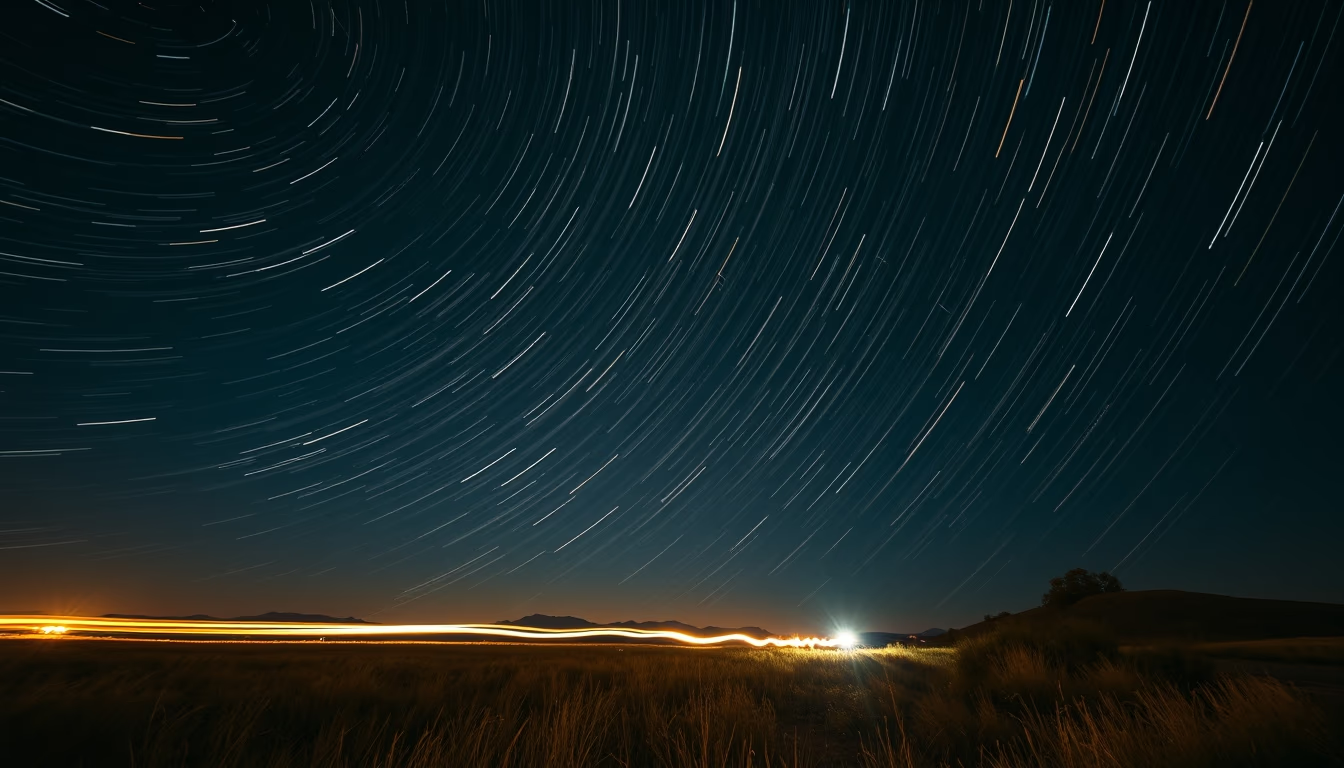
Star trails long exposure
1344×768 · AVIF · CC BY 4.0
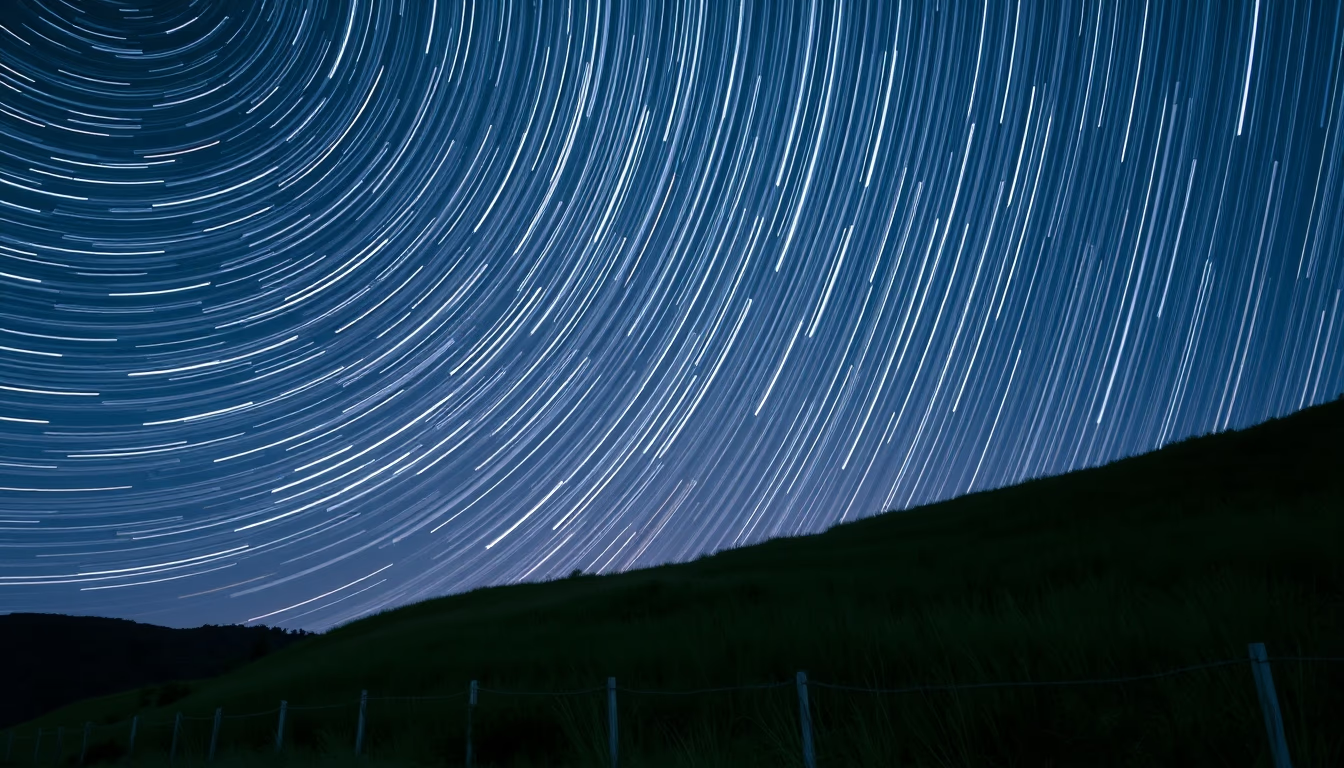
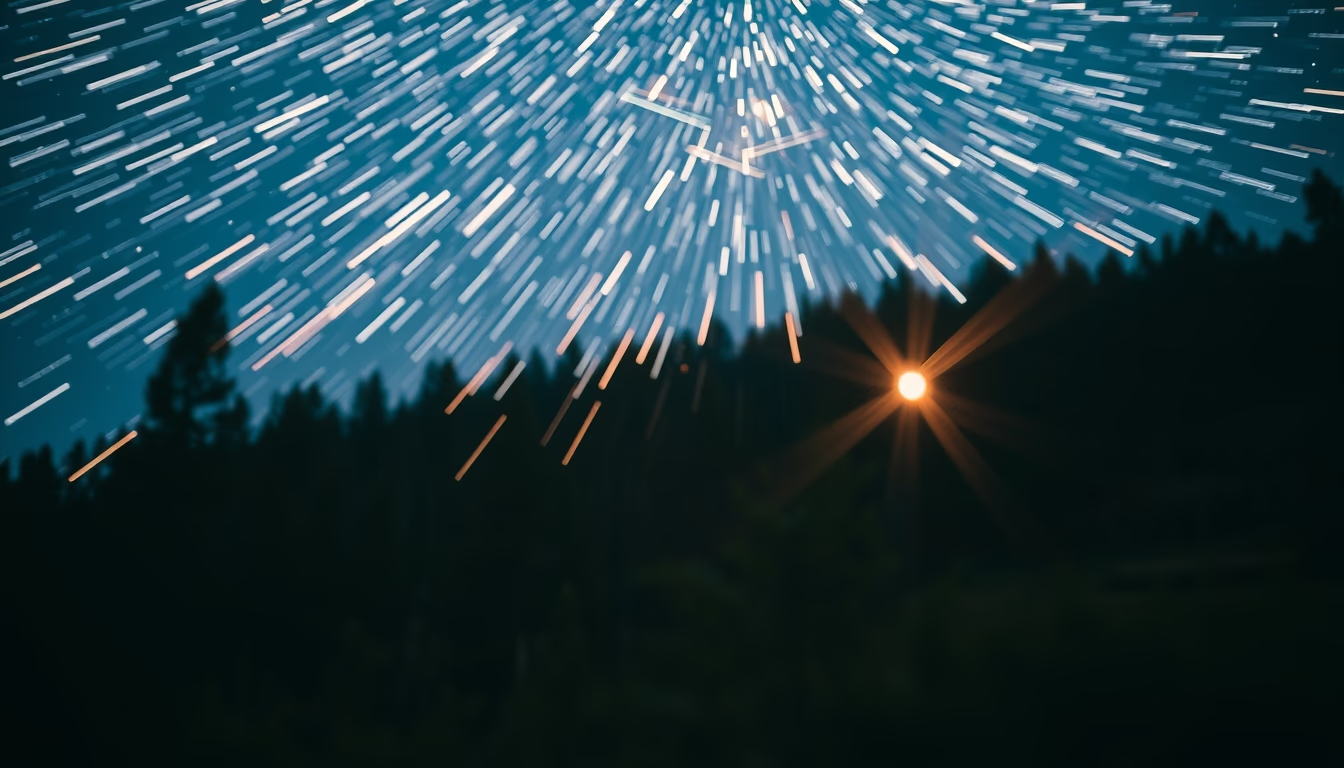
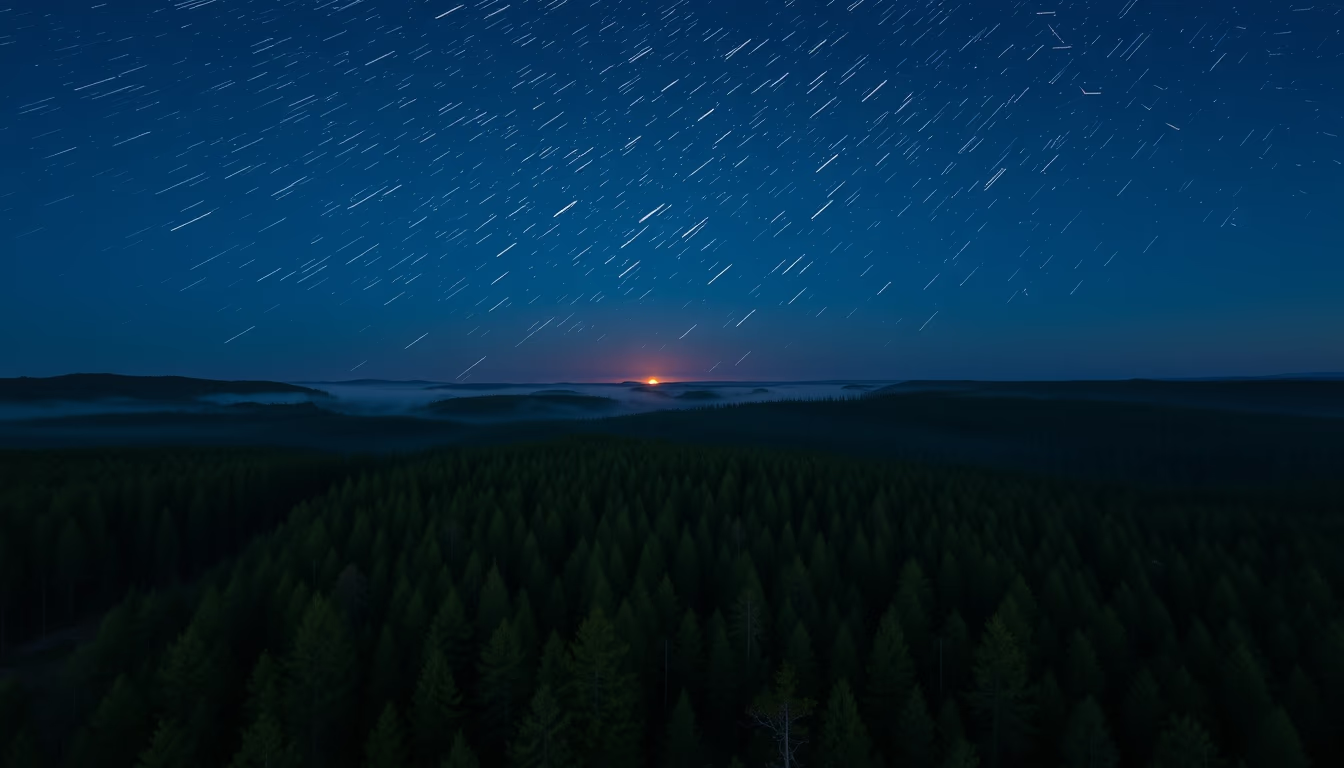
Star trails are records of the apparent motion of stars due to Earth's rotation, captured with long exposure photography.
About this subject
Star trails are created through long exposure photography that captures the apparent motion of stars due to Earth's rotation. As the planet spins, stars seem to draw circular arcs around the celestial poles. In the southern hemisphere, the south celestial pole is near Sigma Octantis; in the north, Polaris marks the center. This technique requires a camera with bulb mode, a sturdy tripod, and a remote shutter to avoid vibrations.
Typical camera settings include low ISO (100, 200) to reduce noise, wide aperture (f/2.8 or larger) to let in more light, and exposure times from 15 minutes to several hours. To minimize sensor noise and long-exposure artifacts, many photographers use the stacking method: they take multiple 30-second frames and combine them with software like StarStax or Photoshop. This approach also allows for easier editing and reduces the risk of overexposure.
The history of star trail photography dates back to the 19th century. One of the earliest known examples is John A. Whipple's daguerreotype from 1850, showing star trails over Boston. Today, it remains a popular genre in astrophotography, accessible to enthusiasts with basic equipment. The key challenge is light pollution: dark sky sites such as deserts, high mountains, or remote islands are ideal. The moon phase also matters; a new moon provides the darkest sky.
Interestingly, the shape of trails varies with latitude. Near the equator, trails appear nearly straight; toward the poles, they form concentric circles. Composers often include foreground elements like silhouetted trees or rock formations to add depth and context. The final image not only showcases stellar motion but also conveys a sense of time and celestial mechanics.
Frequently Asked Questions
What equipment is needed for star trail photography?
A camera with bulb mode, a sturdy tripod, a remote shutter or intervalometer, extra batteries, and a dark sky location away from light pollution.
How long should the exposure be for star trails?
Exposures of 15, 30 minutes show short arcs; 2, 4 hours create full circles. The stacking method (multiple short exposures) is recommended to reduce noise.
How can I reduce noise in long exposure photos?
Use low ISO (100, 200), enable long exposure noise reduction in-camera, or stack multiple images using software.
Direct URL
https://pub-c7d6a6ea828543ac903a74a341ccb2e1.r2.dev/imagens/star-trails-long-exposure-documentary-photography-p4.avifHow to credit
Include a visible link back to UtilizAí. Copy one of the snippets below:
<a href="https://xn--utiliza-eza.com/en/midia/imagens/star-trails-long-exposure-documentary-photography-p4">Star trails long exposure</a> by <a href="https://xn--utiliza-eza.com">UtilizAí</a>, licensed under <a href="https://creativecommons.org/licenses/by/4.0/">CC BY 4.0</a>.
[Star trails long exposure](https://xn--utiliza-eza.com/en/midia/imagens/star-trails-long-exposure-documentary-photography-p4) by [UtilizAí](https://xn--utiliza-eza.com), CC BY 4.0
License: CC-BY-4.0