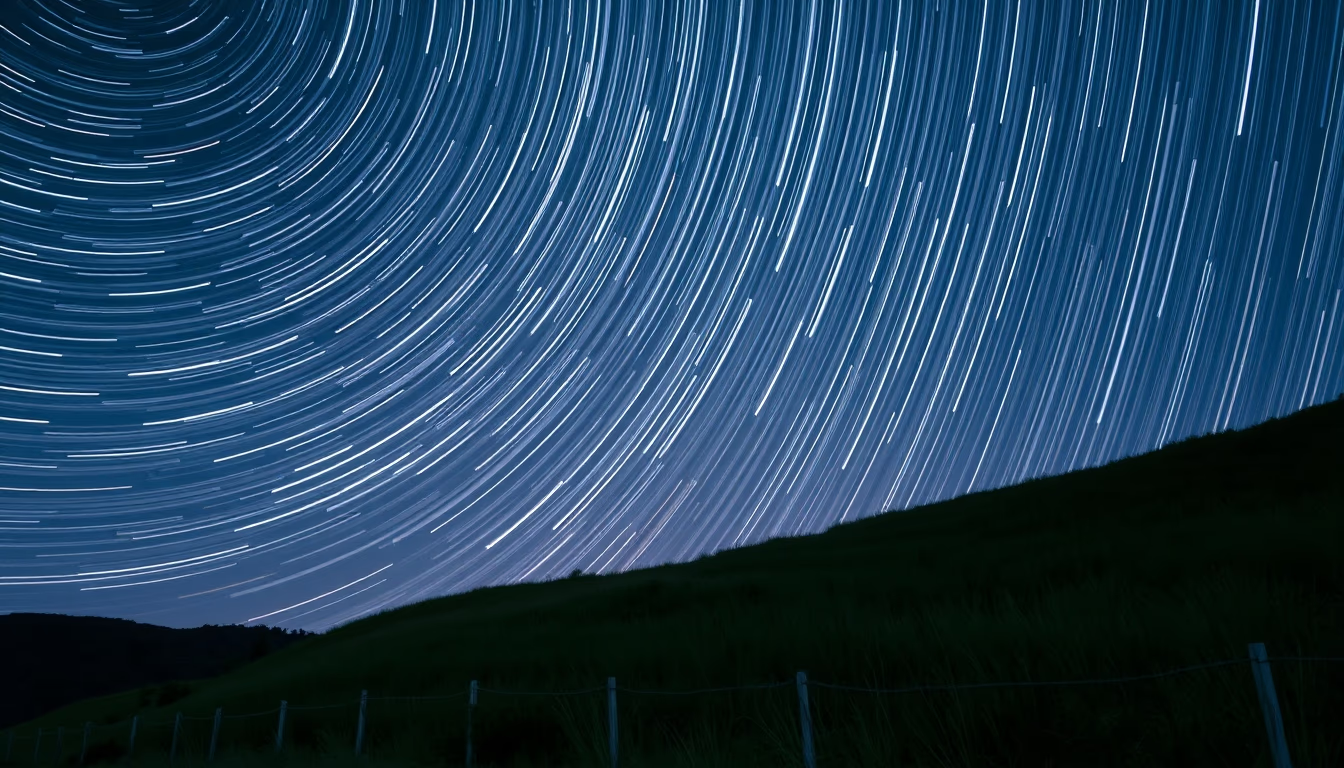
Star trails long exposure
1344×768 · AVIF · CC BY 4.0
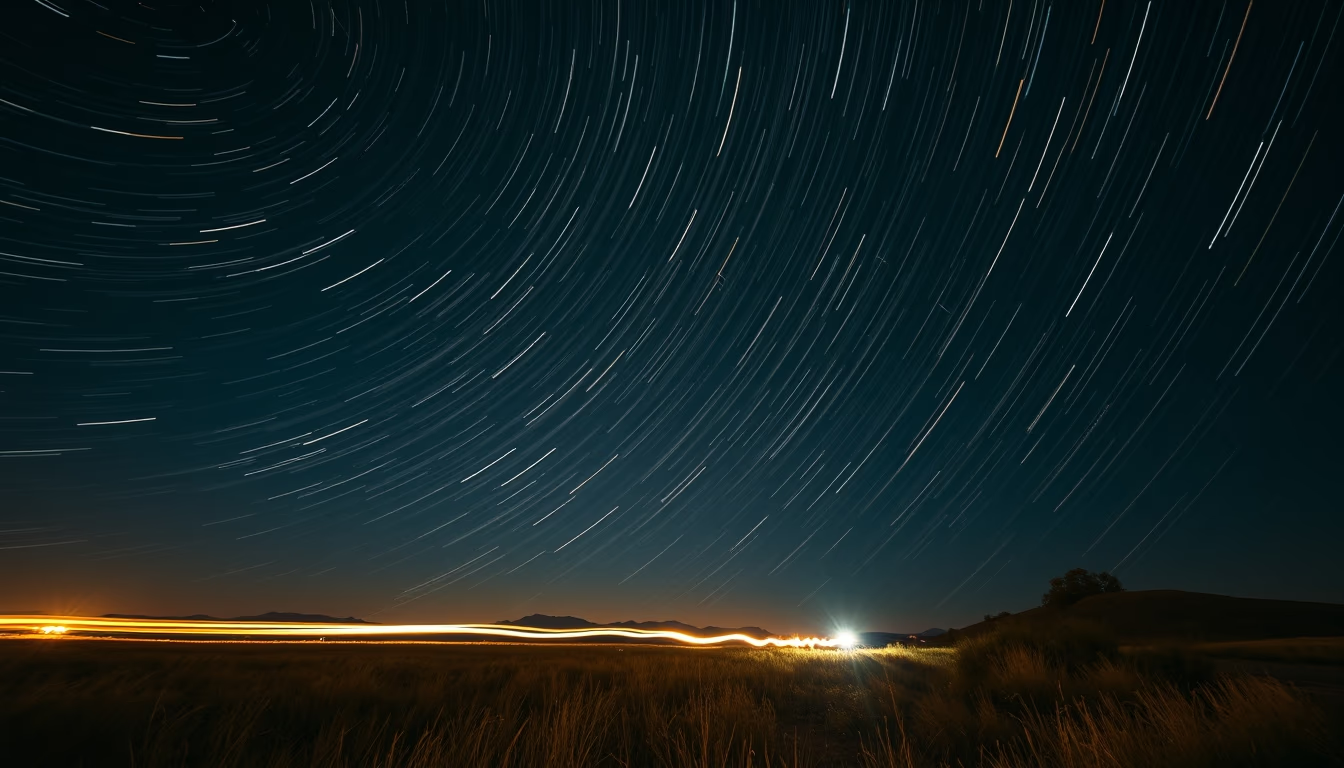
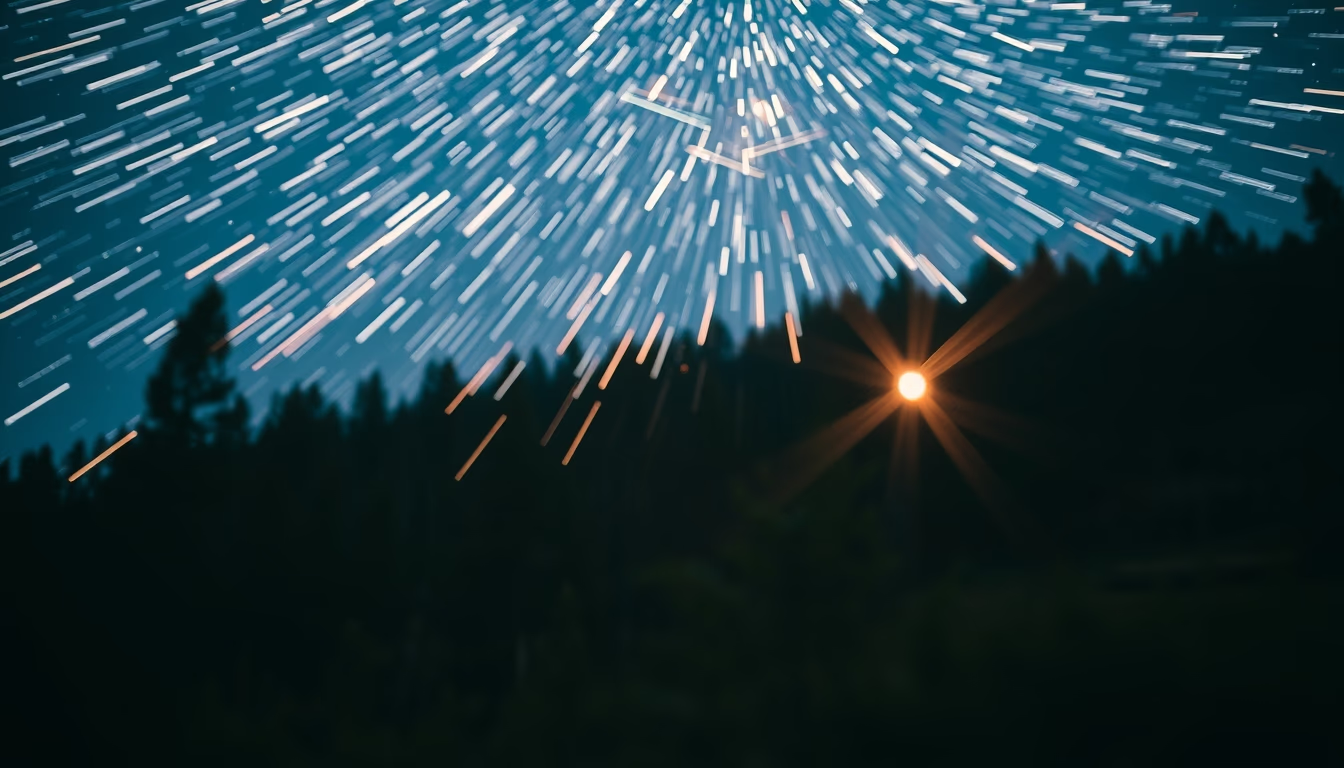
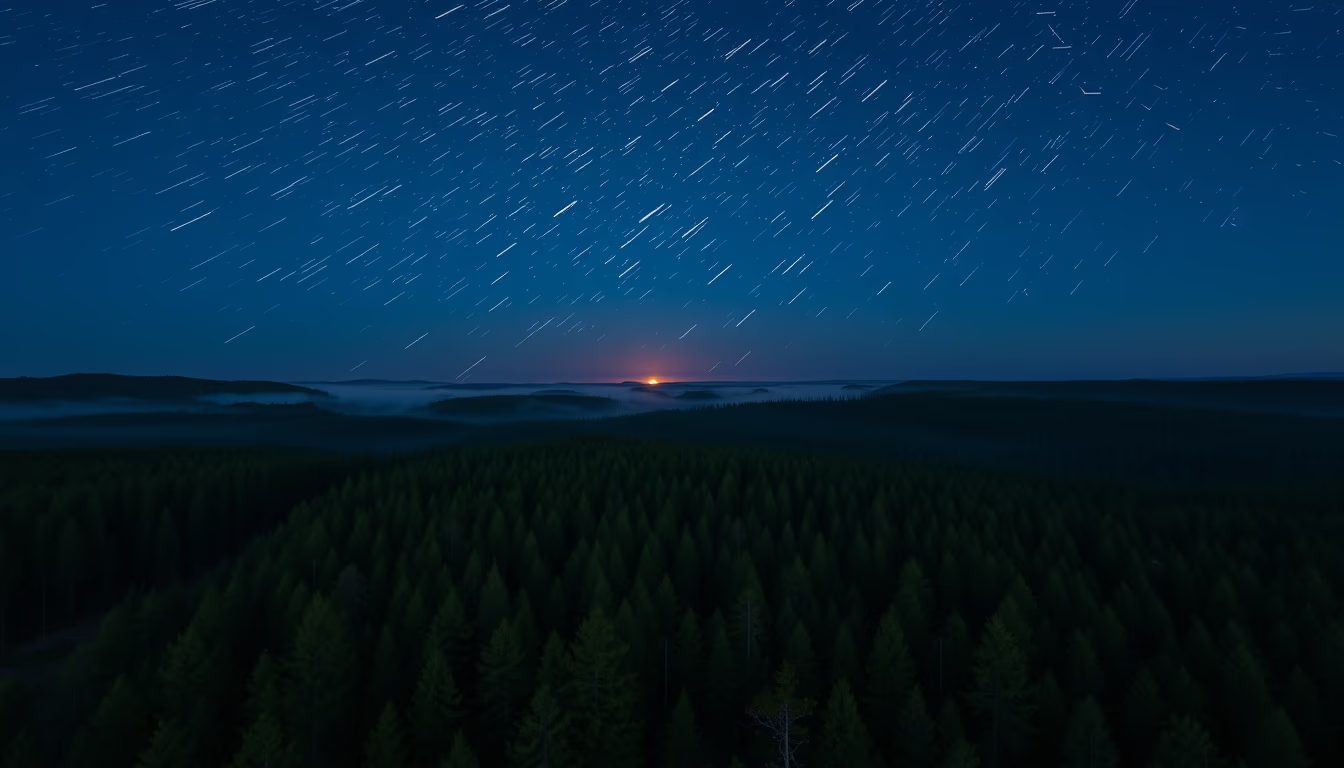
Star trails: long exposure reveals the apparent motion of the night sky, creating concentric arcs around the celestial pole.
About this subject
Star trails are created through long exposure photography that captures the apparent motion of stars caused by Earth's rotation. This effect produces concentric arcs around the celestial poles: in the Southern Hemisphere, the pole is near the Octans constellation; in the Northern, Polaris marks the center. The technique requires a sturdy tripod, exposures from minutes to hours, and often stacking multiple frames to reduce noise and create continuous streaks.
Beyond technique, star trails hold cultural significance. Ancient civilizations such as the Greeks and Polynesians used star motion for navigation and agriculture. In Brazil, the southern sky features indigenous constellations like the Ema (Southern Cross) and the Old Man (Scorpius). The Milky Way, visible to the naked eye in low light pollution areas, offers a stunning backdrop for star trail photography.
Modern astrophotography has advanced with high-sensitivity sensors and wide-angle lenses. Urban light pollution limits captures, driving enthusiasts to remote sites like the Atacama Desert, Swiss Alps, or Brazil's Chapada dos Veadeiros National Park. Weather and moon phases matter: new moon provides darker skies, ideal for long exposures.
Interestingly, trail colors vary with stellar temperature: blue stars are hotter, red ones cooler. In a single image, one can identify clusters and nebulae, like the Orion Nebula, which leave colored streaks. Combining trails with terrestrial landscapes creates compositions that symbolize the connection between humanity and the cosmos.
Frequently Asked Questions
What are star trails and how are they created?
Star trails are the apparent paths of stars captured via long exposure photography, caused by Earth's rotation. They are created using a camera on a tripod, exposures lasting minutes to hours, and often stacking multiple images to minimize noise and enhance continuity.
Where and when is the best time to photograph star trails?
The best conditions are during a new moon in areas with minimal light pollution, such as remote deserts, high mountains, or national parks. In the Southern Hemisphere, winter nights (April to September) generally offer clearer, more stable skies.
Why do star trails form circles instead of straight lines?
Stars appear to move in concentric circles around the celestial poles due to Earth's rotation. In the Northern Hemisphere, Polaris marks the center; in the Southern, the pole is near Octans. The closer a star is to the pole, the smaller and more circular its trail.
Direct URL
https://pub-c7d6a6ea828543ac903a74a341ccb2e1.r2.dev/imagens/star-trails-long-exposure-cinematic-wide-shot-p5.avifHow to credit
Include a visible link back to UtilizAí. Copy one of the snippets below:
<a href="https://xn--utiliza-eza.com/en/midia/imagens/star-trails-long-exposure-cinematic-wide-shot-p5">Star trails long exposure</a> by <a href="https://xn--utiliza-eza.com">UtilizAí</a>, licensed under <a href="https://creativecommons.org/licenses/by/4.0/">CC BY 4.0</a>.
[Star trails long exposure](https://xn--utiliza-eza.com/en/midia/imagens/star-trails-long-exposure-cinematic-wide-shot-p5) by [UtilizAí](https://xn--utiliza-eza.com), CC BY 4.0
License: CC-BY-4.0