Stalingrad ruins
1344×768 · AVIF · CC BY 4.0

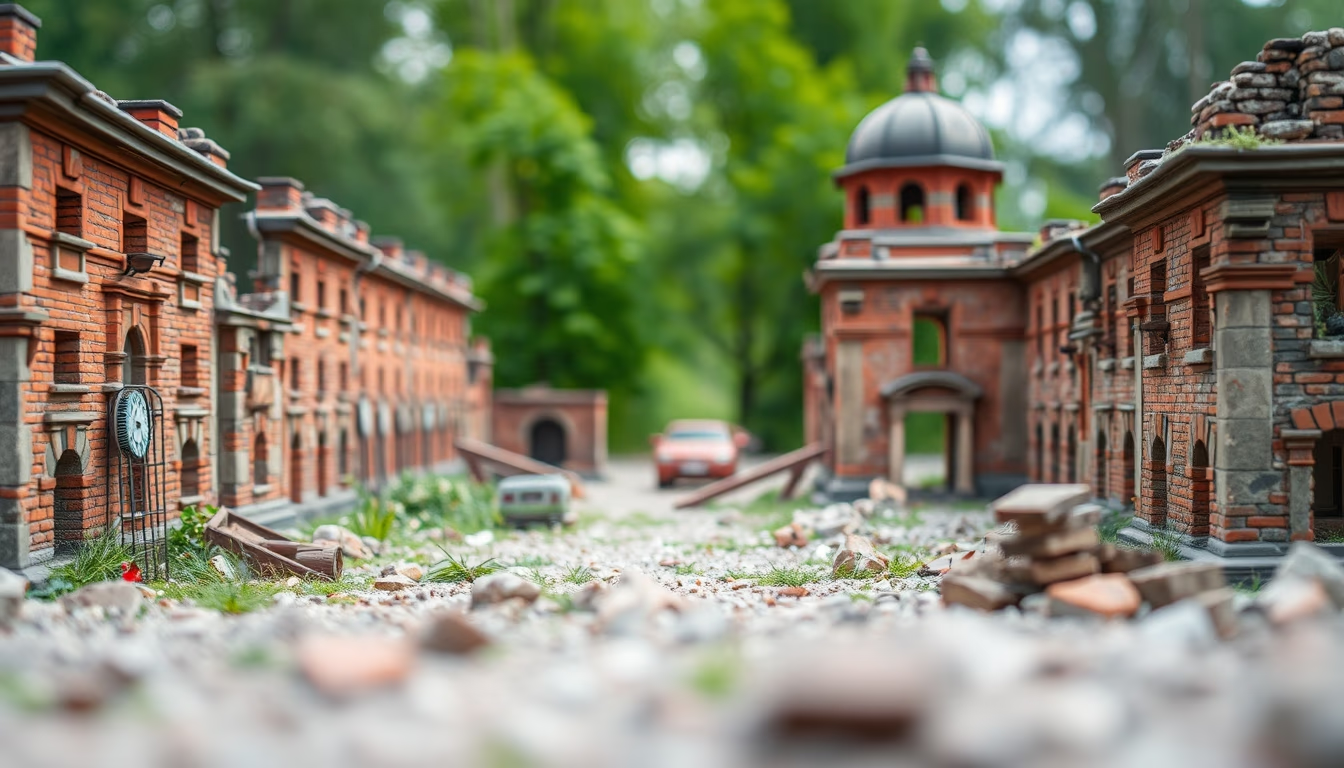
Ruins of Stalingrad, site of the bloodiest battle of World War II from 1942 to 1943, where millions died and the city was leveled.
About this subject
The Battle of Stalingrad (July 17, 1942 to February 2, 1943) was one of the most decisive confrontations of World War II. The city, then named Stalingrad after Josef Stalin, was an industrial and logistic hub on the Volga River. Hitler aimed to capture it to cut Soviet supply lines and advance toward the Caucasus oil fields. The Red Army fiercely resisted, turning every building into a fortress. Urban combat was brutal, with hand-to-hand fighting and snipers. Total casualties (dead, wounded, and missing) are estimated at over 2 million, including Axis and Soviet soldiers, plus civilians.
The city was virtually destroyed. German aerial bombings and intense artillery duels reduced Stalingrad to rubble. The ruins served as shelter and battlefield for both sides. The siege culminated in November 1942 with Operation Uranus, a Soviet counteroffensive that encircled the German 6th Army. After months of starvation and cold, Field Marshal Friedrich Paulus surrendered, marking Hitler's first major defeat. The Battle of Stalingrad is considered the turning point in Europe: from then on, the initiative shifted to the Soviets.
After the war, the city was rebuilt and renamed Volgograd in 1961 during de-Stalinization. The ruins, however, remain symbols of resistance and suffering. Historical sites such as Mamayev Kurgan host monuments, including the 85-meter-tall statue "The Motherland Calls," erected to commemorate the victory. The battle panorama museum displays artifacts and dioramas. The ruins of Stalingrad are visited by tourists and historians, representing an essential milestone to understand World War II.
Official records indicate that over 1,500 buildings were completely destroyed. Civilian deaths range from 40,000 to 100,000. The battle inspired novels, films, and military studies, frequently analyzed as an example of attrition warfare and urban resistance.
Frequently Asked Questions
How many people died in the Battle of Stalingrad?
Total casualties are estimated at over 2 million, including dead, wounded, and missing from both sides, plus around 40,000 to 100,000 civilians.
Why was Stalingrad important to Hitler?
Stalingrad was a strategic industrial and logistic hub on the Volga River. Capturing it would cut Soviet supply lines and protect the German advance toward the Caucasus oil fields.
What remained of the city after the battle?
The city was almost completely destroyed, with over 1,500 buildings leveled. The ruins were preserved as a memorial, and the area around Mamayev Kurgan hosts monuments such as the statue 'The Motherland Calls'.
Direct URL
https://pub-c7d6a6ea828543ac903a74a341ccb2e1.r2.dev/imagens/stalingrad-ruins-cinematic-wide-shot-fresh0.avifHow to credit
Include a visible link back to UtilizAí. Copy one of the snippets below:
<a href="https://xn--utiliza-eza.com/en/midia/imagens/stalingrad-ruins-cinematic-wide-shot-fresh0">Stalingrad ruins</a> by <a href="https://xn--utiliza-eza.com">UtilizAí</a>, licensed under <a href="https://creativecommons.org/licenses/by/4.0/">CC BY 4.0</a>.
[Stalingrad ruins](https://xn--utiliza-eza.com/en/midia/imagens/stalingrad-ruins-cinematic-wide-shot-fresh0) by [UtilizAí](https://xn--utiliza-eza.com), CC BY 4.0
License: CC-BY-4.0