St basil cathedral
1344×768 · AVIF · CC BY 4.0
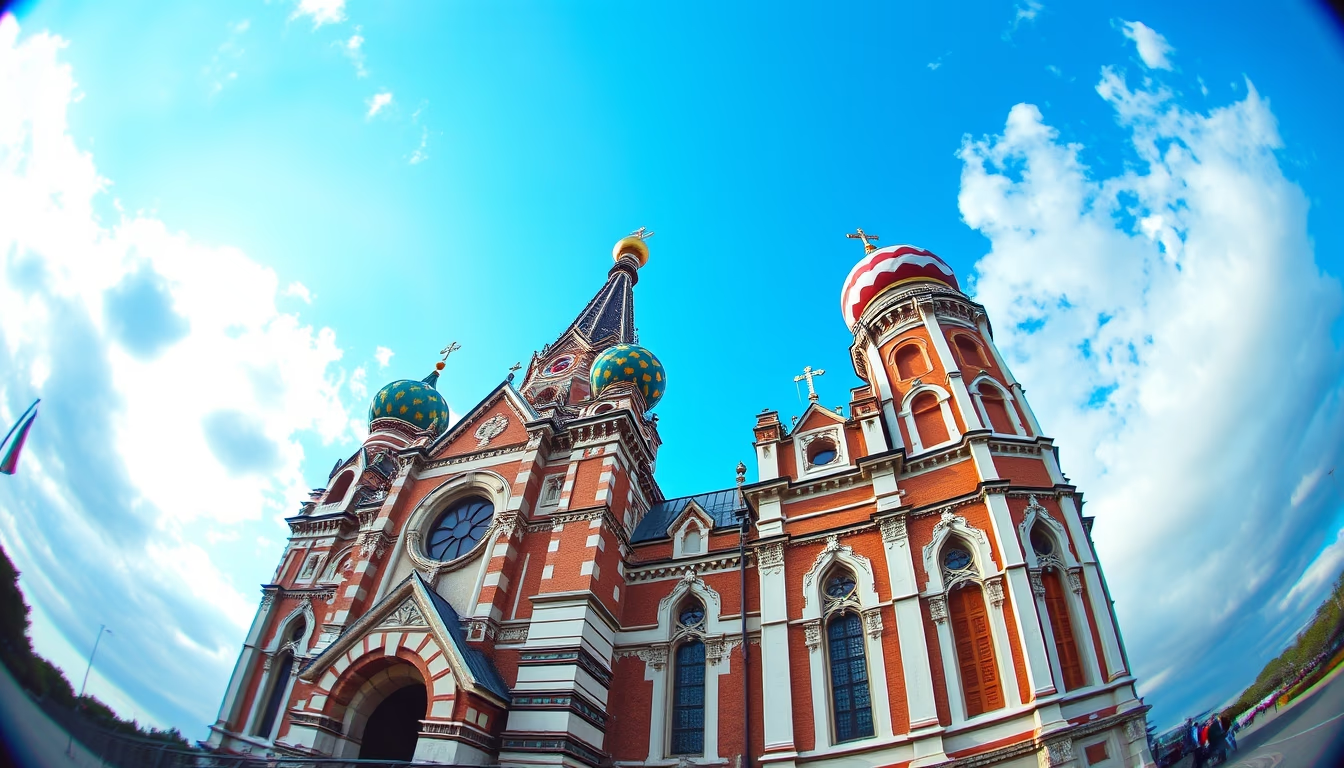
St. Basil's Cathedral in Moscow is an icon of Russian architecture with its onion-shaped domes and vibrant colors, built in the 16th century by order of Ivan the Terrible.
About this subject
Located in Red Square, Moscow, St. Basil's Cathedral is one of the most recognizable symbols of Russia. It was built between 1555 and 1561 by order of Tsar Ivan IV, known as Ivan the Terrible, to commemorate the capture of the Khanate of Kazan. The cathedral's official name is the Cathedral of the Intercession of the Virgin by the Moat, but it became popularly known as St. Basil's after a holy fool who lived in Moscow.
The cathedral's design is unique, with nine independent chapels built on a common foundation. Each chapel has an onion-shaped dome, decorated with geometric patterns and vivid colors such as red, blue, yellow, and green. The architect is unknown, but a popular legend claims that Ivan blinded the architects to prevent them from creating a rival masterpiece. The cathedral suffered damage in fires and during Napoleon's invasion, but underwent several restorations. Since 1990, it has been a UNESCO World Heritage Site.
Contrary to common belief, the cathedral is not the main religious temple of Russia, but a historic monument. It has functioned as a museum since 1928, though occasional religious services are held. The fish-eye lens image emphasizes the characteristic distortion of the main dome, enhancing the sense of grandeur and architectural uniqueness.
Frequently Asked Questions
Why does St. Basil's Cathedral have onion-shaped domes?
The onion-shaped domes are typical of Russian architecture and symbolize burning candles, representing the Orthodox faith reaching toward heaven. The shape also helps prevent snow accumulation in winter.
Did Ivan the Terrible really blind the cathedral's architects?
This is a legend without historical confirmation. The popular story says Ivan blinded the architects to prevent them from creating anything equally beautiful again, but contemporary records do not support this claim.
Is the cathedral still used for religious services?
The cathedral now functions as a museum, but occasional Orthodox services are held, especially on major holidays. Entrance requires a paid ticket and tourist visits are common.
Direct URL
https://pub-c7d6a6ea828543ac903a74a341ccb2e1.r2.dev/imagens/st-basil-cathedral-fish-eye-wide-angle-p7.avifHow to credit
Include a visible link back to UtilizAí. Copy one of the snippets below:
<a href="https://xn--utiliza-eza.com/en/midia/imagens/st-basil-cathedral-fish-eye-wide-angle-p7">St basil cathedral</a> by <a href="https://xn--utiliza-eza.com">UtilizAí</a>, licensed under <a href="https://creativecommons.org/licenses/by/4.0/">CC BY 4.0</a>.
[St basil cathedral](https://xn--utiliza-eza.com/en/midia/imagens/st-basil-cathedral-fish-eye-wide-angle-p7) by [UtilizAí](https://xn--utiliza-eza.com), CC BY 4.0
License: CC-BY-4.0