Spinning wheel antique
1344×768 · AVIF · CC BY 4.0
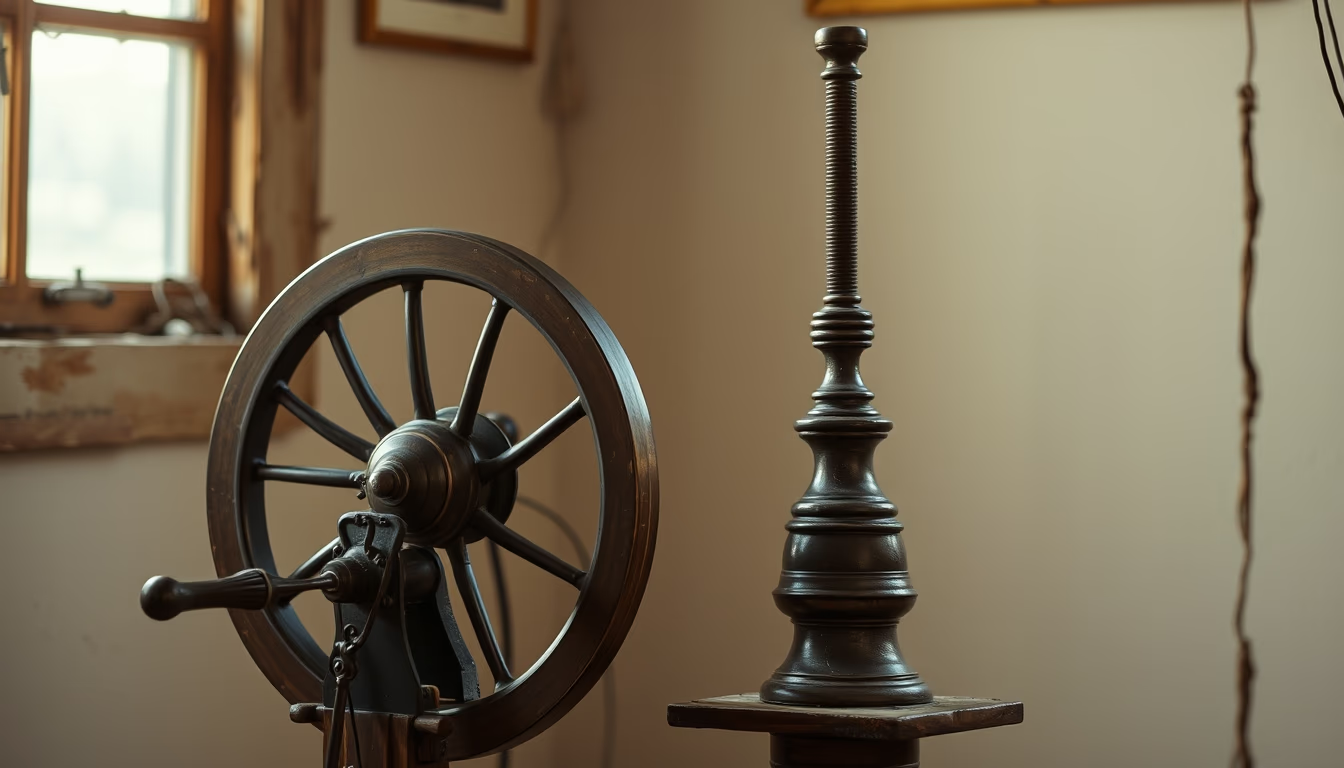
Antique spinning wheel, a textile tool that revolutionized manual yarn production for centuries.
About this subject
The spinning wheel is an ancient tool that automated the twisting of textile fibers into yarn. Originating in India around 500 AD, it spread across Asia, Africa, and Europe, transforming the home production of linen, wool, and cotton. The basic mechanism consists of a wheel driven by a pedal or crank, which spins a spindle attached to a bobbin, continuously drawing and twisting the fiber. Antique models like this were built entirely from wood, with turned details and hand carvings, reflecting the skill of regional woodworkers.
During the Middle Ages, the spinning wheel became a symbol of household economy. Women and children spent hours spinning, and the wheel was often the only means of producing fabric for clothing and surplus trade. The Industrial Revolution gradually replaced manual labor with mechanized spinning machines, but the spinning wheel never fully disappeared. In popular culture, it was immortalized in tales like "Sleeping Beauty" and idioms like "spinning one's fate." A passion for tradition keeps handspinning alive today, especially in rural communities in Brazil and at historical reenactments.
Preserving an antique spinning wheel also preserves an important chapter of textile history. Each wheel reflects local adaptations: low Scottish wheels, large Irish models, or compact travel wheels. The choice of fiber, tension adjustment, and rotation speed influence the thickness and strength of the yarn. Collectors and artisans value these pieces for their functional aesthetics and connection to knowledge passed down through generations.
Frequently Asked Questions
How does an antique spinning wheel work?
The spinner operates a treadle that turns the wheel, transferring motion to the spindle. Fiber is drawn and twisted as it winds onto the bobbin, forming continuous yarn.
What is the historical origin of the spinning wheel?
The earliest evidence comes from India around 500, 1000 AD. It reached Europe in the Middle Ages through contact with the Islamic world, replacing the hand spindle.
Is the spinning wheel still used today?
Yes, by artisans, traditional spinners, and natural fiber enthusiasts. In Brazil, communities preserve the technique, and handspinning workshops are offered at fairs and courses.
Direct URL
https://pub-c7d6a6ea828543ac903a74a341ccb2e1.r2.dev/imagens/spinning-wheel-antique-documentary-photography-fresh14.avifHow to credit
Include a visible link back to UtilizAí. Copy one of the snippets below:
<a href="https://xn--utiliza-eza.com/en/midia/imagens/spinning-wheel-antique-documentary-photography-fresh14">Spinning wheel antique</a> by <a href="https://xn--utiliza-eza.com">UtilizAí</a>, licensed under <a href="https://creativecommons.org/licenses/by/4.0/">CC BY 4.0</a>.
[Spinning wheel antique](https://xn--utiliza-eza.com/en/midia/imagens/spinning-wheel-antique-documentary-photography-fresh14) by [UtilizAí](https://xn--utiliza-eza.com), CC BY 4.0
License: CC-BY-4.0