Spices in glass jars row
1344×768 · AVIF · CC BY 4.0
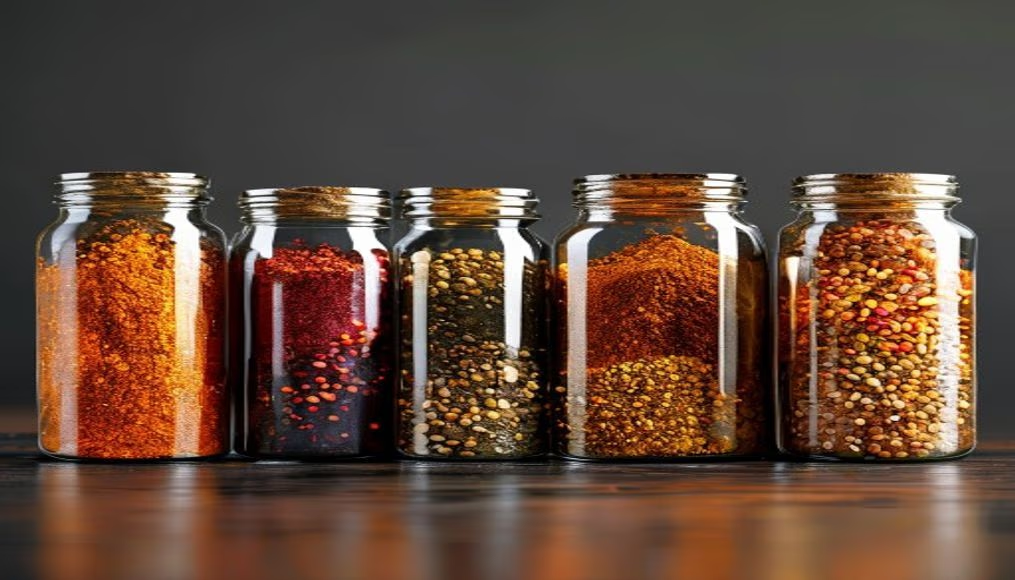
Spices stored in glass jars are essential in global cuisine, offering unique flavors and health benefits. Discover their origins and uses.
About this subject
Spices are aromatic plant products used for millennia to season food, preserve meat, and for medicinal purposes. Originating from different regions such as India, Indonesia, and Latin America, they drove historic trade routes like the Spice Route that connected East and West. Among the most popular are black pepper, cumin, cinnamon, paprika, and turmeric, each with distinct flavor and aroma characteristics.
In Brazil, the use of spices is prominent in regional cuisine. Cumin and annatto are typical in the Northeast, while cinnamon and cloves appear in sweets like rice pudding and quindim. Black pepper is widely used in meats and sauces, and turmeric gives color and flavor to dishes like baked rice. This diversity reflects the indigenous, African, and European influences on Brazilian gastronomy.
Storing spices in sealed glass jars protects against moisture, light, and oxygen, preserving the essential oils responsible for flavor and aroma. In commercial photography, arranging them in a row highlights the variety of colors and textures, aiding visual identification. Beyond culinary use, many spices have antioxidant and anti-inflammatory properties, used in teas and home remedies.
Global spice production moves billions of dollars annually, with countries like India, China, and Vietnam leading supply. In Brazil, spices such as black pepper and cinnamon are mainly cultivated in Pará and Bahia. The choice of glass jars also reflects a sustainable trend, as the material is recyclable and does not alter food flavor.
Frequently Asked Questions
What is the best way to store spices at home?
Keep them in airtight glass jars away from direct light, heat, and humidity. This preserves essential oils and extends shelf life.
Which spices are most used in Brazilian cuisine?
Cumin, annatto, cinnamon, cloves, black pepper, and turmeric are common. Each region has preferences, e.g., cumin in the Northeast.
How to tell if a spice is still fresh?
It should have a strong aroma and vibrant color. If the smell is weak or the taste dull, it is stale. Ground spices have shorter shelf life than whole ones.
Direct URL
https://pub-c7d6a6ea828543ac903a74a341ccb2e1.r2.dev/imagens/spices-in-glass-jars-row-commercial-product-photography-v9.avifHow to credit
Include a visible link back to UtilizAí. Copy one of the snippets below:
<a href="https://xn--utiliza-eza.com/en/midia/imagens/spices-in-glass-jars-row-commercial-product-photography-v9">Spices in glass jars row</a> by <a href="https://xn--utiliza-eza.com">UtilizAí</a>, licensed under <a href="https://creativecommons.org/licenses/by/4.0/">CC BY 4.0</a>.
[Spices in glass jars row](https://xn--utiliza-eza.com/en/midia/imagens/spices-in-glass-jars-row-commercial-product-photography-v9) by [UtilizAí](https://xn--utiliza-eza.com), CC BY 4.0
License: CC-BY-4.0